Palo Alto Electrician for CPAU Panel Work and Eichler Homes
A Palo Alto Eichler retrofit answers to CPAU.
A Palo Alto Eichler retrofit answers to CPAU.
Palo Alto homes, panels, and service upgrades
A Palo Alto Eichler retrofit answers to CPAU. Palo Alto holds the country's largest single-city Eichler concentration, roughly 2,200 homes, and their slab-on-grade EMT, atrium plans, and original 60A to 100A service change every retrofit. We plan around the architecture: ground retrofit, atrium circuit replacement, CPAU-coordinated panel upgrades, FPE and Zinsco replacement, EV chargers, and foothill resilience along the Page Mill corridor.
Quick answer
Cali Rollin Electric is a C-10 electrical contractor, #1144031, working throughout Palo Alto. Three things anchor almost every job here. First, this is not a PG&E city. The City of Palo Alto Utilities has run the electric system continuously since 1896, has been 100% carbon-neutral since 2013, and acts as both the utility and the interconnecting authority: the AIC rating, the disconnect and reconnect, and the final meter approval all flow through CPAU. Second, the Eichlers, roughly 2,200 of an original 2,700, the largest concentration in the country. Slab-on-grade with subsurface EMT, no attic or crawl space, and original 60A to 100A service, so an EV charger or heat pump starts with a panel conversation. Third, the foothills: about 130 homes along Moody Road, Alexis Drive, and Page Mill sit inside a Very High Fire Hazard Severity Zone. A 200A upgrade is quoted after a site and load review. Permits go through Development Services at 285 Hamilton Avenue, with dual sign-off before the meter comes back on.Call (408) 614-4451Free assessmentC-10 #1144031. Verify at CSLB.ca.gov ↗Required permits and inspections coordinated 15+ years in the tradeThree anchors of every Palo Alto job
Its own utility, and its own interconnecting authority
Palo Alto is not a PG&E city, and unlike its neighbors it does not sit under a Community Choice Aggregator. It is its own utility. The City of Palo Alto Utilities has run the electric system continuously since 1896, and CPAU electricity has been 100% carbon-neutral since 2013. That single fact reshapes the paperwork on every service job: the AIC rating comes from CPAU Electrical Engineering, the disconnect and reconnect is scheduled through CPAU Electric Operations, and final approval needs inspection by both CPAU and the Building Division before the meter comes back on. CPAU requires socket-type meters. In the heavily canopied neighborhoods, mast riser and overhead service drop work also needs Urban Forestry coordination.
Electrical retrofits around the architecture, not against it
Palo Alto retains approximately 2,200 Eichler homes out of an original 2,700. No other city in the country comes close. Greenmeadow and Green Gables are both listed on the National Register of Historic Places as Eichler tracts. Royal Manor inside the Palo Verde neighborhood holds another 200 or so, and Fairmeadow, Charleston Meadows, Triple El, Los Arboles, Meadow Park, Channing Park, Greer Park, Walnut Grove, and El Centro Gardens fill out the citywide footprint. CPAU recognizes Eichler electrification as a distinct trade specialty, and the City has hosted a How to Electrify an Eichler webinar.
What actually changes inside an Eichler
Original 60A to 100A service is common across the tracts, so adding an EV charger, heat pump, induction range, or smart electrical panel typically requires a panel upgrade and a CPAU-coordinated service entrance evaluation first. The original branch circuits run through EMT cast into the slab, and decades of radiant-floor leaks can corrode that EMT from the inside. New circuits route over the roof or pick up at the base of the slab, because post-and-beam ceilings, exposed-rafter roofs, and a slab floor leave no concealment paths and fishing through walls is rarely an option. The atrium light, the irrigation pump, and the exterior receptacles have often shared one original circuit for fifty years, and replacing them as a set during a panel upgrade is the cleanest scope. Every Palo Alto Eichler retrofit therefore starts the same way: a service-capacity assessment, a load calculation against the owner's electrification roadmap, and a CPAU-coordinated service entrance evaluation before any new circuit is designed.
Insurance drives the panel work citywide
Federal Pacific Stab-Lok and Zinsco panels are common across the 1950s through 1970s housing, in the Eichler tracts and the conventional mid-century neighborhoods alike. Some insurers may flag these panels or request replacement; requirements vary by carrier and property. We scope all three anchors at the on-site assessment. If a Greenmeadow Eichler needs a panel upgrade for a heat pump, a Zinsco replacement is overdue, and the AIC has to be re-pulled from CPAU Electrical Engineering, one trip and one permit handles the whole sequence.
The foothills are a different city, electrically
Roughly 130 homes in the western foothills along Moody Road, Alexis Drive, and the Page Mill Road corridor sit inside a Very High Fire Hazard Severity Zone, with significant Diablo wind exposure during Red Flag conditions. CPAU began a foothill undergrounding project in 2025 to convert overhead lines and reduce ignition risk. Standby generators and battery storage up there are scoped for defensible-space compliance and WUI Chapter 7A awareness. Flatland Palo Alto is not in a fire hazard severity zone, and we do not pretend otherwise.
~2,200
Eichlers in the city
The country's largest single-city concentration. Slab-on-grade, subsurface EMT, atrium plans, original 60A to 100A service.
CPAU
Utility and interconnect
AIC rating, disconnect and reconnect, and dual sign-off with the Building Division before the meter comes back on.
~130 homes
Foothill fire zone
Moody Road, Alexis Drive, and the Page Mill corridor, where standby power and defensible-space scoping apply.
Palo Alto coverage
UtilityCity of Palo Alto Utilities Municipal electric since 1896, 100% carbon-neutral since 2013. No PG&E, no CCA layer. Interconnecting authorityCPAU Electrical Engineering AIC, disconnect and reconnect, socket-type meter. All through CPAU, not PG&E. Permit authorityCity of Palo Alto Development Services 285 Hamilton Ave, 1st Floor. Trackable via Palo Alto Permit View. Schedule a free assessment →Electrical services.
Choose the work you have in mind.
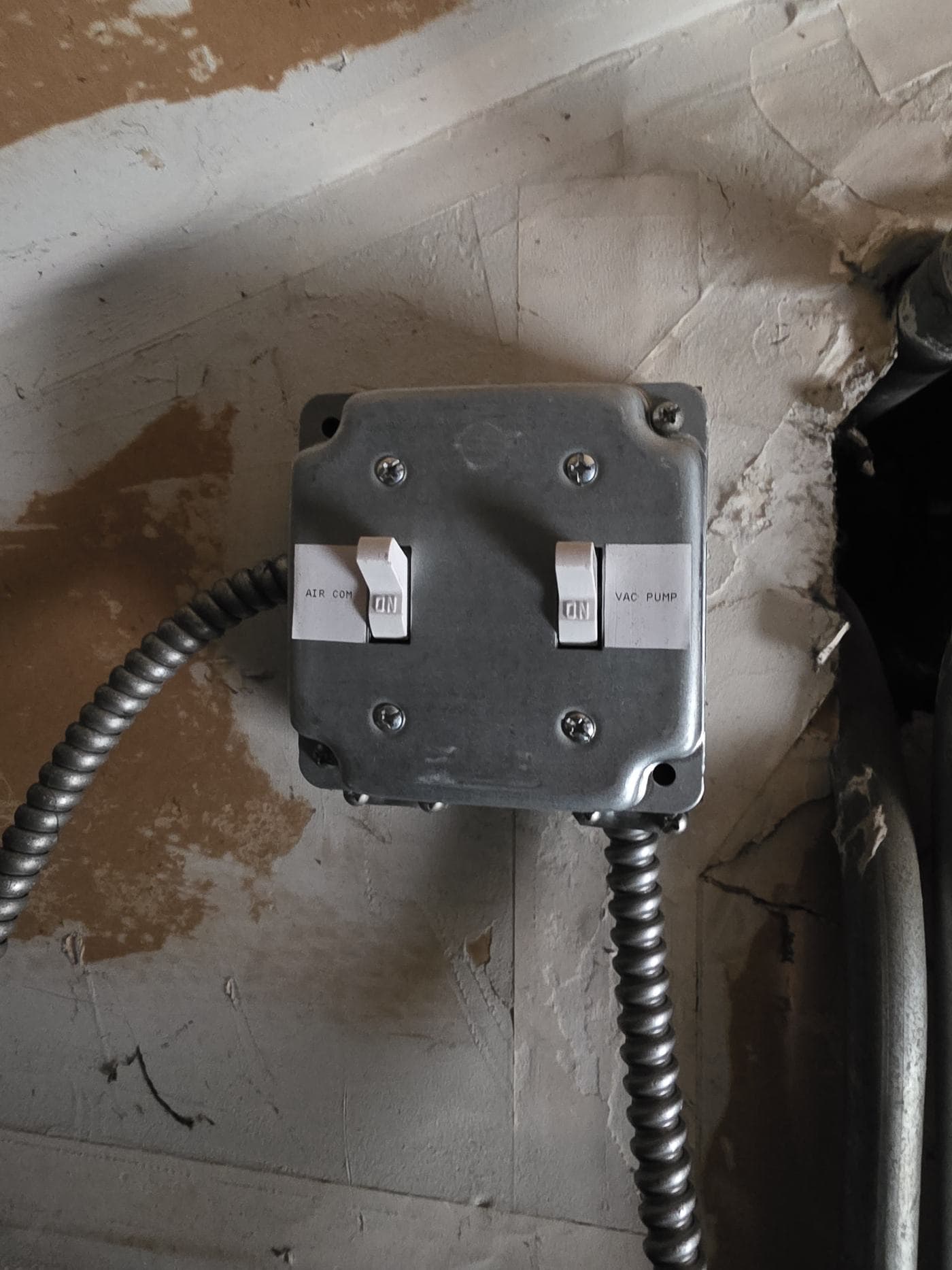
Palo Alto Eichler Rewiring and Retrofit
Slab-on-grade rewires, equipment-ground retrofit, atrium circuit replacement, and panel upgrades sized for the whole electrification roadmap rather than one appliance. Roughly 2,200 Eichlers in Palo Alto, and the routing question is answered at the slab and the roof, not the wall.
Explore this servicePhotography from our electrical projects.See all Palo Alto electrical services
What we handle in Palo Alto
From Eichler retrofits in Greenmeadow and Royal Manor to knob-and-tube rewires in Professorville, insurance-driven panel replacement citywide, and standby power on the Page Mill corridor: full-scope residential electrical with a permit and CPAU coordination on every job.
Palo Alto Eichler Rewiring and Retrofit
Slab-on-grade rewires, equipment-ground retrofit, atrium circuit replacement, and panel upgrades sized for the whole electrification roadmap rather than one appliance. Roughly 2,200 Eichlers in Palo Alto, and the routing question is answered at the slab and the roof, not the wall.
Palo Alto Panel Upgrade
60A or 100A to 200A service upgrades with the AIC rating coordinated through CPAU Electrical Engineering. EV-ready, insurance-compliant, retrofit-aware. required permits coordinated, and dual sign-off before the meter comes back on.
FPE and Zinsco Replacement
Insurance-driven panel replacement for Federal Pacific Stab-Lok and Zinsco, common across Palo Alto's 1950s to 1970s Eichler tracts and conventional mid-century neighborhoods. Some insurers may flag these panels or request replacement; requirements vary by carrier and property.
Palo Alto EV Charger Installation
Level 2 on a dedicated 240V circuit: Tesla Wall Connector, Rivian, Ford, ChargePoint, Emporia, Grizzl-E, and every other major brand. CPAU-coordinated service capacity assessment, because on 60A or 100A original service the panel decides the project.
Aluminum Wiring Remediation
Aluminum branch wiring turns up alongside the panel-era finds in the post-war stock. Correct terminations at every connection point are the entire job, and we assess what is actually present before quoting a scope.
Knob-and-Tube Replacement
Pre-1940 housing concentrated in Professorville (National Register), Old Palo Alto, Crescent Park, and Downtown North. Rewires documented so an insurer can clear the file.
Standby Generators for Palo Alto Homes
For the roughly 130 foothill homes inside the Palo Alto Very High Fire Hazard Severity Zone along Moody Road, Alexis Drive, and the Page Mill corridor. Automatic transfer switch, defensible-space-aware placement, CPAU coordination on the service side.
Battery Storage Installation
Residential battery systems that carry critical loads through an extended outage, which matters most on the Page Mill corridor where Diablo wind exposure drives Red Flag conditions and CPAU began foothill undergrounding in 2025.
Emergency Electrical
Panel failures, burning smell, tripped mains, dead circuits. Call to confirm current emergency availability. When a fault is on the service side, we know to coordinate the disconnect through CPAU Electric Operations rather than PG&E.
A closer look.
Our electrical work.
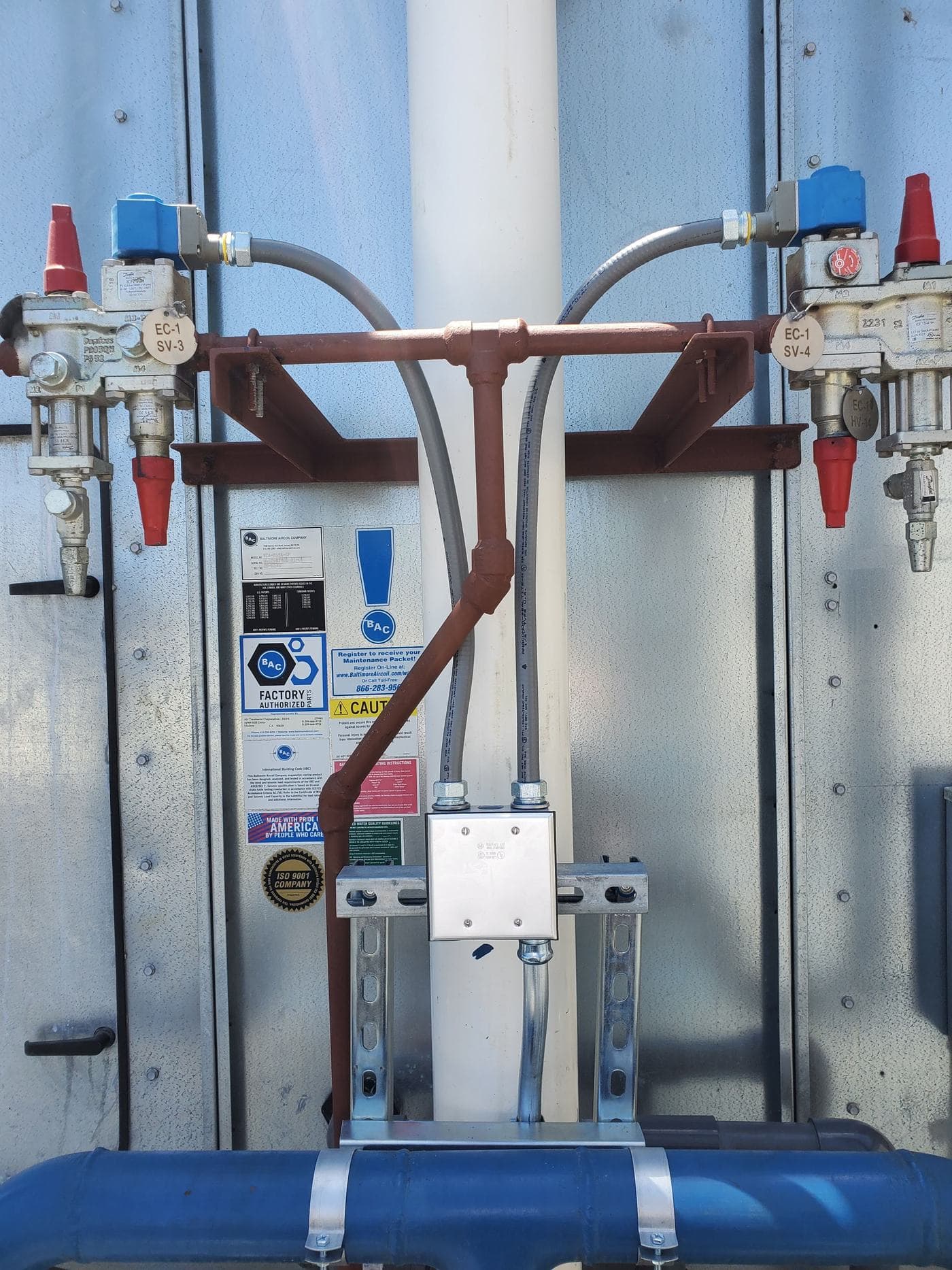
Electrical connections at warehouse mechanical equipment
Planning your project.
Costs, coordination, and what happens next.
What shapes your electrical quote
Equipment condition, service capacity, wiring routes, access, planned loads, and finish restoration determine the scope. A panel replacement is different from a service upgrade or meter relocation.
We confirm any site-visit or diagnostic charge before scheduling. Your written proposal identifies the work, permit and utility responsibilities, exclusions, and a lump-sum price before you approve it.
Permits & utilities
Its own utility, and its own interconnecting authority
Palo Alto is not a PG&E city, and unlike its neighbors it does not sit under a Community Choice Aggregator. It is its own utility. The City of Palo Alto Utilities has run the electric system continuously since 1896, and CPAU electricity has been 100% carbon-neutral since 2013. That single fact reshapes the paperwork on every service job: the AIC rating comes from CPAU Electrical Engineering, the disconnect and reconnect is scheduled through CPAU Electric Operations, and final approval needs inspection by both CPAU and the Building Division before the meter comes back on. CPAU requires socket-type meters. In the heavily canopied neighborhoods, mast riser and overhead service drop work also needs Urban Forestry coordination.
Utility and interconnect
AIC rating, disconnect and reconnect, and dual sign-off with the Building Division before the meter comes back on.
Rebates & incentives
Palo Alto programs worth checking before you buy
Because Palo Alto runs its own utility, the rebates run through CPAU rather than through PG&E or a Community Choice Aggregator. The former federal residential energy and EV-charger tax credits have expired, so the live savings are the CPAU programs below. Rebate program rules, caps, and eligibility change without notice. Cali Rollin Electric does not administer these programs and cannot guarantee any specific rebate amount. Always confirm current terms on the program's official page before applying.
CPAU Rebate Hub
The one-stop residential portal for City of Palo Alto Utilities rebates: heat pump HVAC, heat pump water heater, panel upgrade, and the utility service capacity fee rebate for EV charger service upgrades.
Open program page ↗
CPAU heat pump rebates (water heater and HVAC)
Heat pump water heaters and heat pump HVAC are the largest residential electrification rebates in Palo Alto right now. Replacing a gas water heater or gas furnace with a heat pump may qualify through the Rebate Hub, and panel-upgrade, prewiring, and permit-fee add-ons can stack onto a qualifying project. Income-eligible households may qualify for more. Ask what your address may qualify for.
Open program page ↗
Electrify My Home (CPAU)
CPAU's one-call electrification planning and contractor referral service. Covers panel upgrade evaluation, heat pump sizing, EV-ready coordination, and rebate stacking. Run by the city, independent of us.
Open program page ↗
REAP: Residential Energy Assistance Program
An income-qualified CPAU program offering free upgrades, including a panel upgrade permit-fee rebate for eligible Palo Alto households.
Open program page ↗
From first call to closed permit
How the work is coordinated
CPAU-coordinated from assessment through permit close
Free on-site assessment
Panel evaluation, load calculation, project scope defined. No charge. Eichler-aware across Greenmeadow, Royal Manor, Charleston Meadows, and Fairmeadow, where the architecture sets the routing.
Written quote and permit
Written quote before any work begins. Permit filed with City of Palo Alto Development Services at 285 Hamilton Avenue, with the AIC rating pulled from CPAU Electrical Engineering. Permit review timing depends on the scope and the City's current workload.
Installation day
CPAU disconnect coordinated through Electric Operations. Our crew on site. Work completed to NEC, the California Electrical Code, and City of Palo Alto requirements, with socket-type meters as CPAU requires.
Inspection and close
Dual sign-off: CPAU final inspection and the CPA Building Division, both before the meter is reconnected. Permit close documentation delivered for your insurer or your home sale.
Working across Palo Alto.
From historic Professorville to the Eichler tracts
The city reads as several different electrical markets sharing one utility. A 1905 Professorville original, a 1958 Royal Manor Eichler, and a Page Mill foothill parcel need three different starting points, but all three route through CPAU on the service side.
Professorville
National Register historic district, late 1800s through 1920s
Bounded roughly by Waverly, Cowper, Homer, and Addison. The earliest documented neighborhood in the city, dense with original Stanford-faculty homes and the highest concentration of knob-and-tube remnants and ungrounded circuits anywhere in Palo Alto. Heavy canopy means mast riser and overhead service work needs CPAU Urban Forestry coordination before the disconnect.
Greenmeadow
National Register historic Eichler district, roughly 270 Eichlers
One of two Palo Alto Eichler tracts on the National Register (the other is Green Gables). Single-story overlay protections shape what is visible from the street, but the slab-on-grade construction, original 60A to 100A service, and subsurface EMT runs all remain. Panel upgrades and ground retrofits get scoped around the architecture.
Royal Manor (Palo Verde)
Eichler tract, roughly 200 homes, built 1958
South of Loma Verde Avenue inside the Palo Verde neighborhood. Late 1950s Eichlers with the standard slab-on-grade, post-and-beam, atrium-plan signature. EV upgrades and heat pump conversions almost always require a panel upgrade, because the original service was never sized for a modern electrified load.
Fairmeadow
Established Eichler tract, late 1950s
An early Eichler community where Joseph Eichler himself lived. Mature, well-preserved stock with the same slab-on-grade and original-service characteristics. The retrofit scope is identical to the National Register tracts; only the historic-district overlay differs.
Crescent Park
Pre-WWII and mid-century mix, 1920s through 1960s
North of University Avenue along San Francisquito Creek. A mix of 1920s to 1940s Craftsman homes and post-war infill, so the pre-1940 stock often has knob and tube while the 1950s and 60s stock frequently has FPE Stab-Lok or Zinsco. Heavy canopy here too, so Urban Forestry coordination is part of every mast riser job.
Old Palo Alto
1920s to 1940s Craftsman, Colonial Revival, Spanish Revival
Flatland neighborhood north of Oregon Expressway with high knob-and-tube probability across the pre-1940 stock. Service entrance work coordinates with CPAU Electric Operations, and overhead service drops often require Urban Forestry sign-off in the canopied corridors.
Cali Rollin Electric.
What we bring to every job in Palo Alto
CPAU coordination, not PG&E
We pull the AIC rating from CPAU Electrical Engineering, coordinate disconnect and reconnect through CPAU Electric Operations, and run the dual sign-off with the Building Division. That is service-side detail most contractors do not run, and it is on every Palo Alto job.
Permits for work that requires them
Filed with City of Palo Alto Development Services and coordinated with CPAU. Tracked through Palo Alto Permit View, visible to you the whole way.
Eichler retrofit work, not generic 200A swaps
We scope slab-on-grade EMT, equipment-ground retrofit, and atrium circuits across Greenmeadow, Royal Manor, and Fairmeadow, the country's largest Eichler concentration at roughly 2,200 homes. Family-owned, Santa Clara County based.
C-10 contractor
California C-10 electrical contractor, license #1144031. Verify the current license record at CSLB.ca.gov.
Urban Forestry coordination handled
In the heavily canopied neighborhoods, Old Palo Alto, Crescent Park, Professorville, College Terrace, mast riser and overhead service drop work needs Urban Forestry sign-off before the disconnect. We build that into the schedule instead of hitting it on the day.
Foothill and panel-aware same-day response
Panel failures, burning smells, tripped mains: call to confirm current emergency availability, including the FPE Stab-Lok and Zinsco panels common in mid-century Palo Alto and standby backup for the roughly 130 foothill homes inside the fire zone.
Direct line, no dispatch center
You reach our team when you call. Not a national franchise queue or a scheduling platform.
Palo Alto questions.
What makes Eichler electrical work in Palo Alto different?
Who is the electric utility in Palo Alto?
Why is Palo Alto's permit process different from other Bay Area cities?
Do I need a permit for electrical work in Palo Alto?
Do you serve Palo Alto for electrical work?
Do you replace Federal Pacific (FPE) and Zinsco panels in Palo Alto?
Can you install an EV charger at a Palo Alto home?
How much does a panel upgrade cost in Palo Alto?
Can you install a generator or battery storage for the Palo Alto foothills?
What rebates are available for Palo Alto electrical upgrades?
How quickly can you respond to an electrical emergency in Palo Alto?
Tell us what
you’re planning.
Get a free Palo Alto assessment
Tell us the neighborhood and whether the house is an Eichler. That one answer changes the routing, the panel conversation, and the CPAU coordination before we have looked at anything else.
Call (408) 614-4451Loading the project form…