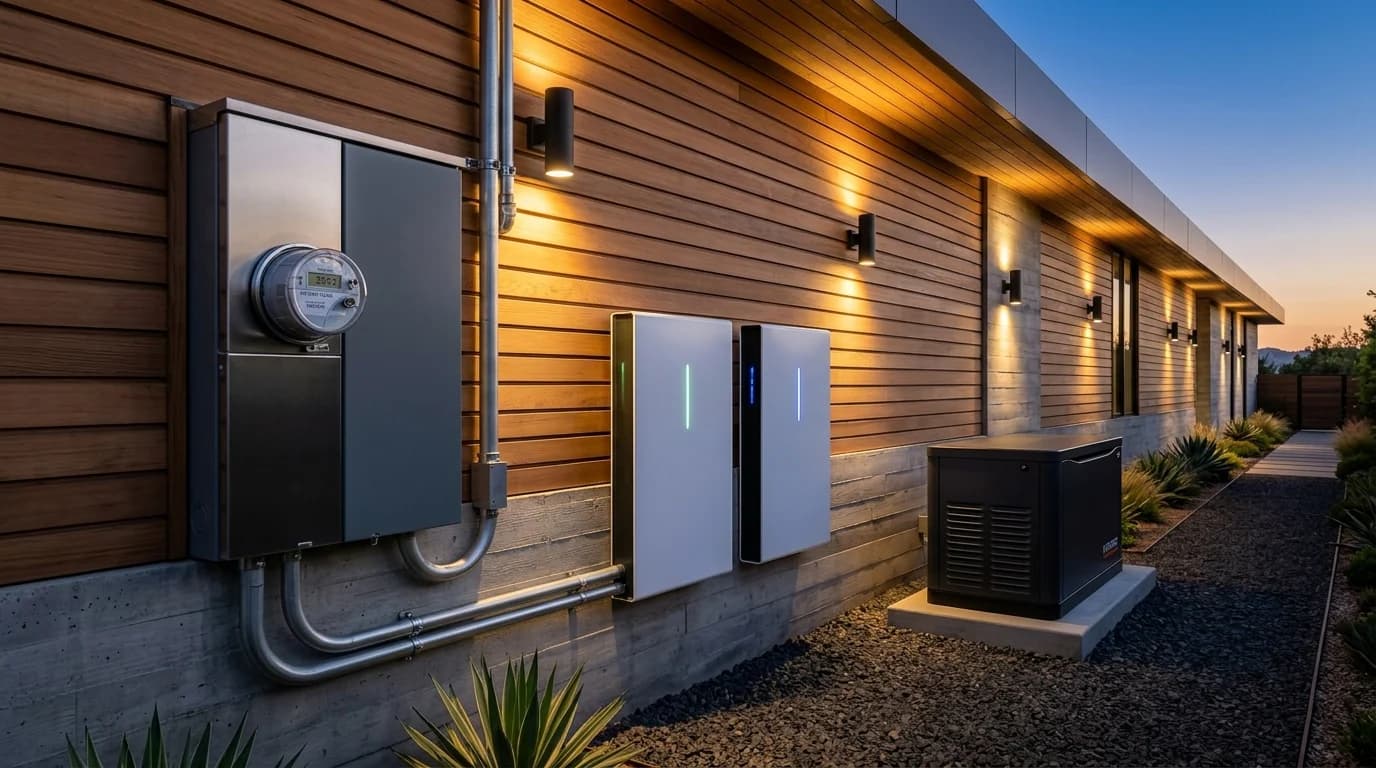
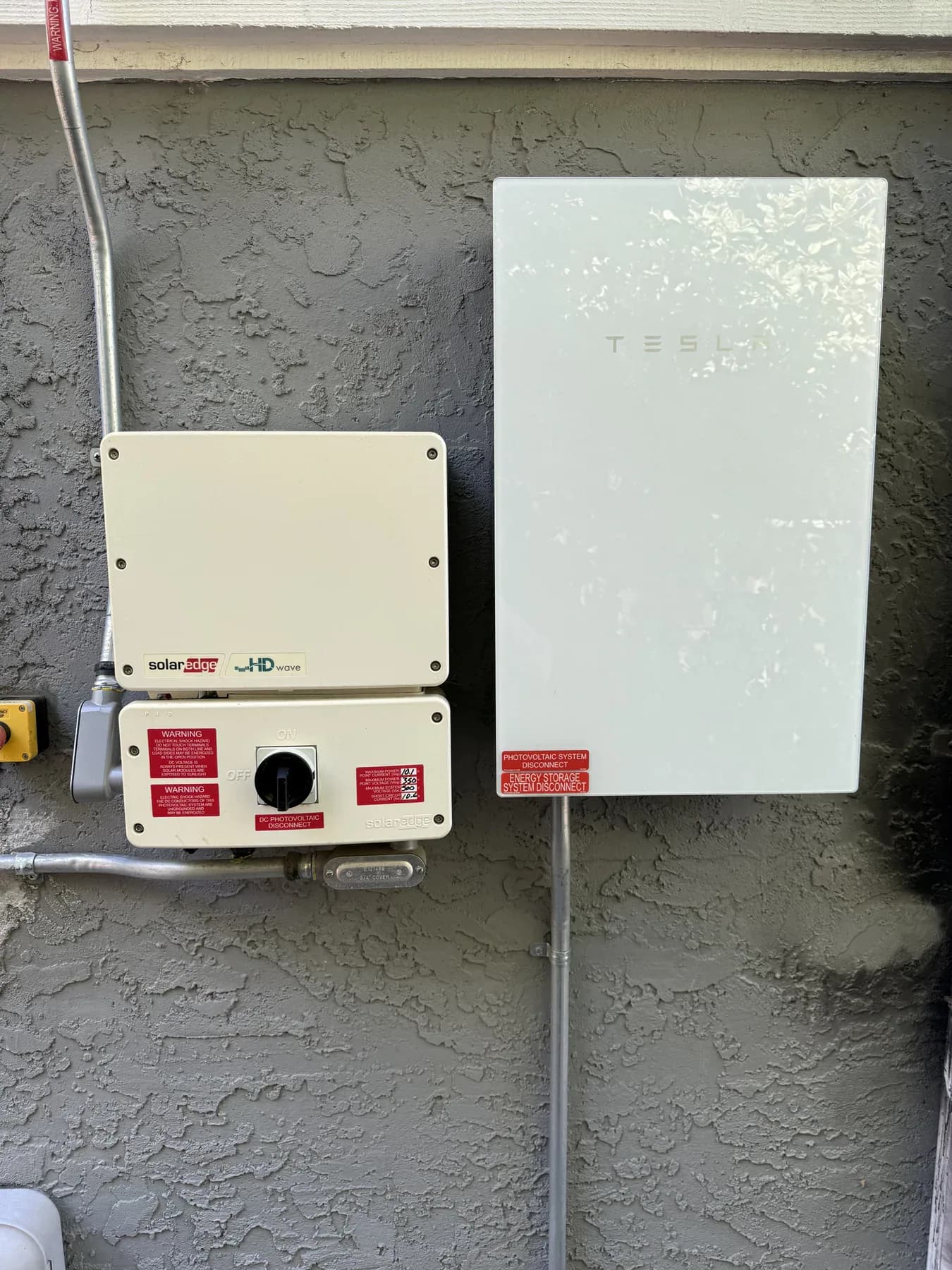
Whole-House Standby Generator Installation in San Jose.
Automatic backup power with an Automatic Transfer Switch (ATS) — through PG&E PSPS shutoffs and outages.
When PG&E de-energizes the grid during a Public Safety Power Shutoff (PSPS) or a storm knocks out power, a permanently installed standby generator keeps your San Jose home running automatically. The Automatic Transfer Switch detects the outage and switches to generator power within seconds — no action from you, whether you are home or not. We size and install the generator, coordinate the gas line, connect the ATS to your panel, and pull the permit.
What is an ATS?
An Automatic Transfer Switch (ATS) is the device that monitors your utility power and automatically switches your home to generator power the moment an outage is detected. It then switches back to utility power when power is restored — without any manual intervention.
< 30 sec
ATS switchover time
ATS required
For automatic backup power
C-10 #1144031
Licensed CA electrician
Permit-required
All generator installs
- C-10 #1144031Licensed
- Bonded& Insured
- 15+ YearsExperience
- Santa Clara CountyService Area
Manual vs. Standby Generator
Why a Standby Generator with ATS Is Different
A portable generator requires you to be home, start it manually, and run extension cords. A standby generator with ATS does none of that — it switches automatically, runs on natural gas, and covers your whole home.
| Feature | Portable / Manual | Standby + ATS ★ |
|---|---|---|
| Switchover | Manual — you run an extension cord | Automatic — within 30 seconds |
| Fuel type | Gasoline — must be stored and rotated | Natural gas or propane — continuous supply |
| Coverage | Selected circuits via extension cord | Whole home or selected critical circuits |
| Run time | Limited by fuel tank | As long as gas supply continues |
| Noise | High — portable units are loud | Lower — standby units quieter, farther from home |
| Permit required | No (portable unit) | Yes — electrical and sometimes gas |
| Resale value | Minimal | Home improvement — adds value |
The ATS Advantage
Without ATS
You have to be home
Manual start, extension cords, gasoline on hand
With ATS
Automatic. Every time.
Transfers in under 30 seconds. No action required.
Load assessment included. We size the generator before recommending equipment.
PG&E PSPS & Outage Protection
Backup Power Through a Public Safety Power Shutoff
A Public Safety Power Shutoff (PSPS) is when PG&E proactively turns off power to a section of the grid during dry, windy, high-wildfire-risk weather to keep its lines from sparking a fire. It is not an equipment failure and not a rolling blackout — it is a deliberate, planned de-energization, and it can last from a few hours to several days until crews inspect every line and restore power.
Most of San Jose sits inside PG&E territory, and homes in the foothills and along the wildland edges are the most exposed to PSPS de-energization during fire season. Utility coverage in Santa Clara County is fragmented — PG&E serves the bulk of San Jose, while the City of Santa Clara is served by Silicon Valley Power (SVP) and Palo Alto by CPAU. Those municipal utilities run their own systems and generally do not call PSPS events the way PG&E does, so whether your home is exposed depends on which utility serves your street. If you are on PG&E, planned shutoffs are a real annual risk.
A permanently installed standby generator paired with an Automatic Transfer Switch removes that risk. The ATS continuously monitors utility power; the instant PG&E de-energizes the line, it disconnects your home from the grid and starts the generator automatically — within seconds, with no manual steps and no need to be home. When PG&E restores power, the ATS transfers back and shuts the generator down. Running on natural gas or propane, the system carries your home through the entire shutoff, however long it lasts.
Which Utility Serves You?
PG&E — most of San Jose
Calls PSPS events during fire-weather. Standby backup recommended.
SVP — City of Santa Clara
Municipal utility; different shutoff exposure than PG&E.
CPAU — Palo Alto
City-run utility with its own grid and policies.
Considering a battery instead of a generator? A home battery is a quieter, fuel-free alternative for shorter outages.
Compare battery backup →What to Budget
Generator Installation Cost in San Jose
A standby generator installation has two main cost components: the generator equipment and the electrical installation. We handle the electrical scope — ATS connection to your panel, transfer testing, load assessment, and permit. Generator equipment can be customer-supplied or sourced through our vendors.
If your home runs on natural gas, the generator connects to your existing gas line. If a new gas line is needed, we coordinate with a licensed plumber — that work is a separate scope and separate contract.
Critical circuit installations (refrigerator, HVAC, key outlets, lights) run on smaller generators and cost less than whole-home backup. If you want the lights to stay on and the HVAC to run, a critical circuit setup is often the right call.
Load Assessment
Determine generator size based on critical vs. whole-home load. Panel capacity evaluated.
Permit & Gas Coordination
Electrical permit filed. Gas line installation coordinated with licensed plumber if new line needed.
ATS & Generator Install
ATS connected to panel. Generator placed and connected. Transfer tested.
Inspection & Commissioning
City electrical inspection. Generator load test run. Operation documented.
Generator Installation Costs — Santa Clara County
| Scope | Range |
|---|---|
| ATS installation — transfer switch only (generator already supplied) | $2,500 – $5,000 |
| Standby generator + ATS — whole home (7.5–22 kW) | $8,000 – $18,000 |
| Standby generator + ATS — critical circuits only | $6,000 – $12,000 |
| Subpanel addition for generator transfer | $1,200 – $2,000 |
| Gas line coordination (customer arranges, we connect) | Included in scope |
| Permit (electrical — varies by SCC city) | $500 – $1,000 depending on jurisdiction |
Written quote provided before any work begins.
Get a Written QuoteWhy Cali Rollin Electric
The ATS Connection Has to Work When It Matters
Generator installation involves your electrical panel, your home's grounding system, and — if natural gas — coordination with another licensed trade. Getting the ATS connection wrong means your generator doesn't switch over when you need it. Our team pulls the permit, performs the electrical connection, and tests the transfer under load before the permit closes.
C-10 #1144031. Permit on every install.
Permits & Code
San Jose Generator Permit Requirements
Any generator tied into your home's electrical panel requires a permit and a final inspection from the local building department. In the City of San Jose, the install has to satisfy a set of placement and safety rules before it passes:
- →Clearances and setbacks — The unit must keep manufacturer-specified distances from the home, from windows and doors, and from the property line, with adequate working space around the equipment.
- →Exhaust and air — Engine exhaust must vent away from the home and from any openings, with enough open clearance for combustion air and cooling.
- →Fuel capacity thresholds — Propane tanks above certain volumes can trigger additional fire-code review and their own siting rules; natural-gas connections must be sized to the unit.
- →Electrical connection — The Automatic Transfer Switch and any subpanel are installed and grounded to current code so the generator can never backfeed the utility line.
- →Inspection to close — A city electrical inspection closes the permit after a load test confirms the system transfers and runs correctly.
Requirements and setbacks vary across Santa Clara County jurisdictions — what the City of San Jose enforces is not identical to Cupertino, Los Gatos, or the county's unincorporated areas. We confirm the exact rules with the AHJ that has authority over your address and pull the permit before any work starts. The City of San Jose publishes its building-permit requirements through its Building Division.
A Lower-Cost Option
Portable Generator + Interlock Kit
Not every home needs a full standby system. A code-compliant alternative is a portable generator paired with a generator inlet box and a panel interlock kit. The interlock lets you power selected circuits — refrigerator, heat, key outlets — safely through your existing panel without the danger of backfeed, at a fraction of the cost of a standby install.
The tradeoff: it is not automatic. You roll out the generator, start it, and switch the interlock by hand, so it requires someone home during the outage and a place to store fuel. For homeowners who want PSPS coverage on a budget, it is a solid entry point.
Ask about an interlock setup →Common Questions
Home Generator Installation FAQ
What size generator do I need for my home?
A 7.5–12 kW generator covers critical circuits — refrigerator, HVAC, a few outlets, and lights. A 14–22 kW unit covers most of a typical 2,000–3,000 sq ft home. We perform a load assessment before recommending a generator size.
What is an Automatic Transfer Switch and do I need one?
An Automatic Transfer Switch (ATS) monitors your utility power and switches your home to generator power within seconds of an outage — automatically. Without an ATS, you manually connect your generator, which requires you to be home, know how to do it safely, and deal with extension cords. For a standby generator, an ATS is not optional — it is how the system works.
Do I need a permit for a generator installation?
Yes. Any generator installation that involves connecting to your home's electrical panel requires an electrical permit in San Jose and all Santa Clara County cities. We pull permits on every installation — this protects your home and ensures the install is code-compliant.
What generator brands do you install?
We install Generac, Kohler, and Briggs & Stratton standby generators. We also install ATS equipment from those manufacturers and third-party transfer switch brands. Customer-supplied generators are accepted — we connect and commission.
How long does generator installation take?
A standard standby generator + ATS installation takes 1–2 days for the electrical work. Gas line installation (if a new line is needed) is coordinated separately with a licensed plumber — add 1–2 days. Permit approval is typically 1–5 business days.
Will a standby generator keep my home running during a PG&E PSPS shutoff?
Yes. A permanently installed standby generator with an Automatic Transfer Switch (ATS) is exactly the system designed for PG&E Public Safety Power Shutoffs (PSPS). When PG&E proactively de-energizes lines during high wildfire-risk weather, the ATS detects the loss of utility power and starts your generator within seconds — no action required from you, whether you are home or not. Because most of San Jose sits in PG&E territory, PSPS events can last hours or days during fire season, and a standby generator running on natural gas or propane keeps your home powered for the full duration of the shutoff.
Natural gas or propane — which fuel should my generator use?
Most San Jose homes already have a natural gas line, which makes natural gas the simplest choice — the generator draws fuel continuously from your existing supply, so there is no tank to refill and effectively unlimited run time during a PSPS or outage. Propane is the alternative when natural gas is not available at the property or the meter cannot supply enough volume; it requires an on-site tank that you refill, but it stores well and burns clean. We evaluate your gas meter capacity and fuel options during the load assessment and recommend the right fuel for your home.
How much does a whole-house generator cost in San Jose?
For the electrical installation scope, a whole-home standby generator + ATS in Santa Clara County typically runs $8,000–$18,000, a critical-circuits-only standby system runs $6,000–$12,000, and an ATS-only installation (generator already supplied) runs $2,500–$5,000. Generator equipment can be customer-supplied or sourced through our vendors, and permits vary by city. See the full pricing table on this page for the per-scope ranges. Every project gets a written quote after a load assessment before any work begins.
Do I need to upgrade my electrical panel before installing a generator?
Sometimes. The Automatic Transfer Switch and generator backfeed have to be integrated with your service panel, and an older or undersized panel — or an obsolete FPE or Zinsco panel — may need to be upgraded first so the generator can be connected safely and to current code. We evaluate your existing panel capacity during the load assessment. If a panel upgrade is needed, we can do the panel upgrade and the generator installation together under one permit. See our panel upgrade page for details.
What does a generator permit require in San Jose?
The City of San Jose requires an electrical permit for any generator connected to your home's panel, and the generator must meet placement rules — minimum clearances from the home, windows, doors, and the property line, exhaust directed away from openings, and adequate working space. Larger fuel tanks (for propane) can trigger additional review. A final inspection closes the permit. Permit requirements and setbacks vary across Santa Clara County jurisdictions, so we confirm the specifics with the local building department before installation.
Ready to get started?
Load assessment included. Written quote before any work begins. We respond same day during business hours.
Schedule an AssessmentCall 408-614-4451Contact
Phone
408-614-4451Hours
Mon–Fri 7:00 AM – 4:00 PM
Emergency electrical services available 24/7
Schedule a Generator Assessment
We respond same day during business hours. No call center. No voicemail.
Don't Let the Next PSPS Shutoff Catch Your Home in the Dark.
Automatic standby power for San Jose homes through PG&E shutoffs and outages. Load assessment included. Written quote before any work begins. Permit and inspection on every installation.
Schedule a Generator AssessmentService Area
Home generator installation across 15 cities in Santa Clara County