Infrastructure · Commercial LED Retrofit · Santa Clara County
DLC-listed retrofits,
code-compliant from quote to commissioning.
Your fluorescent lamps just ran out. Here's the retrofit plan that pays for itself.
C-10 Licensed Electrical Contractor — License #1144031
Commercial LED retrofits across Santa Clara County — built around your rebate, your code, your timeline. We hold DLC V6.0 fluency, run the SVP pre-approval workflow end to end, support 179D documentation back to your tax preparer, and install under NFPA 70E energized-work discipline. The 2026 calendar is doing the talking.
- C-10 #1144031Licensed
- Bonded& Insured
- 15+ YearsExperience
- Santa Clara CountyService Area
Why 2026 Specifically
Four Deadlines on the Calendar — All Pointing at This Year
LED retrofits have been a good idea for a decade. In 2026, four separate forcing functions converge — a statewide lamp ban already in effect, a Title 24 code update, a federal tax-deduction sunset, and a DLC spec transition. Every project we quote this year touches at least two of them.
Active since Jan 1, 2025
California banned the sale of new fluorescent tubes statewide. Replacement supply is gone. Any facility still on fluorescent is on borrowed time — when a lamp goes, the LED retrofit is the only path forward.
Effective for permits submitted on/after Jan 1, 2026
Office LPD tightened from 0.75 to 0.65 W/sf. Retail LPD tightened from 1.0 to 0.90 W/sf. Occupancy sensors now required in all office zones ≤600 sf. Daylight harvesting expanded into primary and secondary daylight zones. Demand-responsive controls required in buildings >10,000 sf. Tailored Method removed as a compliance path.
Construction must begin by Jun 30, 2026
Up to $5.81 per square foot deduction with Prevailing Wage + Apprenticeship (PWA) compliance. OBBBA (P.L. 119-21, signed Jul 4, 2025) sunsets 179D for projects whose construction begins after Jun 30, 2026. Construction start can be established via the Physical Work Test or the 5% Safe Harbor; placed-in-service date can fall later. This is the hardest deadline on the page.
Active Jan 5, 2026 · V5.1 delisted Dec 15, 2026
DLC SSL V6.0 became the active QPL standard for new rebate applications. V5.1-listed products delist Dec 15, 2026; update-application deadline Oct 9, 2026. Multi-phase projects specified on V5.1-only products risk mid-cycle rebate disqualification. We verify V6.0 at submittal, purchase, and project closeout.
Hard Deadlines
- →Jan 5, 2026— DLC SSL V6.0 active for new applications
- →Jun 30, 2026— Federal 179D construction-start cutoff
- →Oct 9, 2026— DLC V5.1 update-application deadline
- →Dec 15, 2026— DLC V5.1 products delisted
Retrofit Approaches
Four Ways to Retrofit — We Choose by ROI and Controls, Not by Default
Most contractors default to one approach for every fixture. We map each retrofit family to your project economics and controls requirements, and we lay out the trade-offs in writing on the proposal.
Old fixture comes out; new DLC V6.0-listed LED fixture goes in. Highest upfront cost, fewest long-term compromises. Triggers Title 24 if scope hits the 10% / 40-fixture threshold — handled in the permit package.
Existing fixture housing stays; ballast is removed and a remote LED driver is installed. Best balance of energy savings, controls compatibility, and dimming range. Standard approach when occupancy sensors or 0–10V dimming are in scope.
Ballast removed; line voltage runs directly to tombstones. Lowest material cost; requires permanent labeling at every fixture to warn future technicians that the sockets are line-voltage live. Installed under NFPA 70E energized-work discipline.
Drop-in LED tube on the existing ballast. Fastest scope to execute, but the ballast must remain in good condition and be on the lamp manufacturer's compatibility list. Failure mode is silent: when the ballast dies, the lamp dies with it.
Fixture Categories We Retrofit
| 2x2 / 2x4 troffers | Offices, classrooms, medical, retail backrooms |
| UFO and linear high-bay | Warehouses, manufacturing floors, distribution |
| Parking lot pole-mounted | Lots, garages, exterior site lighting |
| Exterior wall packs | Building perimeter, loading docks, walkways |
| Exit signs / emergency egress | Code-required egress and life-safety |
| Networked lighting controls | Occupancy, daylight harvesting, demand response |
CCT Selection (Color Temperature)
| 3000K | Hospitality, restaurants, retail customer-facing |
| 3500K–4000K | Office, classroom, medical exam rooms |
| 5000K | Warehouse, parking, industrial inspection |
CCT mismatches across zones — the warehouse goes 5000K while the office stays 4000K and the entry stays 3000K — are the most common complaint after a retrofit. We map CCT zones on the site walk and confirm in writing before procurement.
Rebates and Incentives
Rebates Can Cover 50–100% of Equipment Cost. Call Us Before You Start.
Santa Clara County sits across three utility territories, so rebate program eligibility depends on your address. SVP and CPAU have hard pre-approval rules — start work before the application is approved and you forfeit the rebate. Our team runs the full submission, tracking, and closeout workflow.
DLC V6.0-listed products only — screw-in lamps ineligible. Per-fixture rebate amounts move year-to-year; we run them off the current catalog when we price your project. PG&E 0% On-Bill Financing available from $5,000 to $400,000 per project, paid back through the utility bill.
PG&E Business Energy Efficiency Rebates ↗$0.15 per kWh saved, covering up to 100% of qualifying equipment cost, with a $1.5M per-customer per-year cap. Typical payback under 2 years. Pre-approval is mandatory — we submit, track, and close out the application. Networked lighting controls (NLC) bonus available when DLC-listed NLC is specified — adds roughly 49% more energy savings on top of LED-only. Program contact: (408) 615-6650 / savemoney@siliconvalleypower.com.
SVP Commercial Lighting Program brochure ↗Eligibility Threshold — Palo Alto Customers Only
Critical eligibility — your facility must be larger than 50,000 sq ft to qualify. Most small and mid-size Palo Alto commercial sites are outside the program. For qualifying buildings: 50% of project cost covered, $120,000 per-site cap. Administered for CPAU by Veolia (formerly Enovity): (415) 974-0390 ext. 115 / cpau@veolia.com.
CPAU Commercial-Industrial Energy Efficiency Program ↗Up to $5.81 per square foot deduction with Prevailing Wage + Apprenticeship met. Construction must begin by Jun 30, 2026 (OBBBA repeal). Filed via IRS Form 7205. We coordinate documentation — measurement and verification reports, energy modeling references, allocation letters for tax-exempt building owners — with your CPA or tax preparer.
IRS Form 7205 — Energy Efficient Commercial Buildings Deduction ↗Pay-for-performance aggregator program with a 3.5x multiplier (2024 rate). Hard-to-reach small-business focus rather than a traditional rebate catalog. Best fit for small-business projects where the larger PG&E, SVP, or CPAU programs don't apply cleanly.
BayREN Business ↗Compliance and Permitting
Title 24 Triggers, AHJ Timelines, Universal Waste
A code-compliant retrofit isn't just about the fixtures — it's about the permit determination, the AHJ relationship, and the disposal paperwork. We own all three.
| Title 24 trigger | ≥10% of luminaires in a single enclosed space OR ≥40 fixtures total. Above trigger: LPD + controls must comply with 2025 code; electrical permit required. |
| Below-trigger scope | Like-for-like fixture replacement is generally no-permit. Any new circuit wiring or panel modifications require an electrical permit regardless of fixture count. |
| Permit timelines | San Jose standard plan-check 40+ weeks for large projects; expedited (<5,000 sf) 10–12 weeks. Other SCC cities typically 2–8 weeks. Permit fees vary by jurisdiction and project value — generally $500–$1,000 depending on jurisdiction for retrofit-scope permits. |
| PCB ballast disposal | Pre-~1979 fixtures may contain PCB ballasts (California Title 22 Ch. 42). Small-quantity-generator exemption from permitting, but disposal must go through an approved PCB facility — never trash, never chemical-waste landfill. |
| Mercury lamp disposal | All fluorescent and HID lamps are California Universal Waste. Cannot go in trash. 1-year on-site accumulation maximum. We retain recycling certificates for client LEED and ENERGY STAR documentation. |
Permit-Office Familiarity
Each Santa Clara County city processes electrical permits through its own AHJ on its own timeline. Our team has filed in every one of them — we know which jurisdictions accept digital submittals, which require wet-ink, and which plan checkers ask for additional Title 24 LPD documentation.
Permit fees vary by jurisdiction and project value. For retrofit-scope work, $500–$1,000 depending on jurisdiction is a reasonable budget line. We roll the actual fee into the project quote after the AHJ determination.
Discuss Your ProjectWho We Serve
Six Commercial Segments Across Santa Clara County
We retrofit across the full commercial footprint of the county — from a four-bay auto shop in Morgan Hill to a multi-floor office tower in downtown San Jose, from a Gilroy distribution warehouse to a Cupertino restaurant row. Each segment carries its own scheduling and CCT discipline.
Highest near-term demand — most legacy fluorescent stock still in the field. Phased work over weeknights and weekends to keep tenants productive.
Milpitas, North San Jose, Santa Clara, Sunnyvale, Gilroy, Morgan Hill. 24/7 operations produce the fastest payback — every hour the new fixtures run is a saved hour of demand charges.
Gilroy, Morgan Hill, Milpitas, East San Jose. High-bay retrofits where LED vs HID delivers 65–75% energy savings before controls. NLC adds occupancy-based dimming in aisles.
Gilroy USD, Morgan Hill USD, San Jose USD, Santa Clara USD, Campbell Union — PG&E school programs active. Summer-break execution windows; bond-fund and Prop 39 paperwork familiarity required.
Parking garages, laundry rooms, hallways, exterior. HOA- and property-management-driven, often paired with EV-readiness conduit and panel upgrades.
Downtown San Jose, Sunnyvale, Mountain View, Cupertino. Smaller scope per site; CCT-critical (3000K only — fluorescent-white kills food photography and customer comfort).
Project Economics
Ranges, Not Quotes — Paired With Rebate Framing
Bay Area labor pushes installed pricing above national medians. The ranges below are honest planning numbers — actual quotes come after the site walk and the rebate calculation, which usually offset 50–100% of the equipment cost.
| Office troffer 2x4 installed | $150 – $400 / fixture |
| LED high-bay (UFO or linear) installed | $200 – $350 / fixture |
| Parking lot pole-mounted | $300 – $1,800 / fixture |
| Full warehouse retrofit | $3.00 – $4.50 / sf |
| Full office retrofit with controls | $3.50 – $6.00 / sf |
| Payback (office / retail) without rebates | 2 – 4 years |
| Payback (industrial 24/7) without rebates | 1.7 – 3.5 years |
| LED vs T8 fluorescent — lamp-for-lamp | 30 – 50% savings |
| LED vs T8 fluorescent — with controls | 50 – 75% savings |
| LED vs HID (high-bay, parking) | 65 – 75% savings |
The Rebate Math
- →PG&E catalog— per-fixture rebates, DLC V6.0 required
- →SVP $0.15/kWh— up to 100% of equipment cost
- →179D up to $5.81/sf— federal deduction with PWA
- →OBF 0%— PG&E on-bill financing $5K–$400K
Per-fixture rebate amounts move year to year. We run them against the live catalog when we price your project so the project economics on the proposal are the project economics on the invoice.
How a CRE Commercial LED Retrofit Runs
Eight Steps — Audit, Spec, Pre-Approve, Procure, Permit, Install, Commission, Close
Rebate-funded LED retrofits look simple from the outside and have nine moving parts on the inside. Our process front-loads the documentation work — DLC verification, pre-approval paperwork, AHJ permit determination — so the install itself runs clean and your facilities team gets the closeout package on day one.
Why Cali Rollin Electric
Rebate-Maximizing, Code-Compliant Retrofit Specialists
Most Santa Clara County electrical contractors will install LED fixtures. Fewer will spec to DLC V6.0 with the December 2026 delisting in mind. Fewer still will run the SVP pre-approval workflow end to end or coordinate 179D documentation back to your tax preparer. That gap is where we built our commercial-retrofit practice.
C-10 #1144031. 15+ years on the trade. NFPA 70E energized-work discipline. 408-614-4451.
Recent Work
Commercial LED retrofits we've completed across Santa Clara County.
A small selection of recent commercial LED retrofit work — covered-entry lighting, exterior wall packs, and classroom troffer swaps. Each project ran the full rebate, permit, and Universal Waste paperwork chain.

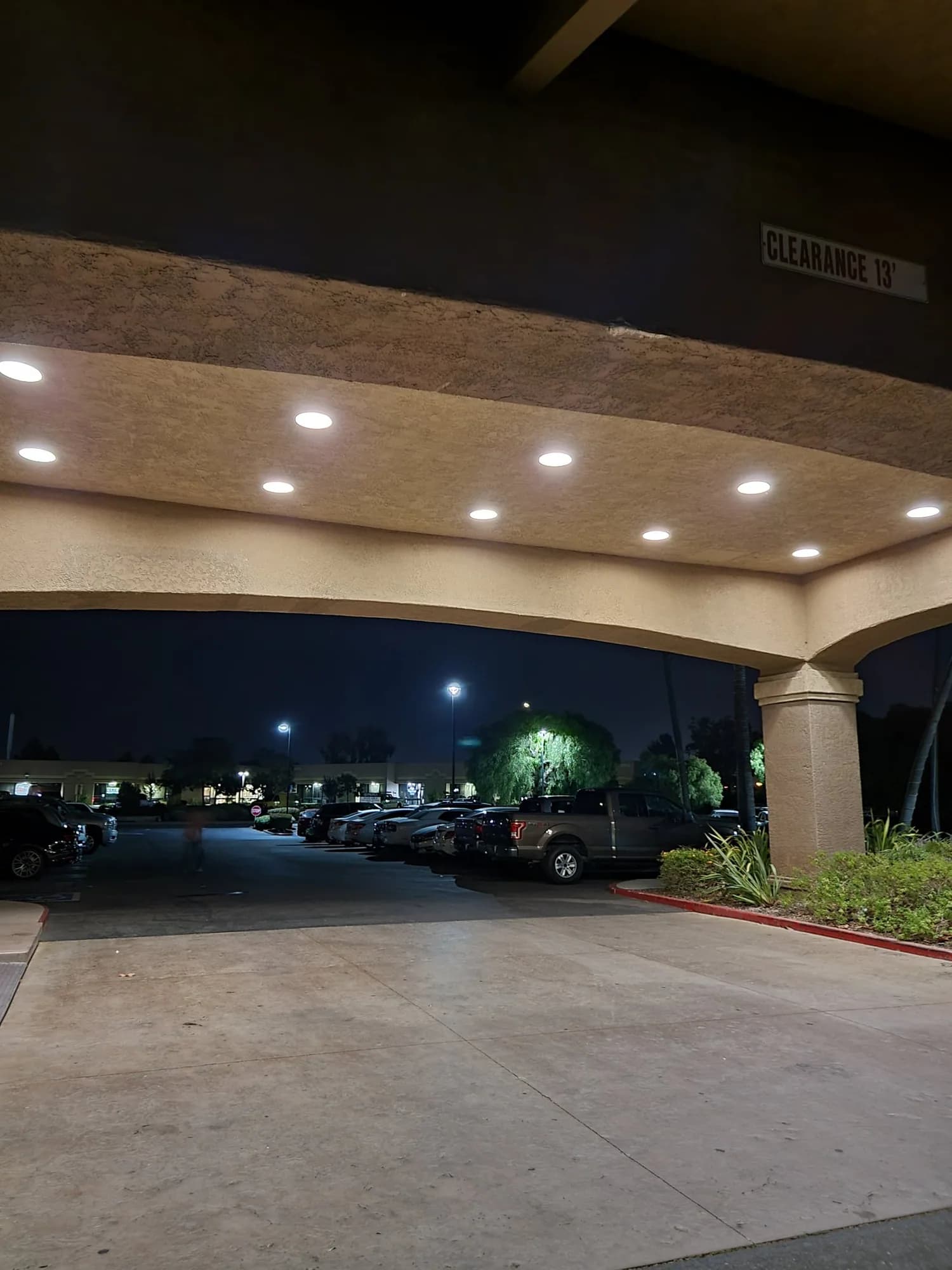
Eight DLC V6.0-listed LED downlights replacing legacy HID cans in a hotel covered-entry ceiling. Even photometric coverage at the 13' clearance height — no hot spots or dark zones along the entrance lane. Damp-location IC-rated cans installed under NFPA 70E energized-work discipline.

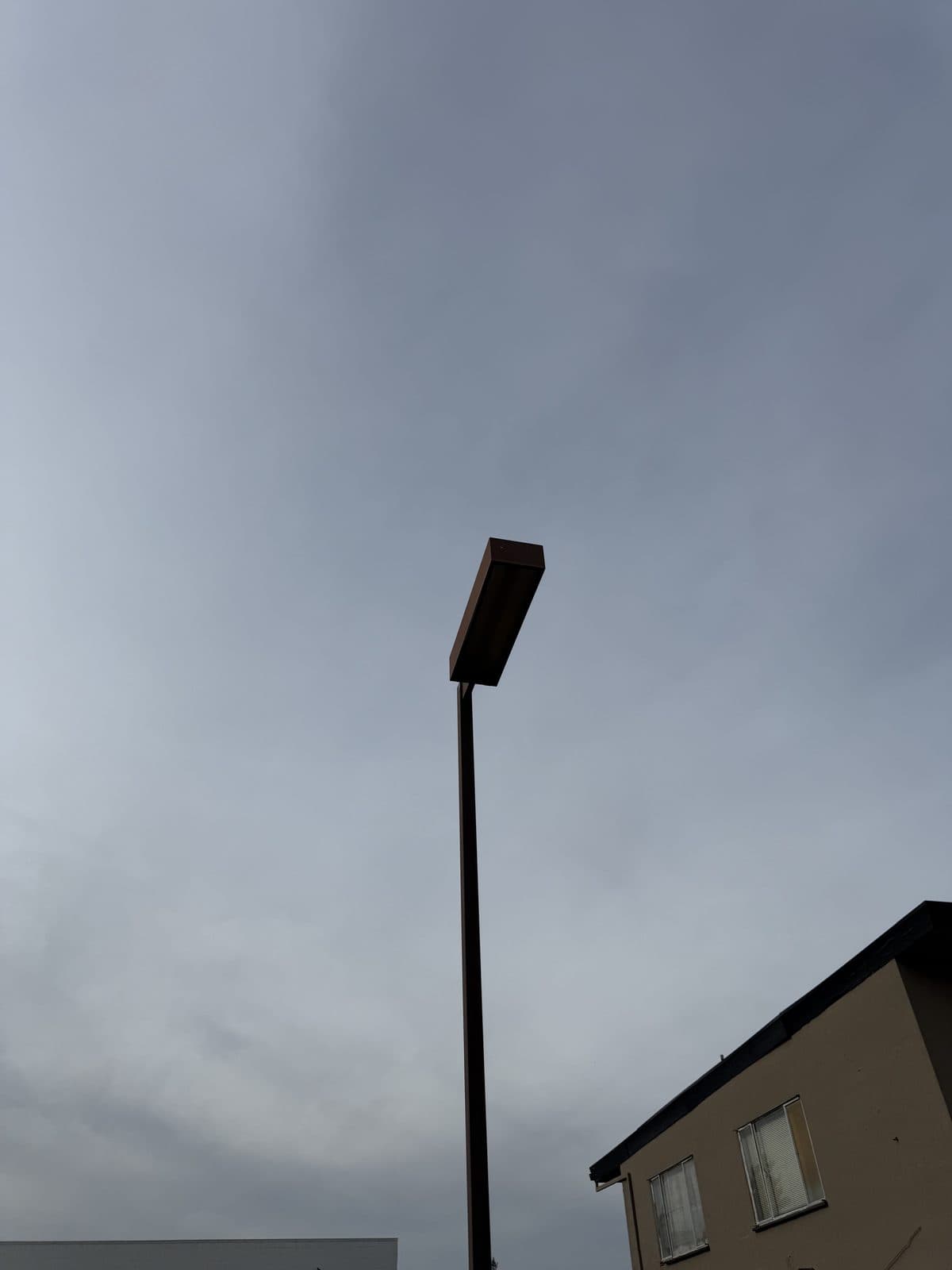
LED wall-pack replacement over a guest-entry walkway. Full-cutoff optics keep the light on the walking surface and off the upper guest-room windows. Type C external-driver retrofit kit with 0–10V dimming wired in for after-hours level reduction.

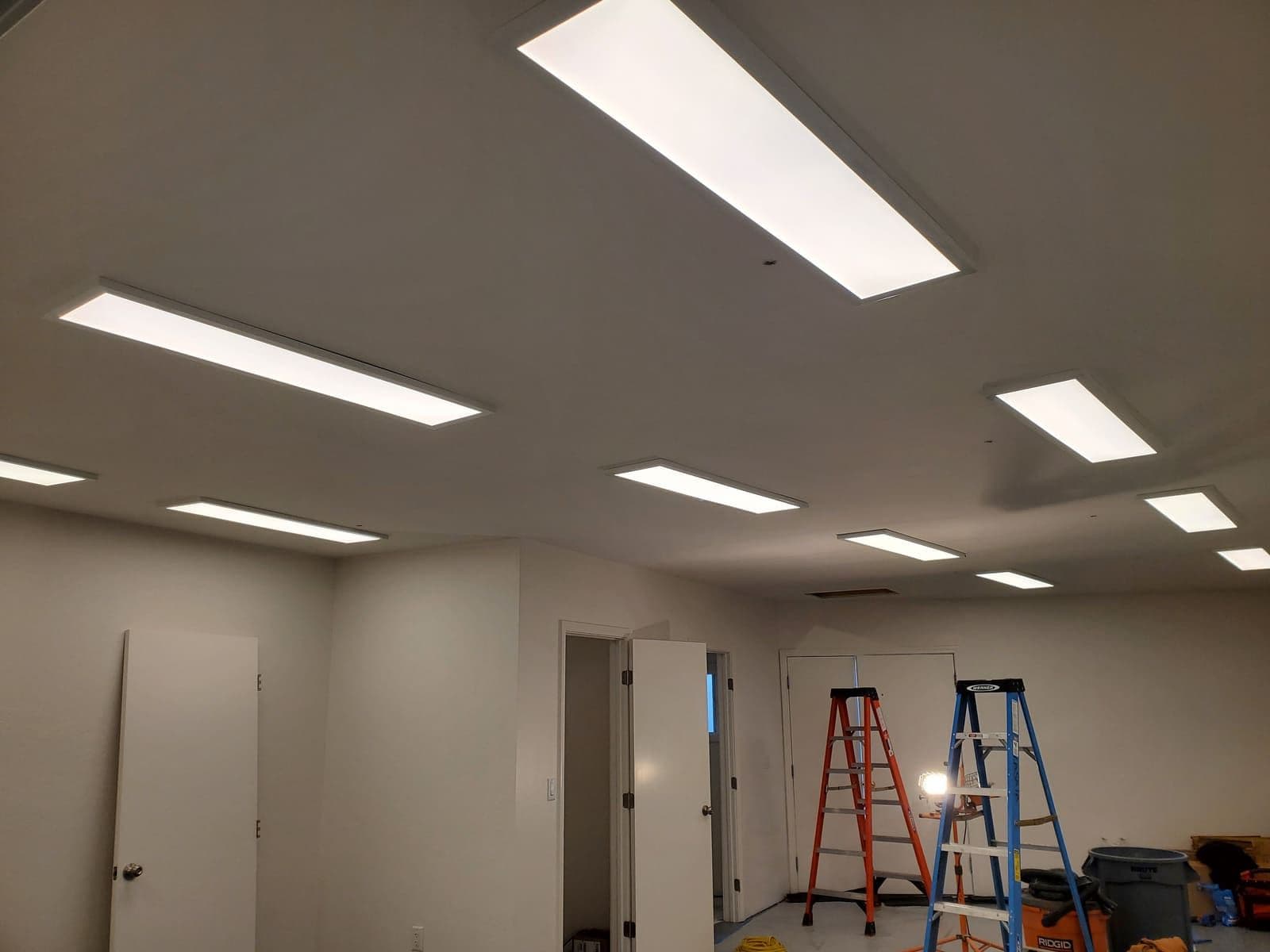
Mid-install: DLC V6.0-listed 2×2 LED troffer panels going into the existing ceiling grid, legacy T8 fluorescent fixtures already removed. Fluorescent tubes packaged for California Universal Waste handling; PCB-ballast manufacture dates verified pre-disposal.
What Customers Say
Reviewed by Real Santa Clara County Customers
Our team's commercial work is verified by Google reviews from property owners and facilities managers across the county. Read the live, unfiltered feedback on the Google Business Profile — and verify our C-10 license standing directly with the California State License Board.
Credentials
- →C-10 #1144031— California State License Board
- →DBE Certified— Disadvantaged Business Enterprise
- →Google Guaranteed— Local Services Ads verified
- →Fully insured + bonded
- →15+ years— owner trade experience
Frequently Asked Questions
Commercial LED Retrofit — FAQ
Does my LED retrofit project require a permit?+
It depends on scope. California's Title 24 retrofit trigger is at least 10% of luminaires within a single enclosed space, or 40 fixtures total across the project — whichever comes first. Above the trigger, lighting power density and controls must comply with current 2025 code and an electrical permit is required. Below the trigger, a straight like-for-like fixture replacement generally does not require a permit. However, any project that adds new circuit wiring, modifies a panel, or installs new networked controls requires an electrical permit regardless of fixture count. We make the permit determination as part of the site walk and the permit fee — typically $500–$1,000 depending on jurisdiction for retrofit-scope work — is rolled into the project quote.
What's the 2026 deadline pressure I keep hearing about?+
Four separate forcing functions converge in 2026. First, California AB 2208 already banned the sale of new fluorescent tubes statewide as of Jan 1, 2025 — replacement supply for legacy fluorescent fixtures is gone. Second, the Title 24 2025 code takes effect for permits submitted on or after Jan 1, 2026 — office LPD tightens from 0.75 to 0.65 W/sf and demand-responsive controls become mandatory in buildings over 10,000 sf. Third, the Federal Section 179D commercial-buildings deduction sunsets for projects whose construction begins after Jun 30, 2026 — that's the hardest, most-cite-able deadline on the calendar, worth up to $5.81/sf with Prevailing Wage + Apprenticeship met. Fourth, DLC SSL V6.0 became the active rebate standard Jan 5, 2026 and V5.1 products delist Dec 15, 2026 — multi-phase projects specified on V5.1-only product risk mid-cycle rebate disqualification. There is genuinely no better year to retrofit.
How long does a typical commercial LED retrofit take?+
From site walk to final rebate receipt, a small to mid project (one floor of office, one warehouse bay, one parking lot) runs 3 to 6 months. A larger multi-building or whole-campus retrofit runs 8 to 18 months. The long-pole items are SVP pre-approval (4–5 weeks before installation can start), permit plan-check (San Jose large projects 40+ weeks, San Jose expedited 10–12 weeks, other SCC cities 2–8 weeks), and final rebate paperwork (10–12 weeks from closeout to rebate check). The installation itself — actually swapping fixtures — usually runs 8 to 13 weeks for a full project and is phased to minimize tenant disruption.
Can I just swap LED tubes into my existing fixtures?+
Sometimes — but the right answer depends on fixture condition, controls requirements, and rebate eligibility. There are three LED-tube retrofit families. Type A plug-and-play tubes drop in on the existing ballast — fastest install, but the ballast must remain in good condition and be on the lamp manufacturer's compatibility list. When the ballast eventually fails, the LED tube fails with it. Type B ballast-bypass tubes remove the ballast and run line voltage directly to the tombstones — lowest material cost, but require permanent labeling at every fixture because the sockets are now line-voltage live. We install Type B under NFPA 70E energized-work discipline. Type C external-driver retrofit kits replace the ballast with a remote LED driver — best balance of energy savings, dimming range, and controls compatibility. We choose by return on investment and controls requirements, not by default — every project gets the analysis on the proposal.
What is networked lighting control and is it worth it?+
Networked lighting control (NLC) refers to fixtures and controls that communicate over a wired or wireless network, allowing occupancy-based dimming, daylight harvesting, scheduled scenes, and demand-response participation. The energy math is decisive — DesignLights Consortium data shows NLC adds roughly 49% additional savings on top of LED-only retrofits. Silicon Valley Power's Commercial Lighting Program offers an NLC bonus rebate (DLC-listed NLC product required). Title 24 2025 already mandates occupancy sensors in all office zones ≤600 sf and daylight harvesting in primary and secondary daylight zones — NLC is the cleanest way to satisfy those requirements while adding measurement and verification data your facilities team can use. On most office and warehouse retrofits over a few thousand square feet, NLC pays for itself inside the rebate cycle.
What happens to my old fluorescent tubes and ballasts?+
All fluorescent lamps and HID lamps are classified as California Universal Waste because of their mercury content. They cannot go in the trash and they cannot accumulate on site for more than one year. Our team packages, transports, and recycles them through a permitted Universal Waste handler, and we retain the recycling certificates for your LEED, ENERGY STAR, and corporate ESG documentation. Pre-1979 fixtures may contain PCB-bearing magnetic ballasts — these are regulated separately under California Title 22 Chapter 42 and must be disposed of through an approved PCB facility, never trash and never chemical-waste landfill. We test ballast manufacture dates during the audit, segregate suspect units on the install, and provide chain-of-custody documentation back to the building owner.
Start With the Site Walk
The fastest first step is a 1–3 day lighting audit. Bring your most recent electricity bill — the rate schedule plus the kWh history is the input to the rebate calculation.
Schedule a Lighting AuditGet In Touch
Commercial LED Retrofit Consultation
Include your facility address, approximate square footage, and most recent electricity bill if available. Our team will follow up to schedule the site walk and run the rebate calculation.
- →DLC V6.0 spec— rebate-protected through 2026
- →Pre-approval workflow— SVP, PG&E, CPAU handled
- →179D coordination— with your CPA or tax preparer
- →C-10 #1144031— licensed CA contractor
Commercial LED Retrofit
Four 2026 Deadlines. One Code-Compliant Retrofit Plan.
Commercial LED Retrofit Service Area — Santa Clara County (15 cities)