Commercial downtime is expensive. Get same-week scheduling: 408-614-4451

Infrastructure · Three-Phase Power

Three-Phase Power for Industrial and Commercial Equipment in Santa Clara County.
CNC, HVAC, Compressors — Wired Right.

Commercial HVAC systems, industrial CNC machines, air compressors, and large equipment motors require three-phase power that single-phase residential panels can't provide. We design, permit, and install three-phase service from the utility feed to the equipment disconnect.

208V / 480V
Common 3-phase voltages
C-10 #1144031
Licensed CA electrical contractor
Permit-required
All 3-phase installations
Load calc
NEC 220 before every quote
  • C-10 #1144031Licensed
  • Bonded& Insured
  • 15+ YearsExperience
  • Santa Clara CountyService Area

Single Phase vs Three Phase

Single Phase vs Three Phase — What's the Difference

ComparisonSingle PhaseThree Phase
Voltage options120V / 240V single phase208V / 480V three phase
Motor applicationsUnder 5 HP typical5–500+ HP — HVAC, CNC, compressors
Power efficiencyStandard — residential and light commercialHigher efficiency at large motor loads
Conductor count2 hot conductors + neutral + ground3 hot conductors + ground (no neutral on some)
Service availabilityUniversally available — residential and commercialUtility-provided at commercial/industrial meters
Panel typeStandard single-phase panelThree-phase panel — different breaker format
Permit complexityStandard electrical permitCommercial electrical permit + utility coordination

Before We Quote

  • Equipment nameplate— voltage, phase, FLA reviewed
  • Utility availability— confirmed at your address
  • NEC 220 load calc— existing service capacity assessed
  • Written quote— permit and utility coordination included

Installation Process

Three-Phase Installation — From Nameplate to Commissioning

Every three-phase installation starts with the equipment nameplate, not a generic circuit size. Motor FLA, voltage, and startup characteristics determine the design.

01
Equipment Nameplate Review
Motor FLA, voltage, and phase requirements reviewed. Existing service capacity assessed. Scope defined.
02
Design & Permit
Circuit design per NEC 430/440. Permit filed with city and utility coordination initiated where needed.
03
Installation
Panel, conduit, wire, disconnects installed per design. Utility coordination completed if new 3-phase service.
04
Inspection & Commissioning
City inspection completed. Equipment energized and tested. Documentation delivered.

Three-Phase Pricing Ranges

Three-phase disconnect and circuit — single equipment$1,500 – $4,000
Three-phase panel addition / subpanel$3,000 – $8,000
Three-phase service upgrade (new utility meter)$5,000 – $15,000+
Motor circuit — per motor (under 50 HP)$800 – $2,500
HVAC 3-phase disconnect and circuit$1,200 – $3,500
Permit and utility coordinationIncluded in project scope

Written quote after nameplate review and load calculation.

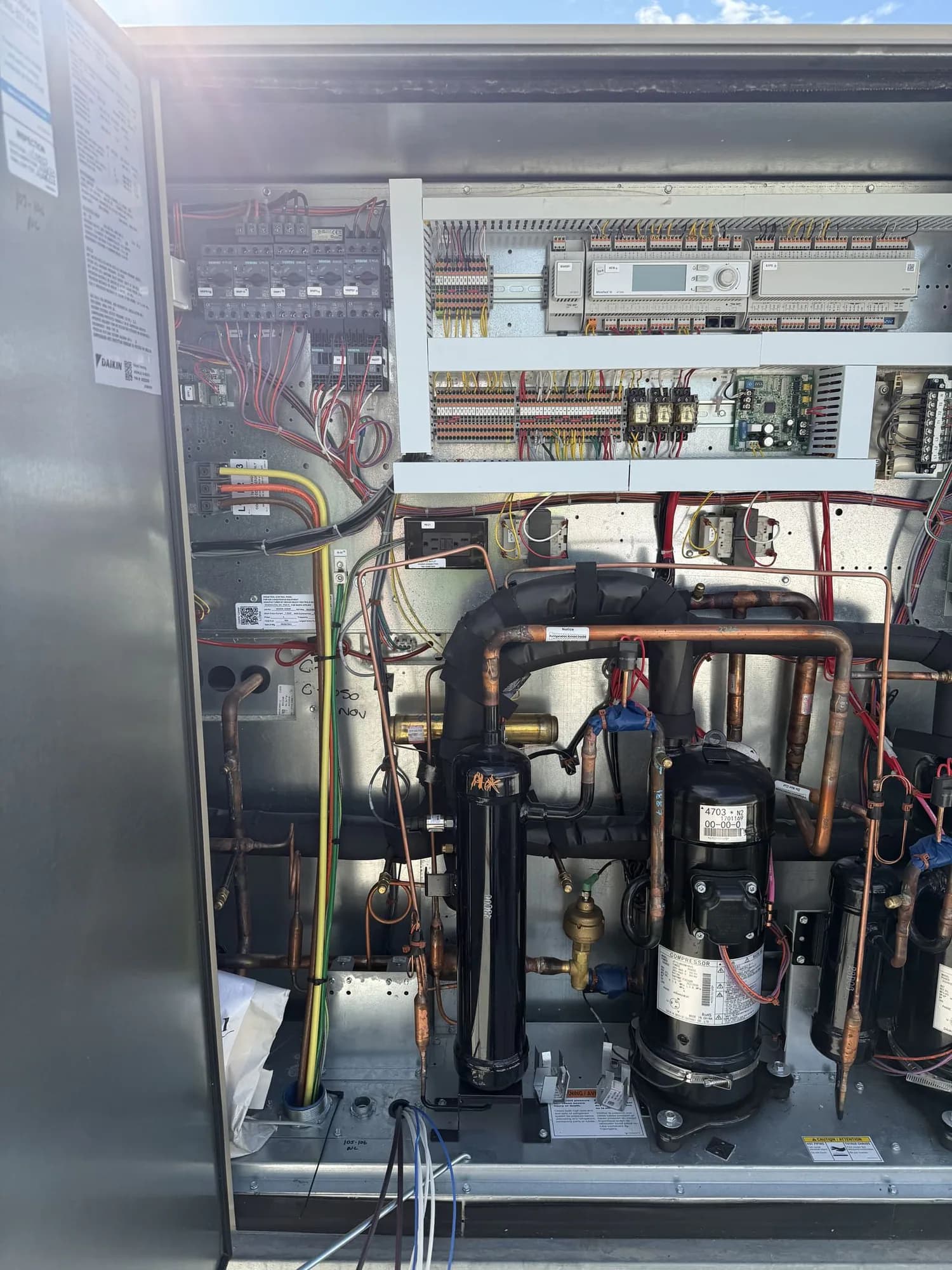
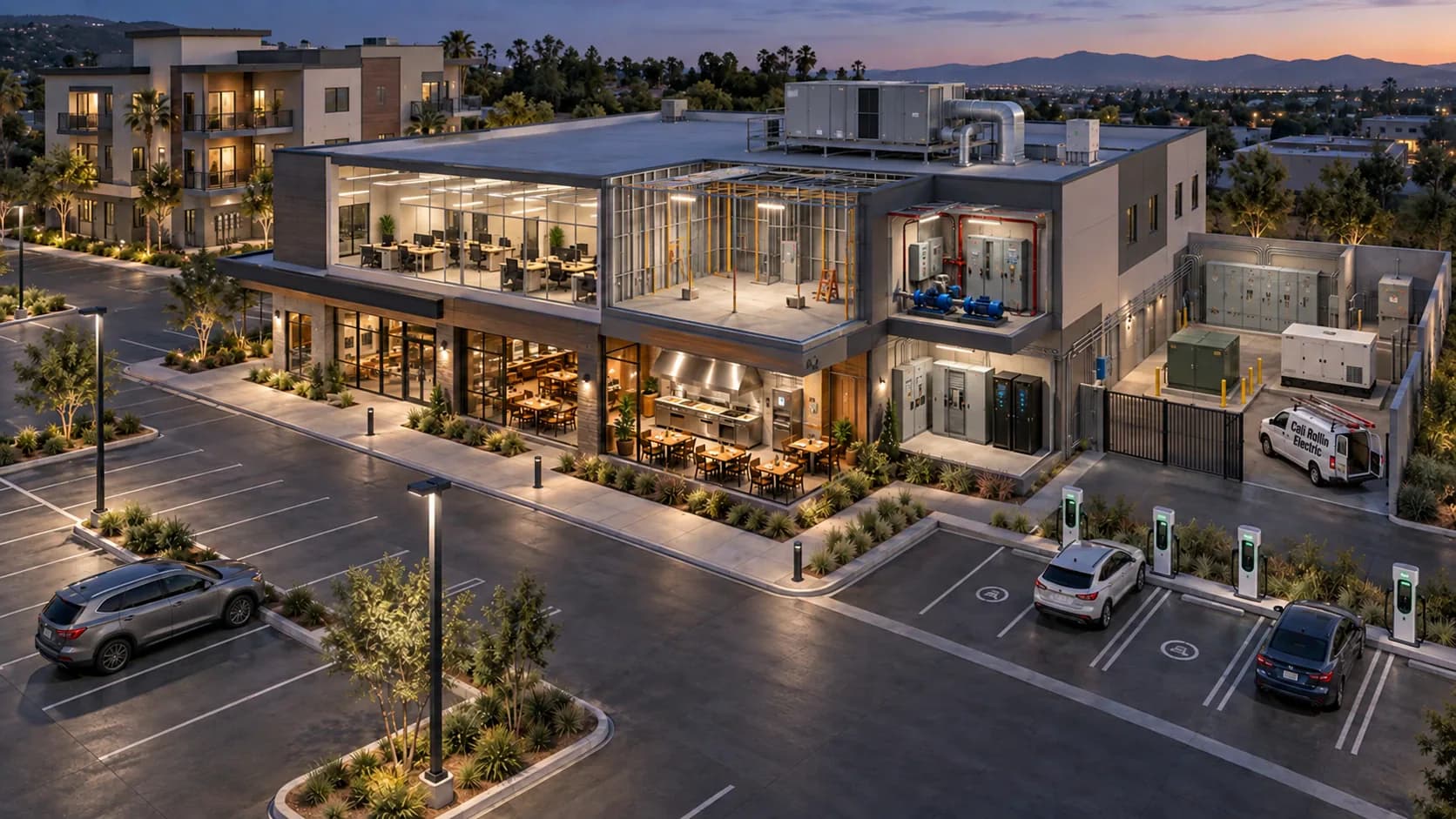
Three-phase electrical installation
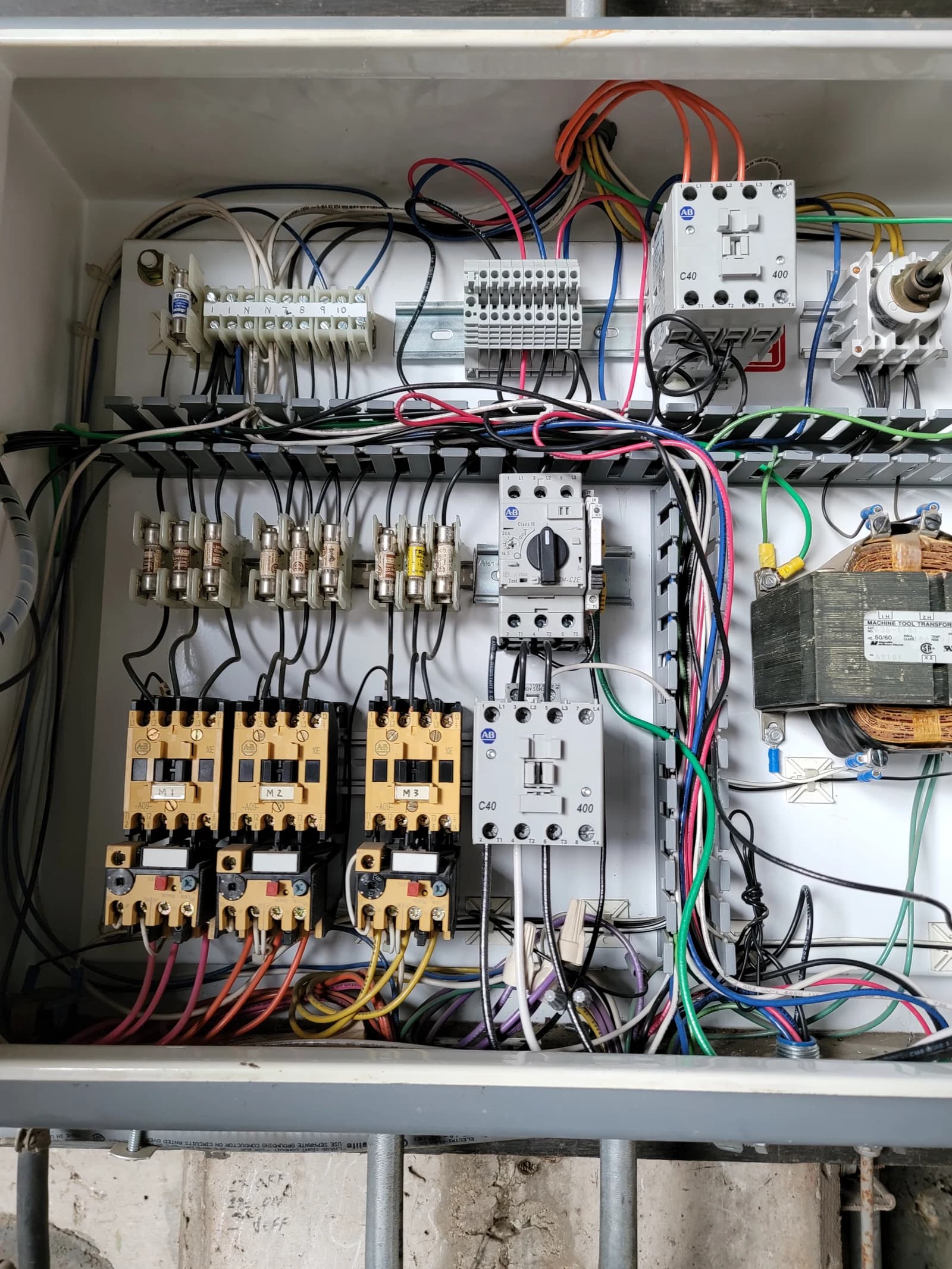
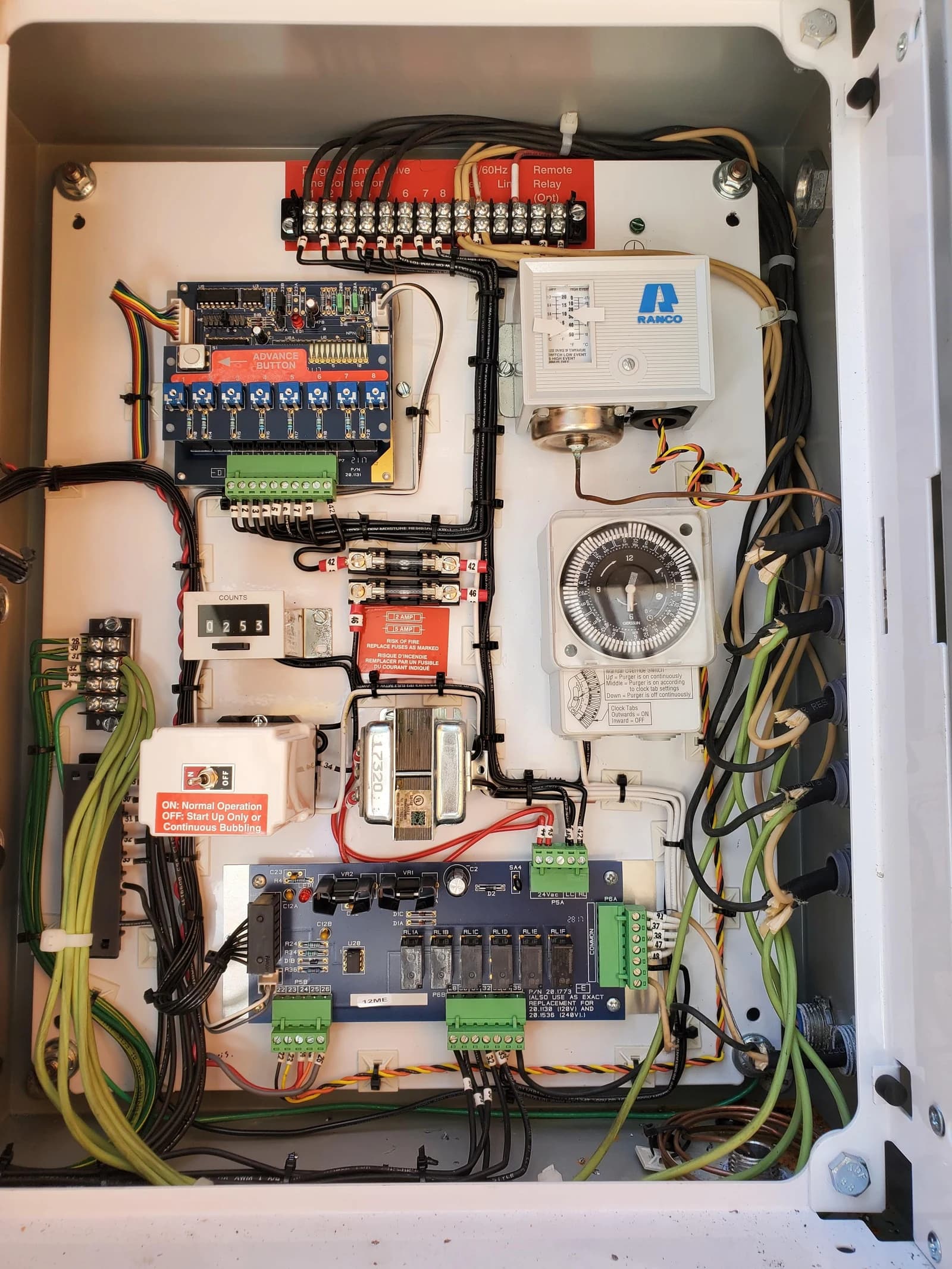
Three-phase panel work on a commercial project
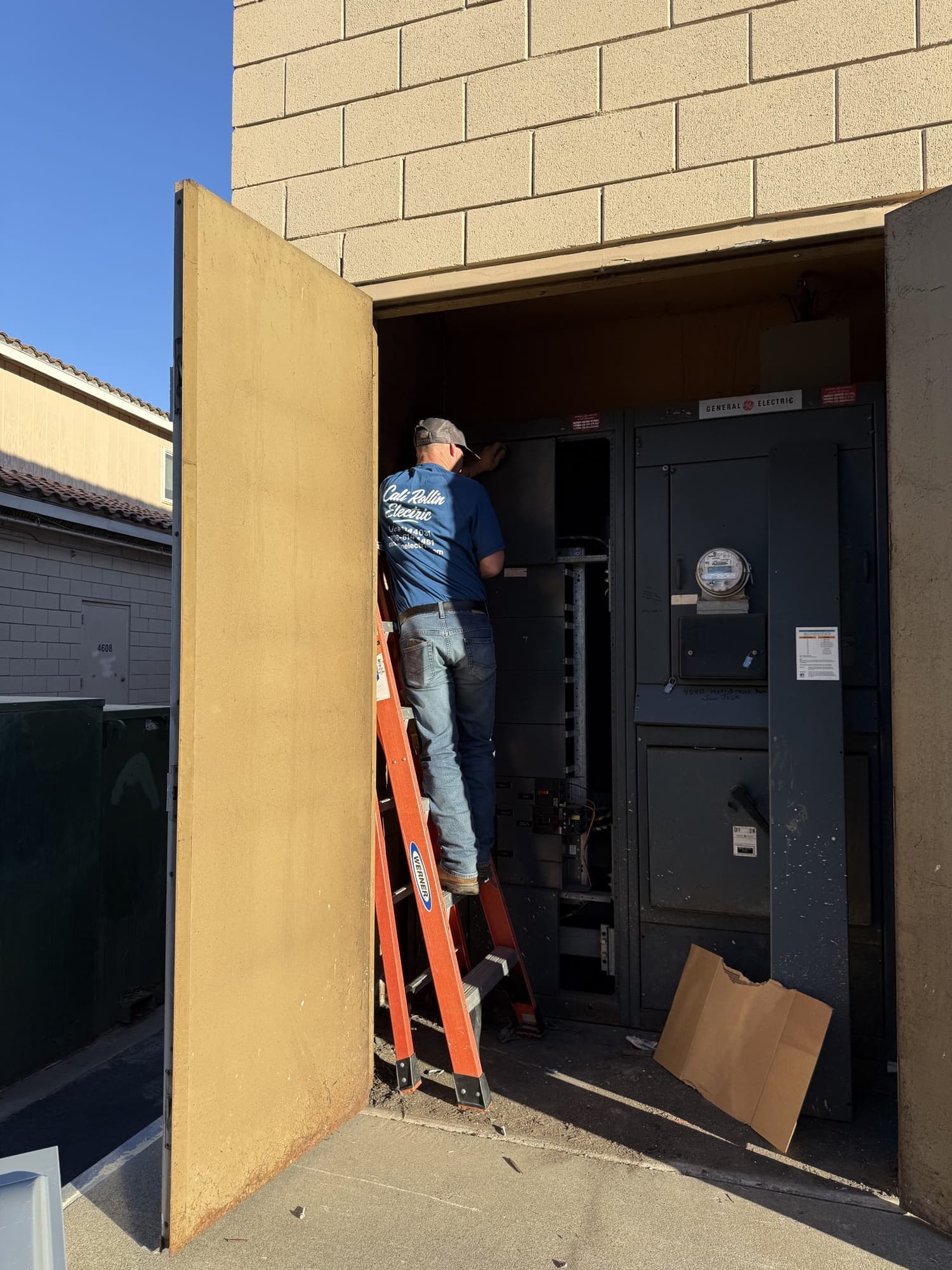
Three-phase service equipment installed and energized

Why Cali Rollin Electric

Three-Phase Work Done to NEC Standard

Three-phase electrical installations for industrial and commercial equipment require proper motor circuit design, utility coordination, and permit management. An undersized conductor or improperly set overload protection is a failed inspection — and a safety risk.

C-10 #1144031. NEC 430 compliant. Every installation permitted. 408-614-4451.

Utility coordination included
3-phase service upgrades require PG&E / SVP / CPAU coordination — we handle it.
NEC 430 motor circuit compliance
Motor circuits designed and installed per NEC Article 430 — properly sized for FLA and startup.
HVAC and mechanical coordination
3-phase HVAC disconnect circuits sequenced with mechanical installation schedule.
Load calculation before quoting
NEC 220 demand calculation performed — no undersized panels on delivery day.
Permit on every installation
All 3-phase work requires permits. Filed and inspected on every project.
12 SCC cities
San Jose, Santa Clara, Sunnyvale, Palo Alto, Cupertino, and more.

Frequently Asked Questions

Three-Phase Electrical — FAQ

How do I know if my facility needs three-phase power?+

Three-phase power is necessary when your equipment demands exceed what single-phase can efficiently deliver. The clearest signals: any 3-phase motor-driven equipment is specified on the nameplate — CNC machines, industrial lathes, compressors, commercial HVAC chillers, and elevator systems all typically require 3-phase. Your equipment specifications list 208V 3-phase or 480V 3-phase. You are experiencing voltage sag and flickering when large motors start, breakers tripping repeatedly under normal production loads, or motors running hot or underperforming. The fastest field check: open the main electrical panel — a 2-pole main breaker means single-phase, a 3-pole main breaker means three-phase. If you measure 208V or 480V between hot conductors, you have 3-phase.

Is three-phase power available at my San Jose location?+

In most industrial, commercial, and mixed-use zones of San Jose — yes, 3-phase power is either already present or readily available from PG&E. To confirm availability at your address, contact PG&E Building and Renovation Service Center at 1-877-743-7782 or visit pge.com and ask specifically whether 3-phase infrastructure is present at your property address. You can also check the utility transformer near your building — a 3-phase transformer will have three bushings on the primary side. Cali Rollin Electric verifies what is at the street during the site assessment before designing any service upgrade. If 3-phase is not at the property line, PG&E must extend distribution infrastructure to reach your site — costs and timelines vary significantly depending on distance.

What is the difference between 208V and 480V three-phase?+

Both are three-phase systems but serve different applications. 208V 3-phase is a Wye configuration with 208V line-to-line and 120V phase-to-neutral — common in light commercial, office TIs, retail, restaurants, and small industrial. It is adequate for motors up to about 25 HP. 480V 3-phase is also a Wye configuration with 480V line-to-line and 277V phase-to-neutral — standard for heavy industrial, manufacturing, data centers, and large HVAC. It is optimal for motors 25 HP and above and allows smaller conductors for the same power delivery over long runs. The practical rule: if your equipment nameplates say 208V or 240V a 208V service is sufficient. If equipment calls for 460V or 480V you need a 480V system. Most small to mid manufacturing shops in San Jose operate on 208V 3-phase and do fine.

How much does a three-phase electrical installation cost?+

Cali Rollin Electric pricing for three-phase electrical work in Santa Clara County: a three-phase disconnect and circuit for single equipment runs $1,500–$4,000. A three-phase panel addition or subpanel runs $3,000–$8,000. A three-phase service upgrade with a new utility meter runs $5,000–$15,000 or more. Motor circuit installation per motor under 50 HP runs $800–$2,500. HVAC 3-phase disconnect and circuit runs $1,200–$3,500. Permit and utility coordination is included in all project scopes. If 3-phase service must be extended from the street, costs increase significantly — overhead extensions can run $10,000–$20,000 and underground extensions with trenching can reach $30,000–$100,000 or more depending on distance.

Do I need a permit for three-phase electrical work?+

Yes — without exception. Every aspect of a 3-phase electrical installation requires permits in San Jose. An electrical permit from the San José Building Division is required for all panel, switchgear, feeder, and branch circuit work. A PG&E service request must be filed and approved before PG&E will connect or modify utility service. For any service over 200A or any voltage or phase change, PG&E requires a formal load application and service engineering review. For 480V systems, NFPA 70E arc flash hazard labeling is also required on all distribution equipment before the system is energized. Cali Rollin Electric handles the full permit package, PG&E service request submission, and arc flash documentation. Permit and utility coordination is included in all project scopes.

Can you handle three-phase work for CNC machines?+

Yes — this is firmly within Cali Rollin Electric scope. For a CNC machine installation we handle site assessment to confirm available service voltage and phase and review equipment specifications, load calculation accounting for motor inrush current typically five to seven times running current on startup, dedicated 3-phase circuit installation from the distribution panel to the machine with a disconnect within sight of the machine per NEC 430.102, soft starter or VFD coordination if the machine manufacturer recommends one to reduce inrush and protect the machine, final terminations at the machine connection box including proper grounding and bonding for EMI-sensitive CNC control systems, and load balancing verification across the panel after the new machine is connected to prevent voltage imbalance that causes motor heating and control errors.

Start With the Nameplate

Gather your equipment nameplate specs before calling — voltage, phase, HP, and FLA. We design the circuit from the nameplate, not a guess.

Schedule a Consultation

Get In Touch

Three-Phase Consultation Request

Include your equipment nameplate information if available — voltage, HP, phase, and FLA. We'll follow up to schedule a site visit and load calculation.

  • Nameplate review— circuit designed to FLA
  • Utility coordination— PG&E / SVP / CPAU handled
  • C-10 #1144031— licensed CA contractor
Loading form…

Three-Phase Electrical Service Area — Santa Clara County

San JoseSanta ClaraSunnyvaleMountain ViewPalo AltoCupertinoLos GatosSaratogaCampbellMilpitasLos AltosLos Altos Hills