San Jose electrician for commercial buildings.
Built for business owners, property managers, facility teams, and general contractors with buildings in San Jose.
Built for business owners, property managers, facility teams, and general contractors with buildings in San Jose.
San Jose buildings, services, and utilities
Built for business owners, property managers, facility teams, and general contractors with buildings in San Jose. Tenant improvements, service and switchgear upgrades, three-phase distribution, restaurant and kitchen power, and emergency response, all planned around the hours your building actually operates.
Quick answer
Cali Rollin Electric is a commercial electrical contractor working across San Jose, from the North San Jose and Golden Triangle R&D and flex corridor to Downtown mixed-use, the Monterey Road and Edenvale industrial band, the Alviso north industrial edge, and the retail and restaurant corridors. The work is tenant improvement, service and switchgear capacity, 208V and 480V three-phase distribution, kitchen and refrigeration power, lighting, and emergency response. Permits run through the City of San José Building Division inside city limits and through Santa Clara County in an unincorporated pocket, and our team confirms which one applies before anything is submitted. PG&E owns the wires and the meter, San José Clean Energy supplies the generation for enrolled accounts, and the disruptive part of the job is scheduled against the hours your tenants are actually open.Call (408) 614-4451Send your plan setWork on your own home instead? Jump to residential services.
Electrical services.
Choose the work you have in mind.
Commercial service and panel upgrades
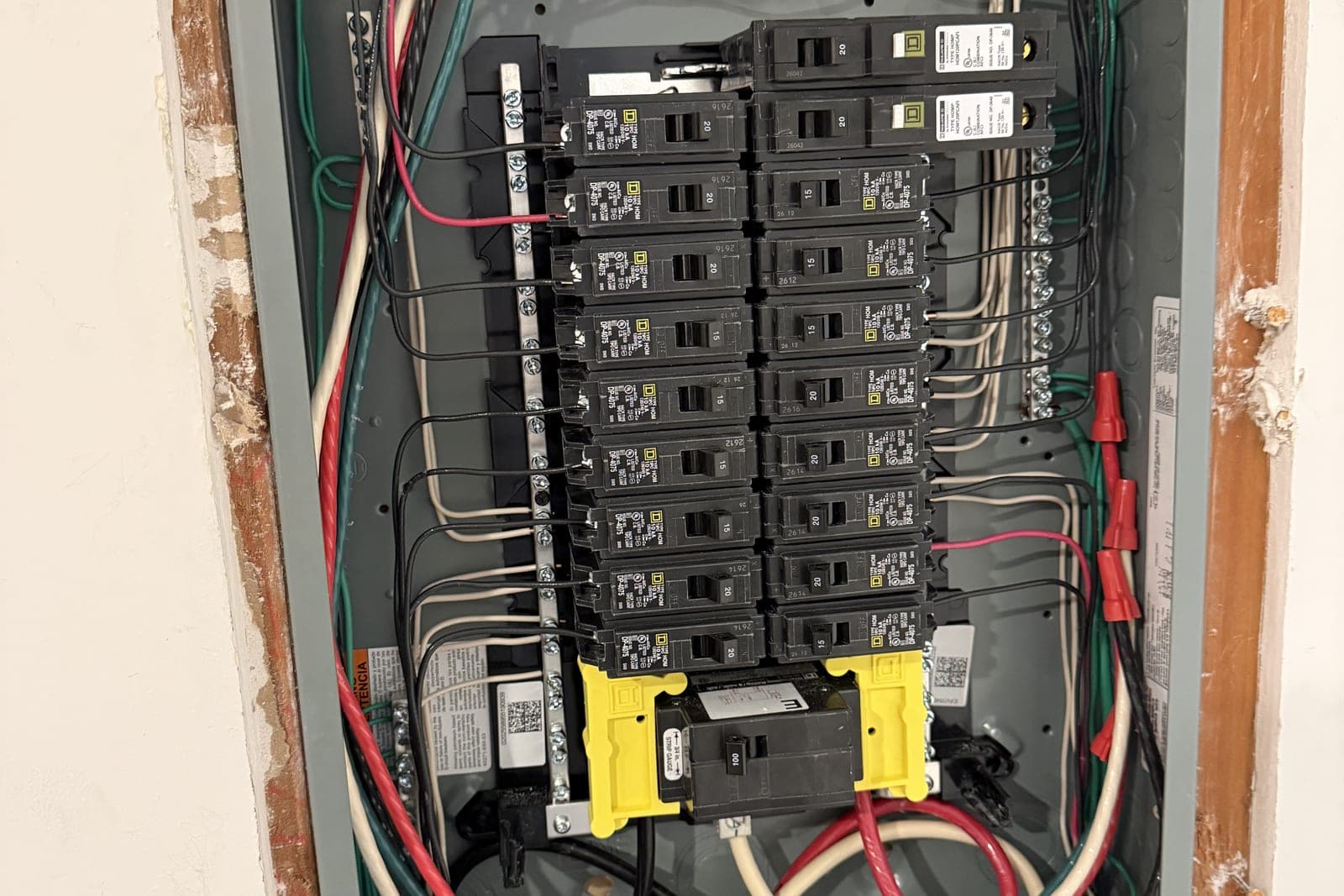
The first generation of North San Jose tilt-ups and the older Monterey Road strip retail commonly run out of service capacity long before they run out of building. This is the upstream scope when the switchgear, not the branch wiring, is the limit.
Explore this servicePhotography from our electrical projects.See all San Jose electrical services
Commercial work, sorted by the building that calls for it
Each card goes to the page that owns the scope detail. The description here is what tends to drive that call in San Jose specifically, so you can find your building before you read a service description.
Commercial service and panel upgrades
The first generation of North San Jose tilt-ups and the older Monterey Road strip retail commonly run out of service capacity long before they run out of building. This is the upstream scope when the switchgear, not the branch wiring, is the limit.
Tenant improvement electrical
Suite turnover in Downtown office and North San Jose flex space, where the incoming tenant equipment list almost never matches the panel the last tenant left behind.
Three-phase electrical
Warehouse and R&D buildings in Edenvale, North San Jose, and the Alviso industrial edge typically run 277/480V, while Downtown mixed-use and small retail typically run 120/208V. Feeders, transformers, and motor connections get sized to the service you actually have.
Restaurant and commercial kitchen
Hood and make-up air loads, walk-in refrigeration, and dedicated equipment circuits on the Alum Rock, Story Road, Japantown, and Lincoln Avenue corridors, usually inside a storefront that was never wired for a kitchen.
Commercial LED retrofit
High-bay warehouse lighting in the south and north industrial ends of the city, plus garage and back-of-house lighting in older Downtown buildings.
Parking lot and site lighting
Pole bases, feeders, photocell and time control for office campus lots off North First Street, retail centers, and industrial yards out on the Alviso flats.
Multifamily and apartment electrical
House panels, meter stacks, common-area circuits, and unit turnovers in Downtown and Berryessa apartment stock, scheduled so residents are not sitting in the dark.
Emergency commercial electrician
A tripped main, failed gear, or a dark suite in the middle of a business day. Response is the same across the city whether the building is Downtown or out on the Monterey Road corridor.
Generator and temporary power
Standby power for buildings that cannot absorb an unplanned outage, and temporary power for construction phases where the permanent service is not energized yet.
Commercial EV fleet charging
Depot and workplace charging at North San Jose campuses and logistics yards, where the real question is what the building service can carry, not what fits in the parking stall.
Commercial electrical maintenance
Scheduled maintenance and infrared thermography for San Jose facility teams who would rather find a failing connection on a Tuesday morning than during a shift.
Looking for the full commercial service list rather than the San Jose view? Start at the commercial hub.
A closer look.
Our electrical work.
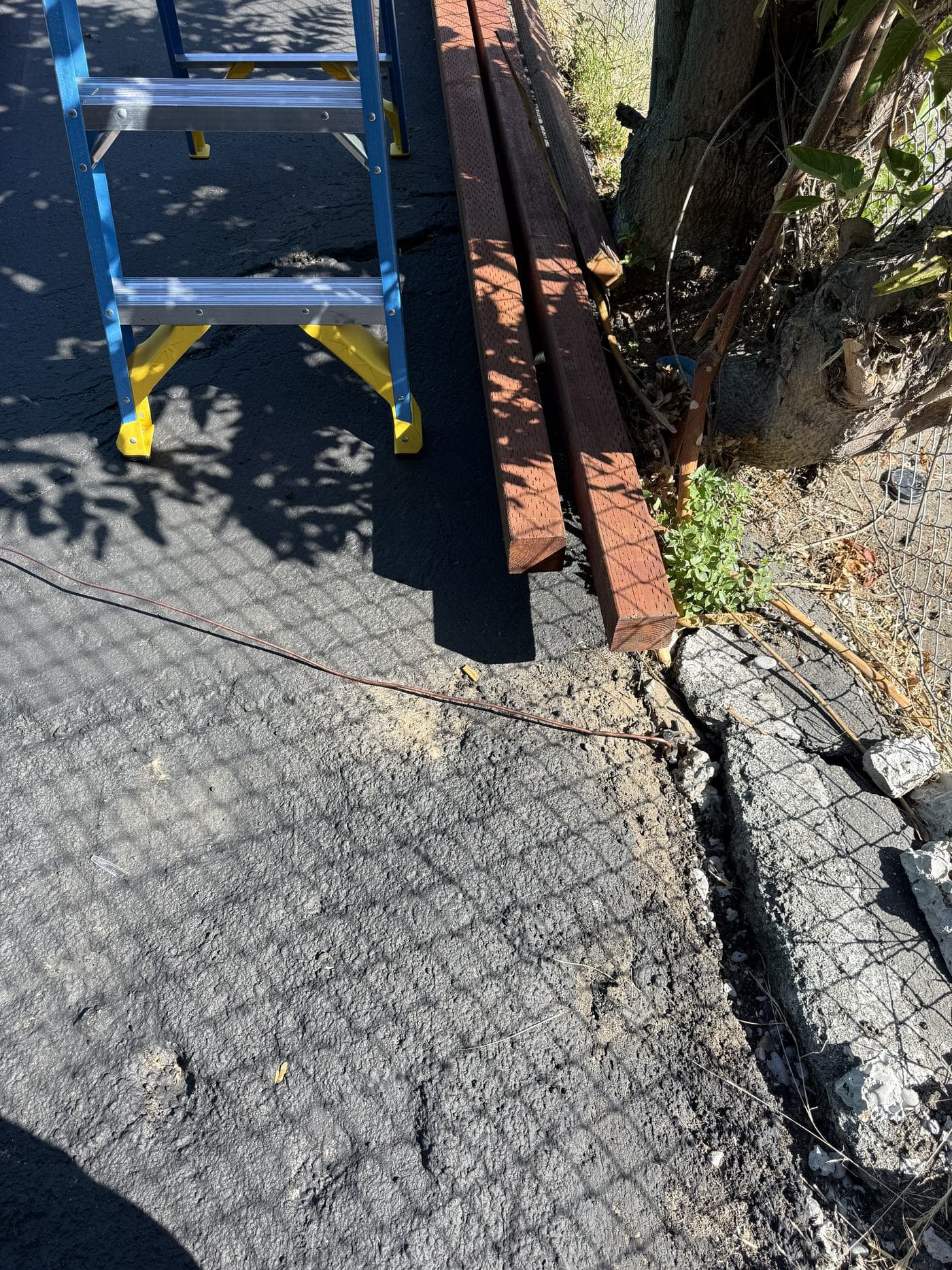
Grounding electrode work beside temporary power equipment
About these projects
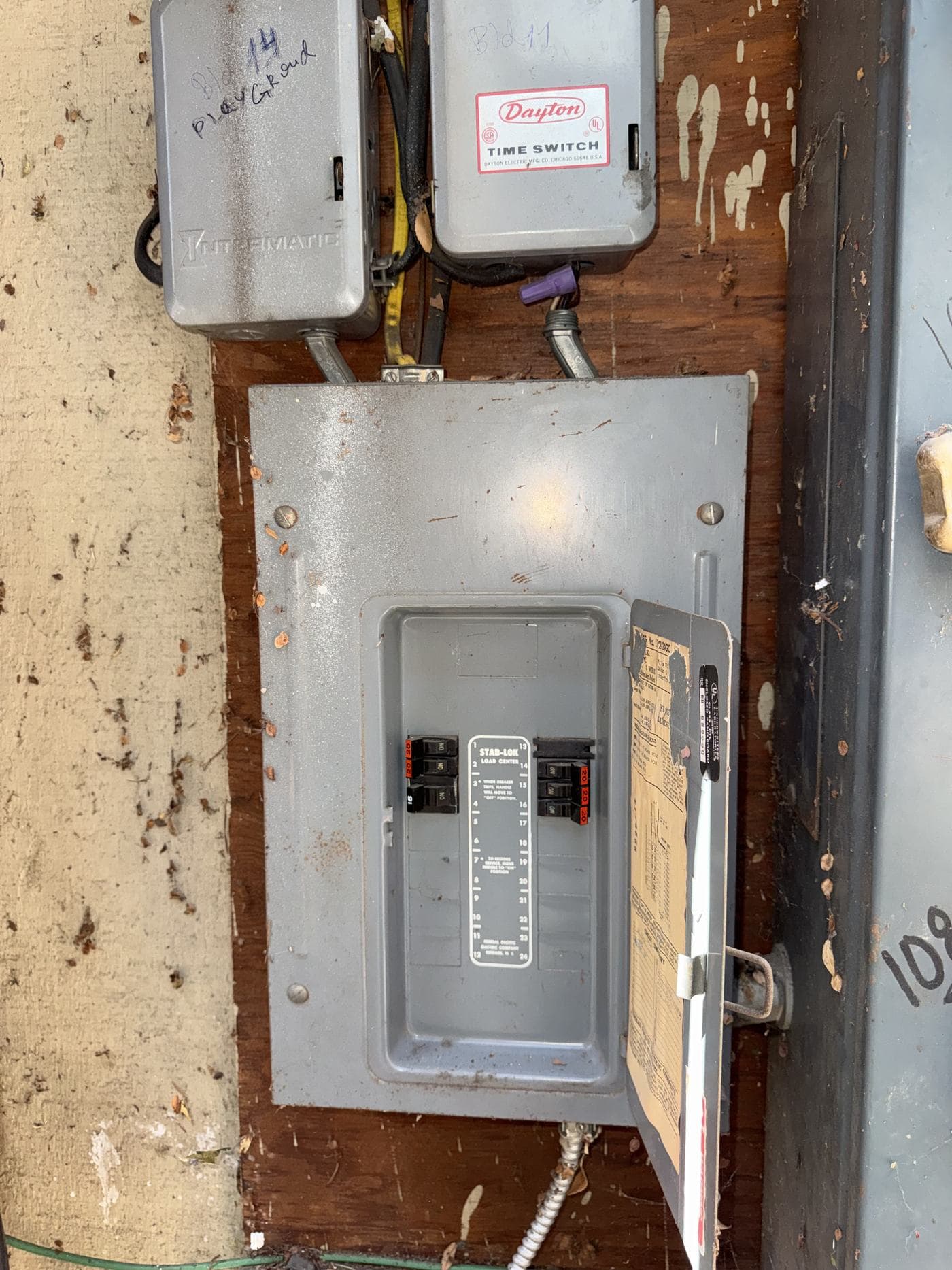
Three electrical projects from our field archive: grounding electrode work, service conductors inside exterior equipment, and an EV charger installation.
Planning your project.
Permits, coordination, and your operating hours.
Who has jurisdiction over your building, and who owns the meter
Two questions decide how a San Jose commercial job gets permitted and energized, and both get answered before anything is filed. The first is jurisdiction. Inside city limits the City of San José Building Division is the Authority Having Jurisdiction. A property in one of the unincorporated pockets in and around the city is permitted and inspected by Santa Clara County instead, even where the mailing address reads San Jose. Filing in the wrong office costs time nobody has.
The second is the review path. SJPermits.org is the City online permit portal, and its table lists which scopes a commercial or industrial building can file there. For electrical, that list is three items: receptacle and switch replacement, a service change or survey up to 400 amps, and a temporary power pole. The City qualifies the service change entry as like-for-like replacement in the same location with no alterations to exterior finishes. Every other electrical scope on that table is marked as not available online for commercial and industrial, and the City direction for those is to submit plans through Standard Plan Review. So anything that adds load, relocates gear, or builds out a suite means a plan submission, a review step, and a schedule that accounts for both. We do not quote a review duration, because it varies with jurisdiction, scope, and how complete the package is. We put the review step into the schedule at the start and tell you early if it moves.
Where a permit fee is carried as a cost line, it is carried as a range, $500 to $1,000 depending on jurisdiction, rather than a flat number, and larger commercial permits are billed by the jurisdiction on its own basis and passed through with documentation.
San Jose jurisdiction and utility split
Inside San Jose city limitsThe City of San José Building Division is the Authority Having Jurisdiction. Our team files the electrical permit with the City and the City sends the inspector.Unincorporated pocketA property in an unincorporated pocket surrounded by the city is permitted and inspected by Santa Clara County instead, not by San Jose. Confirming this before submission avoids a filing in the wrong office.Physical electrical infrastructurePG&E owns the poles, wires, transformer, meter, and the service entrance connection. Service and meter coordination, including any disconnect and reconnect, is with PG&E.Generation supplySan José Clean Energy is the city community choice aggregator and, by default, supplies the generation portion of the bill for enrolled accounts, shown as a line item on the same PG&E bill. It is not involved in hookup or meter work.Working in an occupied building
How the work gets sequenced so San Jose stays open
Almost every commercial building our team works in is running while we are in it. A restaurant is serving, a warehouse is shipping, an office floor is occupied, and tenants are on leases that do not include an unannounced dark afternoon. The outage plan is the deliverable as much as the wire is.
The general rules our crew works to on any commercial job, outage planning, phased cutovers, temporary power, and energized-work practice, are set out on the commercial hub. This section is what changes about them inside San Jose.
Keeping your building running
How the work is coordinated
How the work gets sequenced so San Jose stays open
Almost every commercial building our team works in is running while we are in it. A restaurant is serving, a warehouse is shipping, an office floor is occupied, and tenants are on leases that do not include an unannounced dark afternoon. The outage plan is the deliverable as much as the wire is.
The general rules our crew works to on any commercial job, outage planning, phased cutovers, temporary power, and energized-work practice, are set out on the commercial hub. This section is what changes about them inside San Jose.
The panel labels get verified before a window is promised
A Downtown suite may be fed from a house panel in a room reached through an alley or a shared vault, and a multi-tenant North San Jose flex building can have one panel feeding more suites than the door schedule suggests. Our team traces what each panel actually feeds first, so the tenants who will go dark are the ones who were told they would.
The window matches the corridor your building sits on
A restaurant on Alum Rock or Story Road, a Downtown storefront, and a multi-shift warehouse off Monterey Road each have a different cheapest hour to lose power, and none of them is the same hour. We set the disruptive tie-in against your operating pattern and carry it in the written scope up front instead of adding it later as a change. Where nothing can be de-energized at all, what stays live is documented in advance and worked under NFPA 70E practice, which is covered on the commercial hub.
PG&E scheduling is part of the window, not a footnote
Anything reaching the meter, the service entrance, or the utility side of a San Jose building needs the PG&E disconnect and reconnect lined up with our crew and with the City or County inspection that has to clear before the building comes back. Those are three separate calendars and we sequence them together. We do not promise a utility date we do not control.
Downtown access is arranged, not discovered on the night
Curb frontage, alley approach, freight elevator hours, and after-hours building access in Downtown San Jose belong to the property manager, not to us. Access and staging get confirmed while the window is being set, because a crew that cannot get gear to the electrical room at 10pm on a Saturday has lost the window and the tenants were notified for nothing.
Working across San Jose.
The building stock decides the electrical work
San Jose is not one commercial market. A tilt-up in the Golden Triangle, a Downtown storefront with an upstairs office, a warehouse off Monterey Road, and a distribution building out toward Alviso have different services, different voltages, different tenant turnover, and different problems. This is what the building stock in each looks like.
North San Jose and the Golden Triangle
R&D, flex, and campus office
The corridor along North First Street and out toward Zanker and Trimble is tilt-up R&D and flex space, much of it built for one occupant and re-leased several times since. Services here usually run 277/480V stepped down for 120/208V convenience loads, and the electrical rooms are often shared. The work that comes out of this district is tenant improvement, added capacity for lab and process equipment, rooftop unit connections, and workplace EV charging that lands on a service already carrying a full building.
Downtown San Jose
Older mixed-use, small office, ground-floor retail
Downtown is the oldest commercial stock in the city and the most mixed. Small office over ground-floor retail, upper floors that have changed use more than once, and a steady interest in converting underused office space to residential. Services are often older, sometimes reached through an alley or a shared vault, and curb and street access is tight enough that material staging has to be planned. Expect house panels and meter stacks that were not laid out for the current tenant mix, and expect the disruptive part of the work to happen at night.
Monterey Road corridor and Edenvale
Light industrial, warehouse, older strip retail
South of Downtown the building stock turns industrial: warehouse and light manufacturing along the Monterey Road corridor and into Edenvale, mixed with older strip retail on the frontage. Three-phase distribution, high-bay lighting, compressed air and material handling loads, and yard lighting are the usual scope. Buildings in this band are old enough that the gear is frequently past its useful life while the tenant is very much still using it, which makes phased replacement the practical answer rather than a single shutdown.
Alviso and the north industrial edge
Industrial and yard-heavy sites
At the far north end of the city, out past the North San Jose campuses and toward the bay, the parcels turn industrial: larger footprints, dock doors, yard and site lighting, and racking that dictates where fixtures and circuits can go. Alviso sits low and close to the bay, so outdoor gear, site poles, and yard equipment see a harder environment than the same equipment inland, which makes corrosion at enclosures and pole bases worth inspecting rather than assuming.
Retail and restaurant corridors
Storefront retail, restaurants, and small service tenants
Alum Rock Avenue, Story Road, Japantown, and Lincoln Avenue in Willow Glen carry the small-tenant retail and restaurant stock. Tenant turnover is fast, and the electrical reality is that a storefront built for retail is regularly re-leased to a restaurant. That means hood and make-up air, walk-in refrigeration, and a set of dedicated equipment circuits landing on a panel that was sized for lights, a register, and a couple of receptacles. The capacity question gets answered before the lease, or it gets answered during construction at a much worse moment.
Cali Rollin Electric.
What a San Jose facility team gets from our crew
Bidding a project and need the prequalification paperwork first? The capabilities and prequal package is here.
We identify the right AHJ first
City of San José or Santa Clara County, confirmed against where the building actually sits before anything is submitted.
Capacity is checked against the building you actually have
A North San Jose flex suite that has turned over three tenants and a Downtown storefront on an older shared service hide their capacity problems in different places. The existing service, switchgear, and feeder get assessed against your real equipment list before the scope is set, because if the building cannot carry the load that is a landlord conversation and it belongs before construction.
The written scope carries the San Jose milestones
Scope, exclusions, the City or County submission and inspection milestones, and the outage windows, in writing, so a facilities lead or a finance approver has something concrete to sign against and knows which dates depend on a review office rather than on us.
Our own crew holds the night window
Service and switchgear, three-phase distribution, tenant improvement, and lighting are performed by our own crew, so a 10pm Saturday cutover in an occupied San Jose building does not depend on a sub layer showing up on a schedule we do not control.
Local to the county, not a national queue
Our shop is in Morgan Hill, roughly 20 miles south of Downtown San Jose on Highway 101. Calls land with our team here, not in a national queue.
San Jose questions.
My address says San Jose. How do I know whether the City or the County pulls my permit?
Can our electrical permit be filed online through SJPermits.org, or do we need plans?
Does San José Clean Energy affect my meter, my service upgrade, or my shutdown?
Can a Downtown building on a shared service be upgraded without shutting down the neighbors?
Our building lost power during business hours. What happens when we call?
We are taking over a suite in a North San Jose flex building. Will the existing panel carry our equipment?
Tell us what
you’re planning.
Send your plan set or describe the building
Drawings get you a real scope fastest. Send what exists and our team will come back with questions and a written scope. If there are no drawings yet, the building address, the use type, and a look at the existing gear are enough to start.
- Drawings, a single-line, or the panel schedules if you have them
- Photos of the service, the meter stack, and the room it sits in
- The building address, so we settle City of San José or Santa Clara County jurisdiction first
- Building type and use: office, flex, warehouse, retail, restaurant, multifamily
- Nameplate data for anything that adds load to the existing service
- Your operating hours, and the window the disruptive work has to fit inside
- Target dates, and who owns the schedule: you, a general contractor, or a property manager
Loading the project form…