Residential Battery Storage Built for
NEM 3.0, PSPS, and Real Bay Area Rates.
Net metering changed in 2023 and exported solar lost most of its value. A home battery puts that energy back to work — for self-consumption, for PSPS resilience, and to preserve grandfathered NEM 2.0 rates on existing solar. Tesla Powerwall 3, Enphase IQ Battery, or FranklinWH aPower 2 — installed direct.
3 brands
Powerwall 3 / IQ Battery / aPower 2
10–15 kWh
Per-unit capacity range
$350–$500
San Jose ESS permit
20-year
NEM 2.0 grandfathering preserved
- C-10 #1144031Licensed
- Bonded& Insured
- 15+ YearsExperience
- Santa Clara CountyService Area
Why Battery Storage Now
The Three Reasons San Jose Homeowners Are Adding Storage in 2026
Storage economics changed twice in three years. Adding a battery now is a different calculation than it was in 2022 — and the case is stronger, not weaker, depending on what you already have.
1. NEM 3.0 (Net Billing Tariff) made exports worth ~75% less
Per CPUC Decision D.22-12-056, every solar interconnection submitted on or after April 15, 2023 falls under the Net Billing Tariff. Exported solar earns avoided-cost rates that average roughly 75% below retail. A battery captures midday solar and discharges during the 4 PM–9 PM peak — self-consumption beats exporting.
2. Existing NEM 2.0 solar can add a battery without losing grandfathering
Per the PG&E NEM2 Sunset FAQ, adding storage to an existing NEM 2.0 solar system does not trigger a switch to NEM 3.0, as long as the solar array isn't expanded beyond 10% or 1 kW. The battery interconnects as a separate paired-storage application via PG&E SNEM-PS. For homeowners with a 20-year grandfathered NEM 2.0 export rate, this is the strongest move on the board.
3. PSPS and EPSS outages aren't going away
Public Safety Power Shutoffs and Enhanced Powerline Safety Settings outages continue across PG&E territory. A battery sized for partial-home backup (fridge, lights, internet, one HVAC zone) keeps a household functional through a multi-day outage. For high-PSPS, low-income, or medical-baseline customers with 5+ EPSS outages since January 2024, PG&E's Residential Storage Initiative can fund a free battery.
Important: Powerwall 2 Recall
Tesla Powerwall 2 was recalled November 13, 2025. Approximately 10,500 US units sold between November 2020 and December 2022 are affected. Lithium-ion cells can overheat and cause fire or burn injury.
Tesla is remotely discharging affected units and replacing them at no cost. CPSC recall notice ↗
We do not quote Powerwall 2 for new installs and recommend against expanding existing Powerwall 2 systems. The recall does not affect Powerwall 3.
Three First-Class Brands
Powerwall 3, IQ Battery 10C, aPower 2 — Side by Side
We install all three directly under our C-10 license. Recommendation depends on your existing solar, backup priorities, and warranty preferences.
| Specification | Tesla Powerwall 3 | Enphase IQ Battery 10C | FranklinWH aPower 2 |
|---|---|---|---|
| Usable energy (single unit) | 13.5 kWh | 10.08 kWh | 15 kWh |
| Continuous AC output | 11.5 kW | 7.08 kW | 10 kW |
| Peak power | 22 kW (1 sec) | 14.16 kW (3 sec) | 15 kW (10 sec) |
| Chemistry | LFP | LFP | LFP |
| Outdoor rating | IP67 | IP67 | IP67 |
| Warranty | 10-year | 15-year / 6,000 cycle | 15-year / 60 MWh |
| Inverter | Integrated DC-coupled (6 MPPT, 20 kW) | AC-coupled grid-forming microinverters | AC-coupled (any PV inverter) |
| Best fit | New solar+storage installs | Retrofit onto Enphase microinverter systems | Brand-agnostic / longest warranty |
Specs sourced from manufacturer datasheets: Tesla Powerwall 3 Datasheet, Enphase IQ Battery 10C Data Sheet, FranklinWH aPower 2 Datasheet.
What to Budget
What a San Jose Battery Storage Install Actually Costs
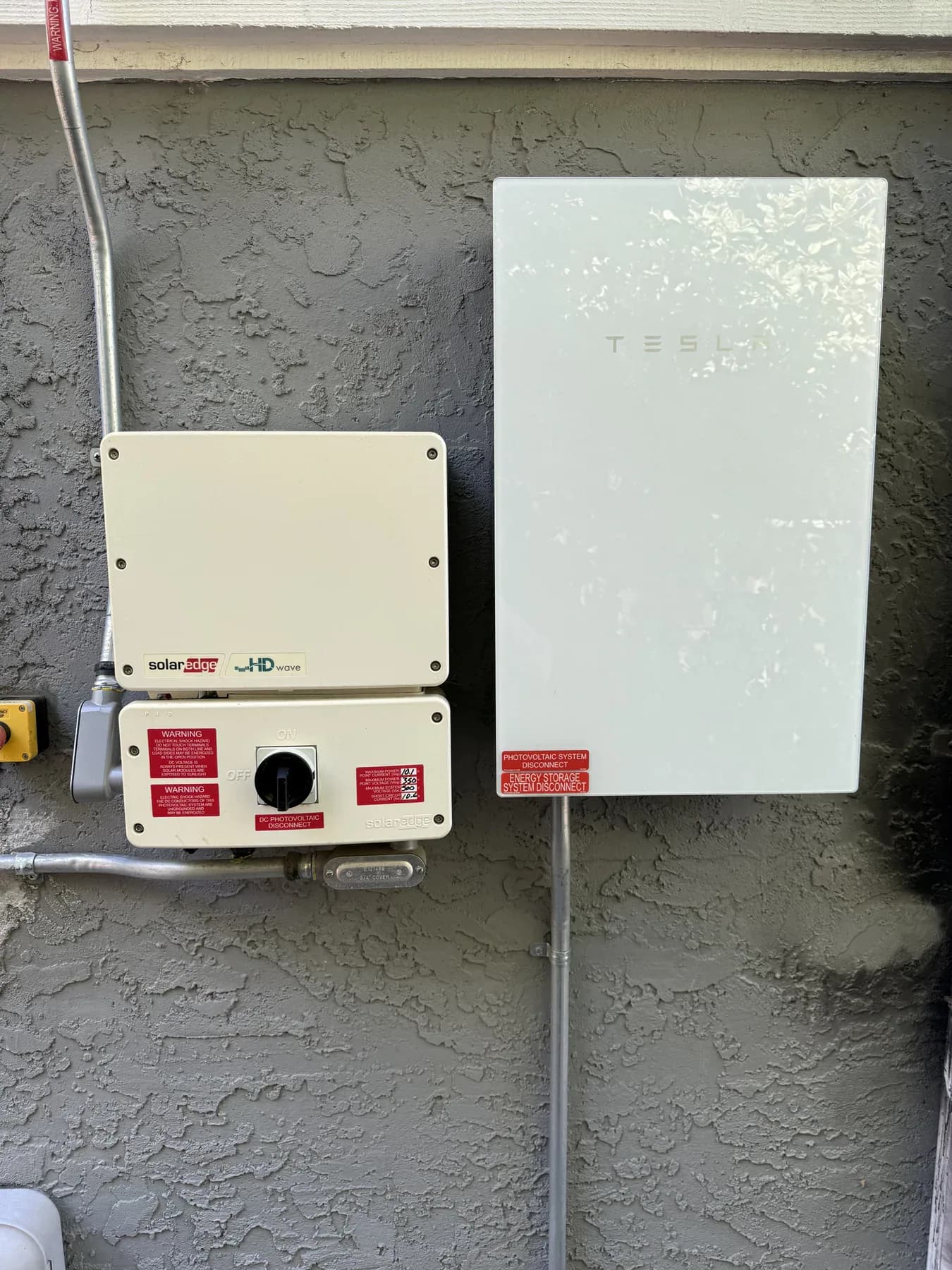
The dominant variables are battery capacity (10–15 kWh per unit), brand, and whether the install pairs with new or existing solar. A single-unit Enphase install on an existing Enphase microinverter system is the lowest-cost path because it reuses your existing inverters and metering hardware. A single Powerwall 3 on a new solar build consolidates inverter and battery into one box. A FranklinWH aPower 2 carries the longest warranty (15 years / 60 MWh throughput) and is brand-agnostic.
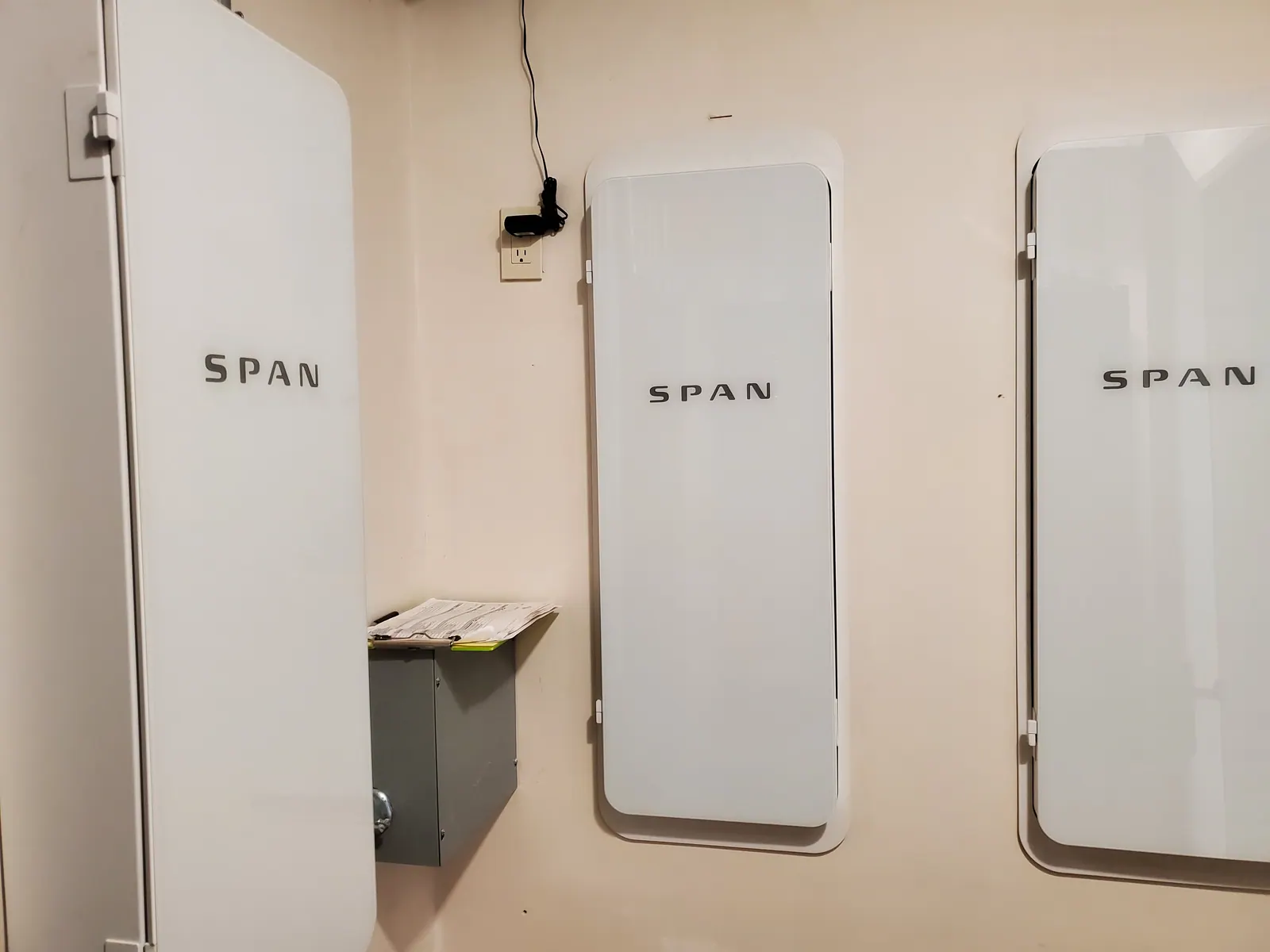
A SPAN smart panel is an optional add for whole-home backup management. Without SPAN, a backup load center provides essential-circuits backup. With SPAN, the battery dynamically prioritizes whatever loads you set during an outage.
The San Jose residential ESS permit runs $350–$500. We pull the permit, file the PG&E SNEM-PS paired-storage interconnection, and coordinate the inspection on every install.
Free Site Assessment
Existing solar inspection, load analysis, backup-priority conversation, brand fit and SPAN evaluation. No charge.
Written Quote & Permit Filing
Written itemized quote. City of San Jose permit filed. PG&E SNEM-PS interconnection started. Typically 1–3 weeks to permit approval.
Installation Day
Battery mounted, gateway / inverter installed, backup load center wired, interconnection commissioned. 6–10 hours for a single-unit install.
Inspection & PTO
City inspection coordinated. PG&E paired-storage permission-to-operate. Rebate paperwork filed. Documentation delivered.
Installed Cost Ranges — San Jose
| Scope | Range |
|---|---|
| Enphase IQ Battery 10C — installed (10 kWh) | $10,000 – $14,000 |
| Tesla Powerwall 3 — installed (13.5 kWh) | $14,000 – $20,000 |
| FranklinWH aPower 2 — installed (15 kWh) | $15,000 – $22,000 |
| SPAN smart panel add-on (whole-home backup management) | $5,500 – $8,500 |
| Multi-unit stacks (per added unit, same brand) | Brand list price + install |
| San Jose residential ESS permit | $350 – $500 |
Pricing before rebates. Written quote provided after a free assessment.
Get a Written QuoteRebates & Incentives
What Currently Applies in San Jose
The incentive landscape changed substantially between late 2025 and early 2026. Federal residential storage credits expired. SGIP ratepayer-funded budgets closed. What's still active is concentrated and worth pursuing.
The headline for SJCE-territory homeowners is the SJCE EcoHome Battery Storage Rebate: $125/kWh standard, $400/kWh for Environmental Justice Community-qualified households, up to $10,400 maximum. It requires solar pairing, SGIP Verified Equipment List eligibility, permanent install with final permit, and Peak Rewards enrollment for three years.
For Powerwall 3 specifically, Cali Rollin Electric is a Tesla Certified Installer, so the Tesla "Next Million Powerwall" rebate ($500 per Powerwall 3, up to $1,000 per household, order window through June 30, 2026) is processed directly through us.
A note on federal credits: 25C, 25D, and 30D all expired in 2025 under the One Big Beautiful Bill Act. They are listed below for completeness, but no longer reduce the cost of a system completed in 2026. Verify your specific eligibility with a tax professional — ENERGY STAR federal tax credit guidance.
Code & Interconnection References
- 2025 California Energy Code §150.0(s) — new single-family homes with electric service >125A must be BESS-ready. Effective January 1, 2026 per the California Energy Commission.
- CFC §1207 / NFPA 855 — residential ESS must be installed at least 3 ft from doors, operable windows, and other openings into habitable space, plus 10 ft from vegetation. See the NFPA 855 guidance.
- AB 130 building code freeze — local residential code amendments are frozen Oct 1, 2025 through June 1, 2031 per the CBSC Bulletin 25-03. The 2025 statewide CBC/CEC still took effect January 1, 2026.
- PG&E SNEM-PS — paired-storage interconnection for systems ≤30 kW. Cali Rollin Electric files this on every install. PG&E NEM program page.
Applicable Programs
| Program | Value |
|---|---|
| SJCE EcoHome Battery Storage Rebate ↗ Up to $10,400 for EJC-qualified households. Solar pairing + SGIP VEL listing required. | $125 – $400/kWh |
| Tesla "Next Million Powerwall" Rebate Up to $1,000 / household. Order Nov 1 2025 – Jun 30 2026, install through Dec 31 2026. Tesla Certified Installer required. | $500 / Powerwall 3 |
| PG&E Residential Storage Initiative (RSI) ↗ 5+ EPSS outages since Jan 2024 + CARE / FERA / Medical Baseline enrollment. Not stackable with SGIP. | Free battery |
| SGIP RSSE (AB 209) ↗ Waitlisted. Contact us for current queue position. | $1,100/kWh (income-qualified) |
| SGIP General Market ↗ All ratepayer-funded budgets closed Dec 30, 2025 per CPUC Decision 25-12-003. | Closed |
| Federal 25D Residential Clean Energy Credit ↗ Ended Dec 31, 2025 under the One Big Beautiful Bill Act (P.L. 119-21). Systems completed after that date do not qualify. | Expired |
Programs change. Eligibility verified at estimate.
Why Cali Rollin Electric
What We Bring to Every Battery Storage Install
Most battery installers in the Bay Area are solar-primary contractors who treat battery-only retrofits as an afterthought. Our team treats standalone storage as a first-class job — every install permitted, interconnected, and documented.
Three brands installed directly. Tesla Certified for Powerwall 3, SPAN Certified for smart-panel pairing. C-10 #1144031. PG&E SNEM-PS paired-storage interconnection filed on every install. Our team is the team doing the work — 15+ years of trade experience and one direct line.
Tesla Certified Installer
Powerwall 3 direct install, warranty support, and Tesla 'Next Million Powerwall' rebate processed through us as the certified installer.
SPAN Certified Installer
Smart-panel pairing for whole-home backup management — load prioritization that a stock backup load center can't do.
Three first-class brands
Powerwall 3, Enphase IQ Battery 10C, FranklinWH aPower 2. Brand recommendation matches your solar setup and resilience goals — not our supplier rebate.
PG&E SNEM-PS handled
Paired-storage interconnection filed with PG&E (SNEMPairedStorage@pge.com). NEM 2.0 grandfathering preserved on existing solar.
Permit on every install
City of San Jose ESS permit, plan check, and final inspection. NEC Article 706 compliant. Documentation delivered.
Fire-code setbacks designed in
CFC §1207 / NFPA 855 3-foot separations from openings and 10-foot vegetation clearance routed at site assessment, not at inspection.
Credentials
- →C-10 #1144031 — Licensed electrical contractor, verifiable at CSLB.ca.gov
- →Tesla Certified Installer — Direct Powerwall 3 installs and warranty support
- →SPAN Certified Installer — Smart-panel pairing for whole-home backup management
- →15+ years of electrical trade experience
- →Permit + inspection on every install. NEC Article 706 compliant.
- →DBE Certified — Disadvantaged Business Enterprise (California)
Common Questions
Battery Storage FAQ
Does adding a battery to my existing solar system trigger NEM 3.0?
No — provided your solar system isn't substantially modified at the same time. Per PG&E's NEM 2.0 Sunset FAQ, adding a battery to an existing NEM 2.0 solar interconnection does not trigger the Net Billing Tariff (NEM 3.0), as long as the solar array isn't expanded beyond a 10% or 1 kW increase. The battery is interconnected as a separate paired-storage application post-PTO. For homeowners with grandfathered NEM 2.0 export rates, adding storage is the single strongest way to capture more value from existing solar without losing that grandfathering. Cali Rollin Electric files the PG&E SNEM-PS interconnection paperwork as part of the install.
Which battery should I choose — Powerwall 3, Enphase IQ Battery, or FranklinWH aPower 2?
It depends on what you already have and what you're solving for. Tesla Powerwall 3 (13.5 kWh, 11.5 kW continuous, integrated DC-coupled solar inverter) is the strongest choice for new solar-plus-storage installs because it consolidates inverter and battery in one unit. Enphase IQ Battery 10C (10.08 kWh, 7.08 kW continuous, AC-coupled with grid-forming microinverters) is the best fit for retrofits onto existing Enphase microinverter solar systems and is the most modular option for scaling up in 10 kWh increments. FranklinWH aPower 2 (15 kWh per unit, 10 kW continuous, 15-year / 60 MWh throughput warranty) is brand-agnostic — compatible with any PV inverter — and carries the longest warranty in the mainstream residential market. All three use LFP chemistry, are IP67 outdoor-rated, and qualify for the SJCE EcoHome rebate. Cali Rollin Electric is a Tesla Certified Installer and a SPAN Certified Installer, and installs all three brands directly under our C-10 license.
What rebates apply to battery storage in San Jose in 2026?
San Jose customers in SJCE territory have several pathways. The headline is the SJCE EcoHome Battery Storage Rebate: $125/kWh standard ($3,250 max at 26 kWh) or $400/kWh for Environmental Justice Community qualified households ($10,400 max). It requires solar pairing, SGIP Verified Equipment List eligibility, and Peak Rewards enrollment for three years. The Tesla 'Next Million Powerwall' rebate ($500 per Powerwall 3, up to $1,000 per household) applies through June 30, 2026 for orders placed through a Tesla Certified Installer — Cali Rollin Electric qualifies. PG&E's Residential Storage Initiative (RSI) provides a free battery for customers with 5+ EPSS outages since January 2024 who are enrolled in CARE / FERA / Medical Baseline. Federal 25D is expired — it ended December 31, 2025 under the One Big Beautiful Bill Act, and systems completed after that date do not qualify. SGIP General Market is closed per CPUC Decision 25-12-003; SGIP RSSE is waitlisted. We verify current eligibility at the estimate.
Is the Tesla Powerwall 2 still being installed?
No — and we recommend strongly against quoting Powerwall 2 for any new install. Powerwall 2 was discontinued and recalled in November 2025. The CPSC-registered recall (approximately 10,500 US units sold November 2020 through December 2022) cites lithium-ion battery cells that can overheat and cause fire or burn injury. Tesla is remotely discharging affected units and replacing them at no cost. If you have an existing Powerwall 2 and were planning to add another, the right path is replacement, not expansion. The recall does not affect Powerwall 3, which uses different cells and is the current US residential offering.
How much does a battery storage install cost in San Jose?
Installed pricing varies by brand, capacity, and electrical complexity. A single Tesla Powerwall 3 (13.5 kWh) typically runs $14,000–$20,000 installed before rebates. A single FranklinWH aPower 2 (15 kWh) runs $15,000–$22,000 installed. Enphase IQ Battery 10C (10 kWh) installations run $10,000–$14,000 installed. A multi-battery stack scales roughly linearly. San Jose residential ESS permits run $350–$500. Costs change with conduit runs, panel capacity, gateway hardware, and whether a SPAN smart panel is added for whole-home backup management. Written quote provided after a free on-site assessment.
Where can the battery be installed on my property?
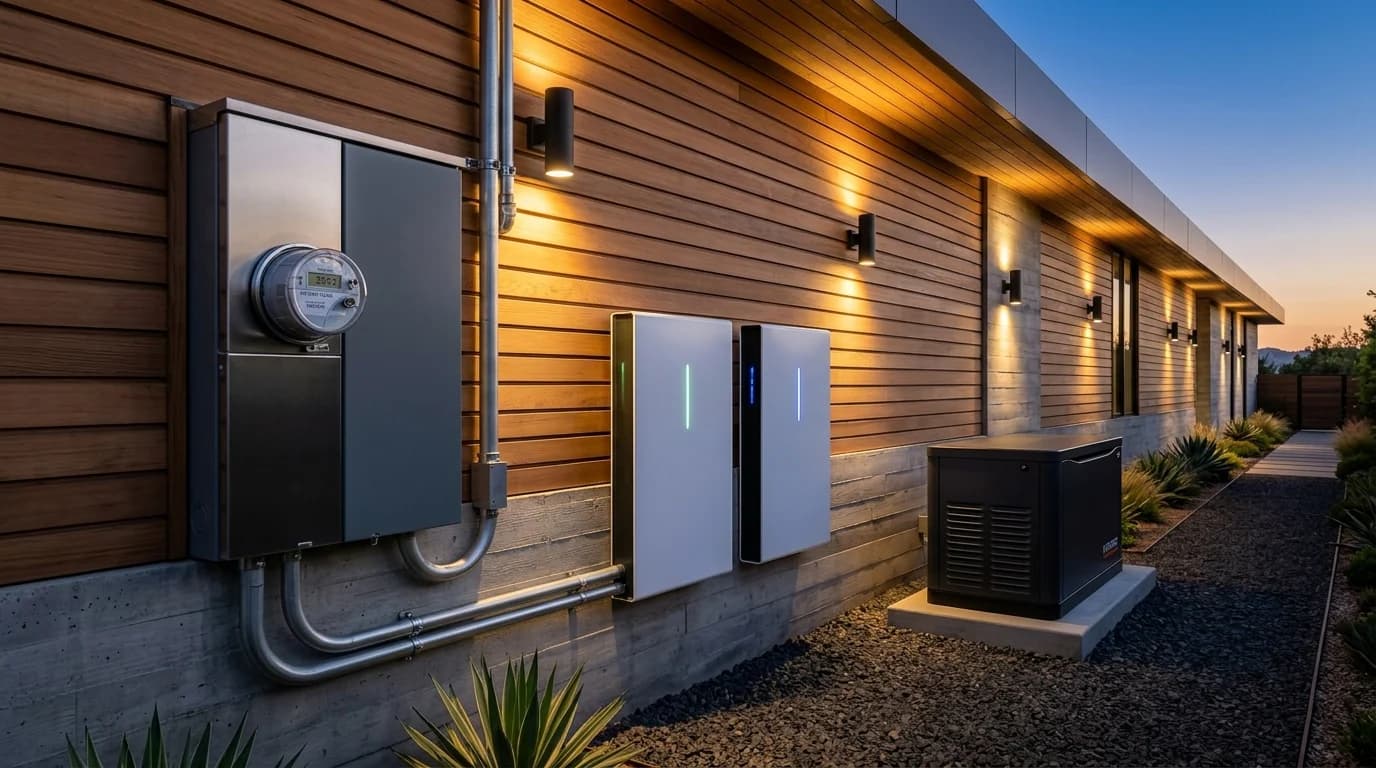
All three brands we install (Powerwall 3, Enphase IQ Battery 10C, FranklinWH aPower 2) are IP67 outdoor-rated and use LFP chemistry, which is well-suited to Bay Area climate. Garage walls, exterior side walls, and outdoor pads are all viable. California Fire Code §1207 and NFPA 855 require a minimum 3-foot separation from doors, operable windows, HVAC inlets, and other openings into habitable space, plus 10 feet from vegetation. We confirm setbacks against San Jose Fire Department requirements at the site assessment and route every install around them.
How does the PG&E Base Services Charge change battery payback?
Effective March 1, 2026, PG&E added a fixed monthly Base Services Charge (~$24/month for most residential customers, ~$6/month for CARE, ~$12/month for FERA and Affordable Housing) paired with a per-kWh reduction of roughly $0.05–$0.07/kWh. Directionally, this compresses the value of TOU arbitrage slightly because export and avoided-import rates both fall under the new structure. It does not fundamentally change the case for battery storage, which is still driven by PSPS resilience, NEM 3.0 self-consumption economics, and grandfathered NEM 2.0 preservation for existing solar owners. We size systems against your actual usage and rate plan, not against generic payback claims.
Do I need a SPAN smart panel?
Not for every install — but it solves a specific problem well. A battery only backs up the circuits wired into the backup load center. For partial-home backup (fridge, lights, internet, one HVAC zone), a standard load center works. For whole-home backup where the battery dynamically prioritizes loads when grid power is out, a smart panel like SPAN replaces your main panel and lets you control which circuits run, and in what order, when running on stored energy. Cali Rollin Electric is a SPAN Certified Installer and can pair SPAN with Powerwall 3, IQ Battery, or aPower 2. We assess whether SPAN is worth the cost at the estimate based on your actual backup priorities.
Is a permit required for battery storage installation?
Yes — always. Every residential energy storage system in San Jose requires an electrical permit, plan check, and final inspection. The 2025 California Energy Code (Title 24 Part 6 §150.0(s)) makes new single-family homes with electric service >125A BESS-ready by default. NEC Article 706 governs the installation — readily-accessible disconnect within sight, externally-accessible emergency shutdown, DC overcurrent protection, 30"×36" working clearance, and eight nameplate data points. Cali Rollin Electric pulls the permit, files the PG&E SNEM-PS paired-storage interconnection, and coordinates the city inspection. You don't navigate any of that.
Ready to get started?
On-site assessment is free. Most installs are scheduled within two to three weeks depending on permit turnaround.
Schedule an AssessmentCall 408-614-4451Contact
Phone
408-614-4451Hours
Mon–Fri 7:00 AM – 4:00 PM
Emergency electrical services available 24/7
Get a Free Battery Storage Assessment
We respond same day during business hours. No call center. No voicemail.
Ready to Get Battery Storage Quoted?
Powerwall 3, Enphase IQ Battery, or FranklinWH aPower 2 — installed directly by a Tesla Certified, SPAN Certified C-10 electrician.
Schedule a Battery Storage AssessmentService Area
Battery storage installation across 15 cities in Santa Clara County