Infrastructure · Multifamily & Apartment Electrical · Santa Clara County
Multifamily & Apartment Building
Electrical Contractor — Santa Clara County
House and landlord panels, per-unit sub-panels, service and switchgear upgrades, meter banks and sub-metering, CALGreen EV-ready parking, common-area lighting, and fire/ life-safety circuits — the full multifamily scope in one place. Our licensed team gives you a dedicated point of contact, code-current on the 2025 CEC (2023 NEC base) taking effect Jan 1, 2026, and bidding to code minimum, not just what the plans show.
- C-10 #1144031Licensed
- Bonded& Insured
- 15+ YearsExperience
- Santa Clara CountyService Area
Full Multifamily Scope
The Whole Building — House Panel to Per-Unit Sub-Panel to Parking
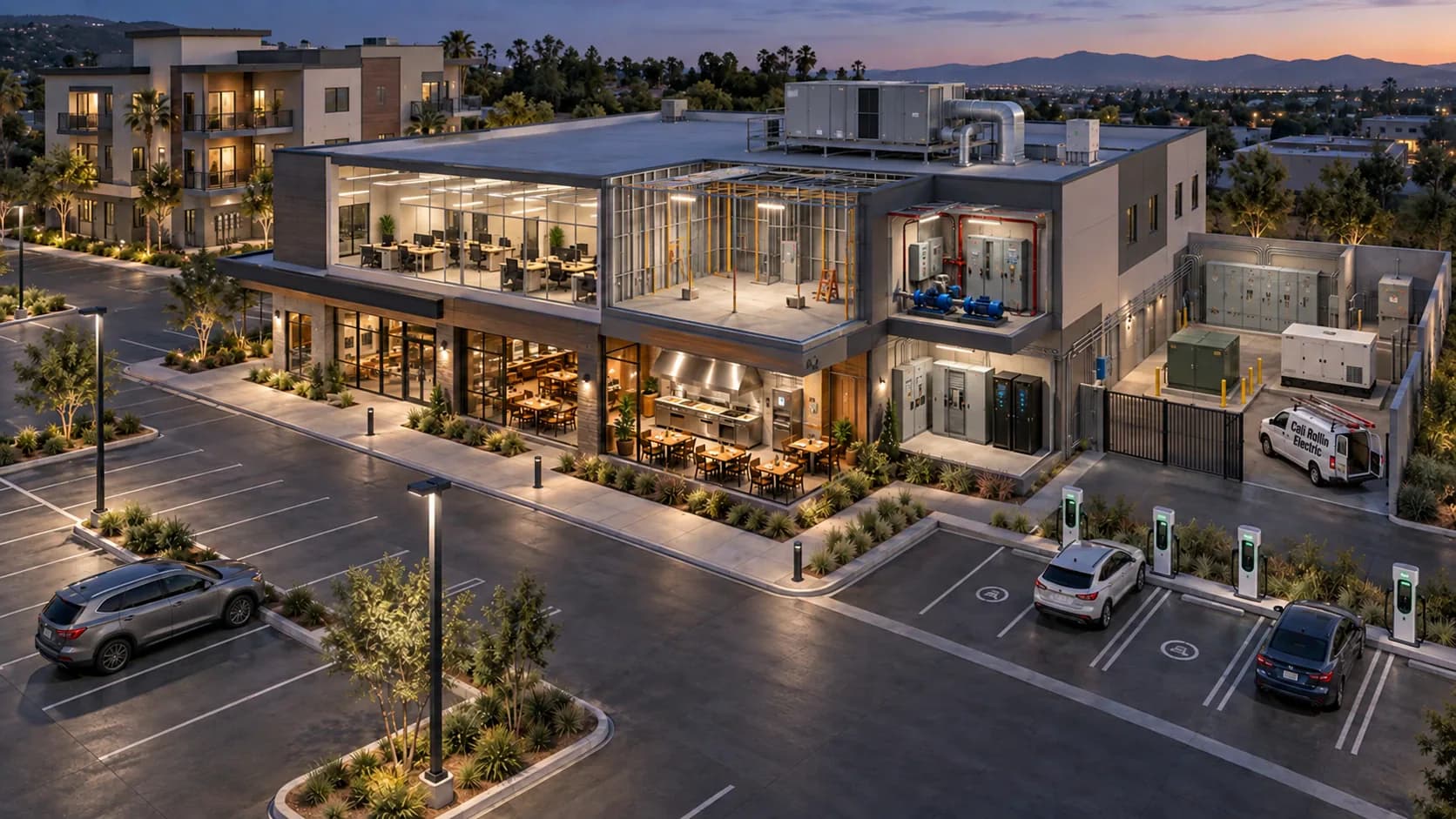
Multifamily electrical is a layered system, not one panel. We carry every layer on one page and one point of contact — so you're not stitching the house service, the unit panels, the meter bank, the EV-ready parking, and the common-area lighting across separate trades and separate bids.
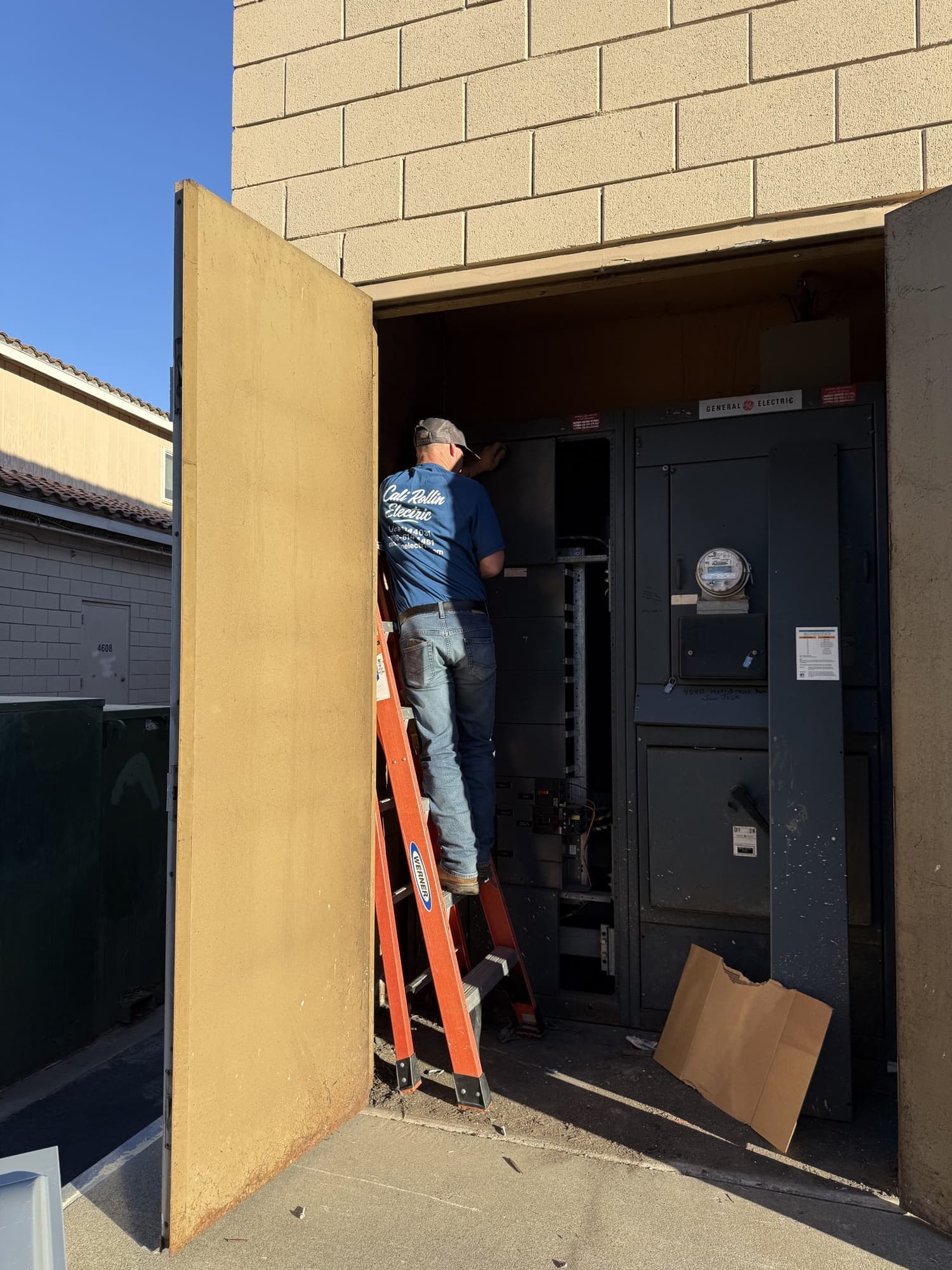
The main building service and the landlord panel that feeds common-area loads — corridor and exterior lighting, elevators, fire/life-safety, laundry, EV management. Sized under the NEC 220.84 multifamily method so the house load and the demand-factored dwelling loads are accounted for together, not guessed.
Individual dwelling-unit panels fed from the service. The 2025 CALGreen EV-ready provisions wire each assigned space's Level 2 receptacle back to its own unit panel — that direct-to-unit feeder is the load-calc driver under-scoped bids miss.
Service-entrance and switchgear work sized to the load the building actually carries. We state the amperage on the bid. Electrification load from BAAQMD appliance rules and CALGreen EV-ready capacity is built into the calculation up front.
Multi-meter stacks and the service-disconnect grouping that goes with them. The NEC 230.71 six-disconnect rule and 230.72 grouping govern how the disconnecting means is arranged for a single service.
Electric sub-metering and load disaggregation per Title 24 Part 6 §130.5 (triggered at 50 kVA service and above), plus CTEP-approved submeter tenant billing. SB 7 water submetering is a separate water requirement — we keep the two precisely distinct.
Known-hazardous and discontinued panels replaced across an apartment property — the failure-prone equipment a property manager can't buy parts for anymore and an inspector flags on sale or refinance.
EV-ready provisioning for new multifamily parking under the 2025 CALGreen code — assigned-space Level 2 receptacles wired to unit panels, installed Full-Power Level 2 chargers at the required share of common spaces, and automatic load management (ALMS) so the service doesn't have to grow to cover every port at once.
Fire-pump power (Art. 695), emergency systems that restore power in ≤10 seconds (Art. 700), legally-required standby ≤60 seconds (Art. 701), and optional standby (Art. 702). Dedicated, separately-routed circuits — smoke control and elevator recall are common multifamily examples a thorough bid scopes explicitly.
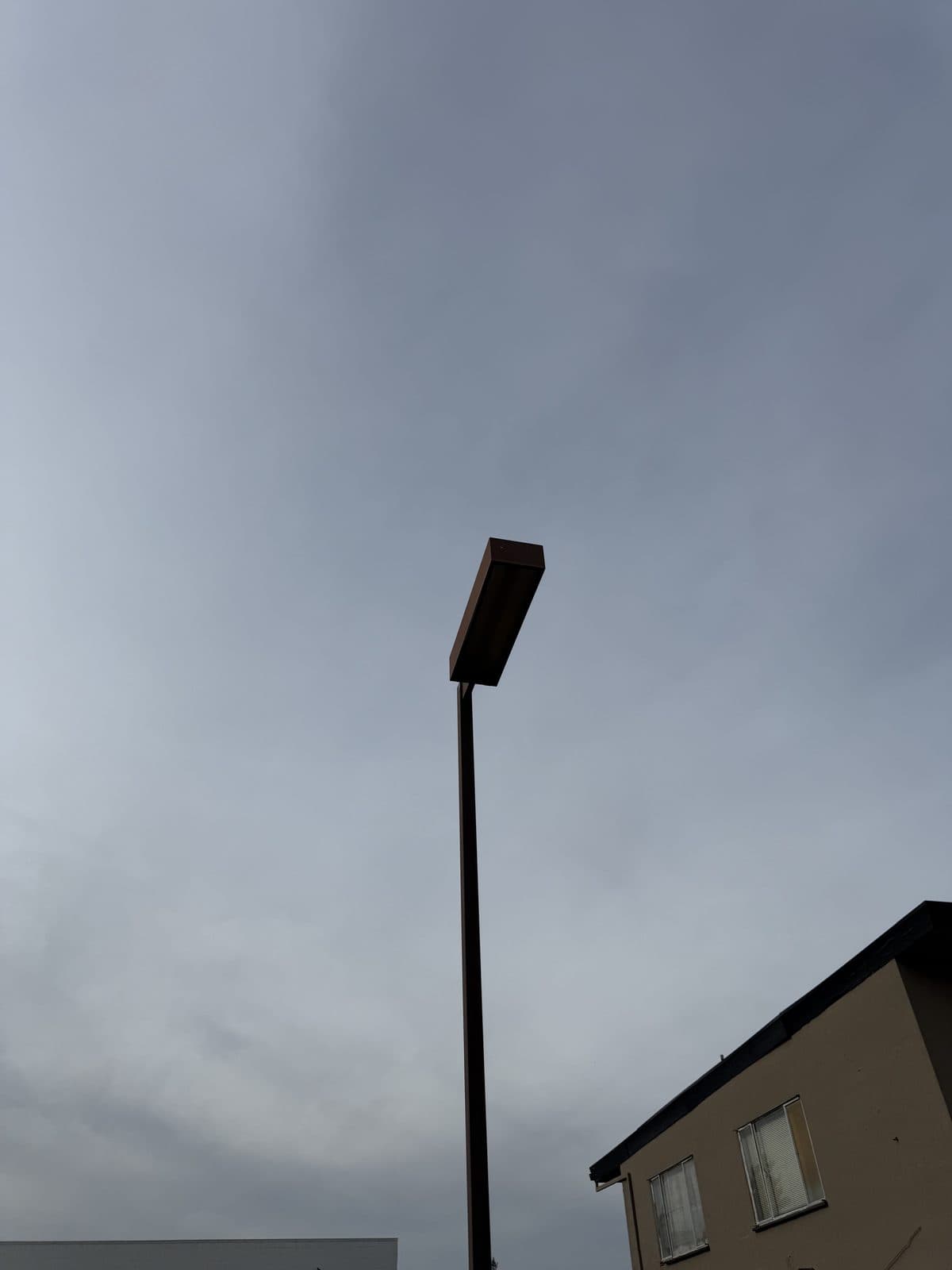
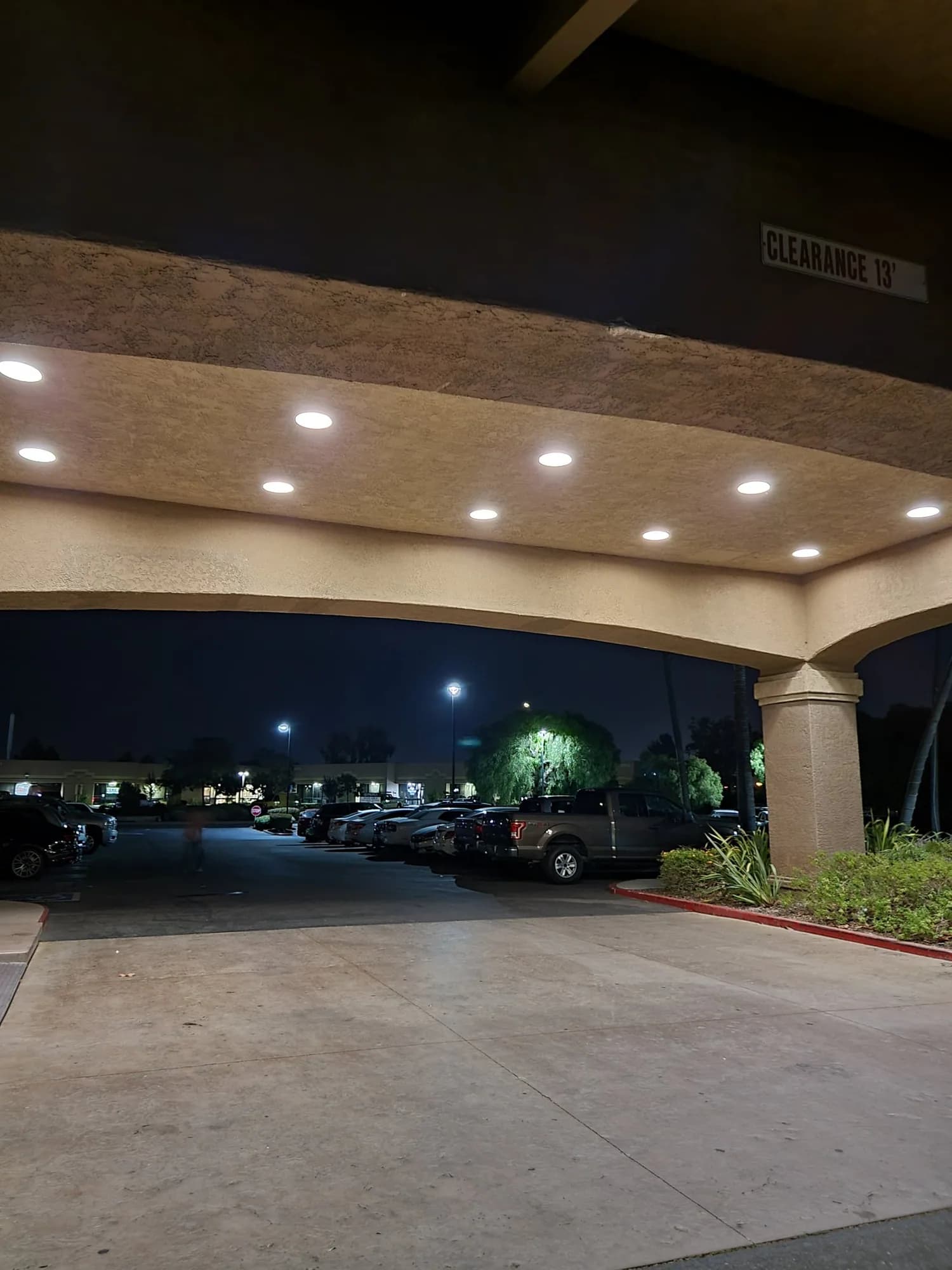
Corridors, garages, laundry and utility rooms, walkways, and exterior. §160.5(e) requires occupancy/vacancy sensing on at least one luminaire in bathrooms, garages, laundry, utility rooms, and walk-in closets; common-use areas comply with §160.5(b)–(e).
Who We Work With
Developers, Property Managers, and Condo Associations
Santa Clara County is roughly 44–45% renter-occupied, and multifamily units grew faster than single-family stock from 2010 to 2020 — a deep, still-growing market for both new construction and existing-building service. Whoever you are in that market, you get the same dedicated point of contact backed by our full crew.
New multifamily that needs a bidder fluent in house-panel and per-unit-panel architecture and the 2026 CALGreen EV-ready mandate. We bid to code minimum and note any plan gaps in the cover letter — defensible for both you and the inspector.
Existing apartment stock facing tenant-occupied panel and sub-panel upgrades, common-area lighting, obsolete-panel replacement, and electrification load problems. One overloaded panel or one damaged feeder can affect several families at once — occupied-building work is its own discipline.
Common-area service, exterior lighting, and shared-equipment work for condo and townhome associations — with a dedicated point of contact and the crew that runs the job from walk to closeout.
Renter-occupancy figure: U.S. Census / ACS, Santa Clara County QuickFacts.
Why Our Team Matters Here
- →A dedicated point of contact— walk to closeout
- →Code-current— 2025 CEC + CALGreen 2025
- →Bids to code minimum— not just the plan set
- →Quotes after a walk— no placeholder pricing
Code & Sizing
Sized to the Code, Not to a Rule of Thumb
California is on the 2025 California Electrical Code (Title 24 Part 3), built on the 2023 NEC base with state amendments, effective Jan 1, 2026. The articles below are the ones that actually govern a multifamily bid — load, disconnects, EV-ready parking, lighting controls, and sub-metering.
| Load calc — NEC 220.84 | The optional multifamily method for feeders and services supplying three or more dwelling units. Uses demand factors when each unit has electric cooking and electric space heating/AC, with general lighting at 3 VA/sq ft and small-appliance + laundry at 1500 VA each. House loads are added per Part III. This is the core sizing article for house panels, per-unit sub-panels, and the main service. |
| Service disconnects — NEC 230.71 / 230.72 | Up to six switches or breakers may serve as the disconnecting means for a single service, grouped per 230.72. The 230.85 emergency-disconnect requirement applies only to one- and two-family dwellings — multifamily is exempt under the 2020/2023 NEC. |
| Box fill — NEC 314.16 | Conductor, device, clamp, and equipment-grounding volume allowances under 314.16(B) drive box-depth upsizing on 3-way and shared-neutral multiwire branch-circuit runs. Sized location by location rather than assumed. |
| EV-ready — 2025 CALGreen (Title 24 Part 11) | Assigned spaces in new multifamily each get a Low Power Level 2 EV-ready receptacle (minimum 208/240V, 20A branch circuit) wired to the corresponding unit's panel; 25% of unassigned/common spaces get installed Full-Power Level 2 chargers. Automatic load management is typically required to comply economically. Effective for permits on or after Jan 1, 2026. |
| Lighting controls — Title 24 Part 6 §160.5 | At least one luminaire on an occupancy/vacancy sensor in bathrooms, garages, laundry rooms, utility rooms, and walk-in closets; common-use areas comply with §160.5(b)–(e). |
| Sub-metering — Title 24 Part 6 §130.5 | User-accessible disaggregated measurement of downstream load energy uses, triggered once the service reaches 50 kVA (e.g., 200A at 120/240V single-phase) — not universal for every small service. CTEP-approved submeter tenant billing is a separate, sound state requirement. |
Code-cycle note: the 2026 NEC is not adopted in California — the state stays on the 2023 NEC base until a later cycle. Verify the exact CALGreen section, the EV Capable vs. EV Ready tiers, and any local upward amendments against the adopted Santa Clara County or City of San Jose ordinance for your project before final.
Wiring Method
Our multifamily default is EMT feeders with MC-cable branch circuits and homeruns. It's a labor-efficient way to run a building — MC pulls faster than pulling individual conductors in pipe, while material is roughly a wash.
This is a Cali Rollin Electric methodology choice, not a code mandate — we spell it out so a GC or spec writer knows exactly how the building gets wired and why.
Discuss Your ProjectCALGreen EV-Ready & Incentives
The 2025 EV-Ready Mandate, Handled End to End
The biggest live lever in multifamily electrical right now is regulatory, not a rebate — the 2025 CALGreen EV-ready mandate that takes effect for permits on or after Jan 1, 2026. We connect the mandate, the load analysis, and the incentives that genuinely apply into one story, and we're honest about the ones that don't.
- →Each assigned parking space gets a Low Power Level 2 EV-ready receptacle (minimum 208/240V, 20A branch circuit) wired to that space's corresponding dwelling-unit panel.
- →25% of unassigned and common spaces get installed Full-Power Level 2 chargers (30A and up).
- →Automatic load management (ALMS) is typically needed to comply economically — so the service doesn't have to grow to cover every port at full draw at once.
- →The direct-to-unit-panel wiring is the load-calc and feeder driver that cheap bids leave out — and the one inspectors and developers care about.
Multifamily electrical incentives in the county are thin and changing in 2026. We pair the ones that genuinely apply to your site and don't dangle the ones that don't.
- →SVCE multifamily EV charging — a Community Choice rebate covering EV outlets, Level 2 ports, panel upgrades, and pre-wiring, with reservation required before purchase/install. SVCE is the CCA for several Santa Clara County cities but not all — San Jose is San Jose Clean Energy, Palo Alto is CPAU, Santa Clara is SVP — so we confirm your site is in SVCE territory before pairing it.
- →PG&E multifamily programs — common-area and exterior LED rebates via a Multifamily Single Point of Contact, plus a no-cost EV-charger program limited to priority communities or buildings meeting the AMI-based path; we check the address's eligibility.
- →Federal & SVP notes — the federal 30C EV-charger credit is effectively winding down and tract-limited (ask your tax advisor whether your site and timing qualify), and the SVP site incentive in Santa Clara is currently fully subscribed and closed to new applications — check back with SVP.
Permits & Utility Coordination
Three Utility Territories, Every County AHJ
Santa Clara County multifamily work crosses three serving utilities and a stack of permit offices. A bid has to identify the right utility and authority up front — the meter, CT-cabinet, and transformer-pad rules differ, and service work is permit-first. We coordinate the meter reconnect after city inspection.
| PG&E | Serves most of Santa Clara County, including San Jose. Greenbook standards, the Building & Renovation portal, permit-first sequencing, and multi-month transformer and equipment lead times on service work. |
| Silicon Valley Power (SVP) | Serves the City of Santa Clara only, plus a small Cupertino pocket. Different meter, CT-cabinet, and transformer-pad rules than PG&E territory. |
| City of Palo Alto Utilities (CPAU) | Serves Palo Alto. A multifamily bid has to identify the serving utility up front — service-equipment rules and approval sequencing differ by territory. |
City of San Jose multifamily electrical typically routes through Standard Plan Review with a multifamily submittal checklist; not all multifamily work qualifies for online permits. An electrical permit and inspection are required for service and panel work — fees vary by jurisdiction and project value, so the actual fee is rolled into the quote after the AHJ determination.
Electrification Load Drivers
Two forces are quietly raising the load older multifamily panels were never sized for — and a service bid that ignores them under-provisions the building.
On replacement only, new gas appliances are phased toward zero-NOx — residential water heaters under 75k BTU manufactured after Jan 1, 2027; furnaces after Jan 1, 2029; larger water heaters after Jan 1, 2031. Existing equipment isn't forced out and gas stoves are excluded — but as units re-equip electric, older multifamily panels may not carry the new load. We size for where the building is heading, not only where it is.
The per-space Level 2 receptacles and common-space chargers add real, planned-for load. Direct-to-unit-panel wiring and automatic load management are the design levers that let a building add EV capacity without oversizing the whole service.
What Drives the Cost
We Quote After the Walk — Here's What Moves the Number
There are no placeholder prices on a Cali Rollin Electric multifamily quote — the number follows a site assessment. What it depends on, though, is no mystery. These are the real drivers, and a bid that ignores them is the bid that comes back short mid-job.
The target amperage and whether the service is being upsized for electrification and EV-ready load.
House panel plus how many per-unit sub-panels, and whether they're new or replacements.
EMT feeders with MC-cable branch and homeruns, and how far the building has to be wired.
Number of assigned-space receptacles, common-space chargers, and the load-management system that ties them together.
Whether §130.5 disaggregation is triggered and the §160.5 controls scope across common areas.
Fire pumps, emergency and standby systems, smoke control, elevator recall — dedicated, separately-routed circuits.
Phasing, tenant notice, temporary power, and after-hours sequencing on a live building.
Conductor material across feeders and services, which moves both material cost and termination labor.
Which AHJ and which utility (PG&E / SVP / CPAU), and the lead times that come with service equipment.
Why Cali Rollin Electric
Full-Team Depth Across the Whole Building
The big specialist shops are built for developer-turnkey scale and aren't responsive for mid-size or occupied-building service work. The generalist shops handle a multifamily building like an oversized house. We sit in the gap — full multifamily depth with a local team that answers the phone and runs the job.
C-10 #1144031. 15+ years on the trade. Serving all of Santa Clara County from Morgan Hill. 408-614-4451.
What Customers Say
Reviewed by Real Santa Clara County Customers
Our work is verified by Google reviews from property owners, managers, and homeowners across the county. Read the live, unfiltered feedback on the Google Business Profile — and verify our C-10 license standing directly with the California State License Board.
Credentials
- →C-10 #1144031— California State License Board
- →DBE Certified— Disadvantaged Business Enterprise
- →Google Guaranteed— Local Services Ads verified
- →Fully insured + bonded
- →15+ years— trade experience
Frequently Asked Questions
Multifamily & Apartment Electrical — FAQ
How is multifamily electrical different from single-family work?+
A single-family job is one service, one panel, one customer. A multifamily building is a layered system: a main service feeds a house/landlord panel for common-area loads — corridor and exterior lighting, elevators, laundry, fire/life-safety, EV management — while each dwelling unit runs from its own sub-panel, often through a meter bank or multi-meter stack. Sizing is governed by the NEC 220.84 optional multifamily method, which applies demand factors across the dwelling units and adds the house load on top. The service-disconnect grouping follows NEC 230.71/230.72. And the work is frequently done in an occupied building, which makes scheduling, tenant notice, and phasing part of the electrical scope rather than an afterthought. We carry all of that on one page and one point of contact.
What does the 2025 CALGreen EV-ready mandate require for my apartment project?+
For new multifamily, the 2025 CALGreen code (Title 24 Part 11) requires EV-ready provisions at parking, effective for permits submitted on or after Jan 1, 2026. Each assigned space gets a Low Power Level 2 EV-ready receptacle — minimum 208/240V on a 20A branch circuit — wired back to that space's corresponding dwelling-unit panel. Separately, 25% of unassigned or common spaces require installed Full-Power Level 2 chargers. Because every assigned receptacle ties back to a unit panel, the mandate drives the per-unit feeder and load calculation, which is exactly where under-scoped bids fall short. Automatic load management (ALMS) is typically needed to comply without oversizing the service. Verify the exact CALGreen section and any local amendments against the adopted Santa Clara County or City of San Jose ordinance for your specific project — we handle that on the permit package.
How do you minimize disruption to tenants during a panel or sub-panel upgrade?+
Occupied-building work is its own discipline. We start with a site assessment, then build a phasing plan around the residents — written notice, scheduled outage windows, and temporary power where a unit or common system can't go dark. With Cali Rollin Electric, you get a dedicated point of contact, backed by our full crew, who plans the sequence, coordinates with the property manager, and is on the phone if something needs to change mid-job. One overloaded panel or one damaged feeder in a multifamily building can affect several families at once, so the safety and continuity planning is part of the electrical scope, not a separate conversation.
Phased vs. complete service or panel replacement — which is right for an occupied building?+
It depends on the building's condition, the load you're adding, and how much downtime the residents can absorb. A complete replacement is cleaner and often the better long-term value when the service is being upsized anyway — for electrification load, EV-ready capacity, or an obsolete service. A phased approach keeps an occupied building energized while work moves through it section by section, which can be the right call when residents can't all lose power at once or when the budget is spread across cycles. We lay the trade-offs out in writing after the site assessment so the decision is made on real numbers, not a default. There are no placeholder prices on our quotes — the number follows the walk.
Do you replace obsolete panels (FPE, Zinsco, Pushmatic, Challenger, Sylvania) in apartments?+
Yes. Federal Pacific (FPE), Zinsco, Pushmatic, Challenger, and Sylvania panels are known-hazardous or discontinued equipment — parts are hard or impossible to source, and they're commonly flagged at sale, refinance, or inspection. In a multifamily setting that can mean house panels, per-unit sub-panels, or both. We replace them with current-code equipment sized under the NEC 220.84 multifamily method, sequence the work to keep the building livable, and note any related code bring-up the plans missed in the cover letter.
What service size does my building need, and how do you size it?+
Multifamily services commonly land in the 600A to 1000A-and-up range, but the right number comes from the NEC 220.84 optional multifamily load calculation — not a rule of thumb. That method applies demand factors across the dwelling units (when each has electric cooking and electric space heating or AC), adds the house load per Part III, and accounts for the feeders the building actually carries. On top of that we build in CALGreen EV-ready capacity and the electrification load coming from BAAQMD appliance replacement rules, so the service is sized for where the building is heading. Meter banks and the service-disconnect grouping (NEC 230.71/230.72) are part of the same design. We state the amperage on the bid.
Do you handle San Jose and Santa Clara County permitting and utility coordination?+
Yes — across the county's multiple authorities having jurisdiction. City of San Jose multifamily electrical typically routes through Standard Plan Review with a multifamily submittal checklist, and not all multifamily work qualifies for online permits. Service-change work requires confirming the serving utility will approve the ampacity and location of the new service equipment before final, with the utility meter reconnect coordinated after city inspection. Santa Clara County sits across three utility territories — PG&E for most of the county including San Jose, Silicon Valley Power for the City of Santa Clara, and City of Palo Alto Utilities for Palo Alto — and we identify the serving utility up front because the equipment rules and sequencing differ. We serve every Santa Clara County AHJ from Morgan Hill.
Can you handle sub-metering and common-area or exterior lighting controls?+
Yes, as distinct service lines. Electric sub-metering and load disaggregation are governed by Title 24 Part 6 §130.5, which calls for user-accessible disaggregated measurement once the service reaches 50 kVA — it isn't universal for every small service. CTEP-approved submeter tenant billing is a separate, sound state requirement we can scope alongside it. Note that SB 7 submetering is a water requirement, not an electric one — we keep the two precisely distinct so the bid is accurate. For lighting, Title 24 Part 6 §160.5 requires occupancy/vacancy sensing on at least one luminaire in bathrooms, garages, laundry, utility, and walk-in closet spaces, with common-use areas complying under §160.5(b)–(e). Corridors, garages, laundry rooms, walkways, and exterior all fall in scope.
Start With a Site Assessment
The fastest first step is a walk-through of the property. Have your service size, panel locations, and — for new construction — the plan set ready, and we'll scope it to code minimum and quote from real numbers.
Schedule a Site AssessmentGet In Touch
Multifamily Electrical Consultation
Include the property address, unit count, and current service size if you have them — and for new construction, whether you have a plan set. We'll follow up to schedule the site assessment and scope the work to code minimum.
- →A dedicated point of contact— backed by our crew
- →Full multifamily scope— house panel to EV-ready parking
- →2025 CEC + CALGreen— code-current bids
- →C-10 #1144031— licensed CA contractor
Multifamily & Apartment Electrical
The Whole Building, One Trusted Local Team.
Multifamily & Apartment Electrical Service Area — Santa Clara County (15 cities)