Emergency Electrician

Emergency Electrician in San Jose

An electrical emergency is first a safety decision. Know when to call 911 or PG&E, isolate an affected circuit only if it is safe, and arrange help for a property-side electrical fault.

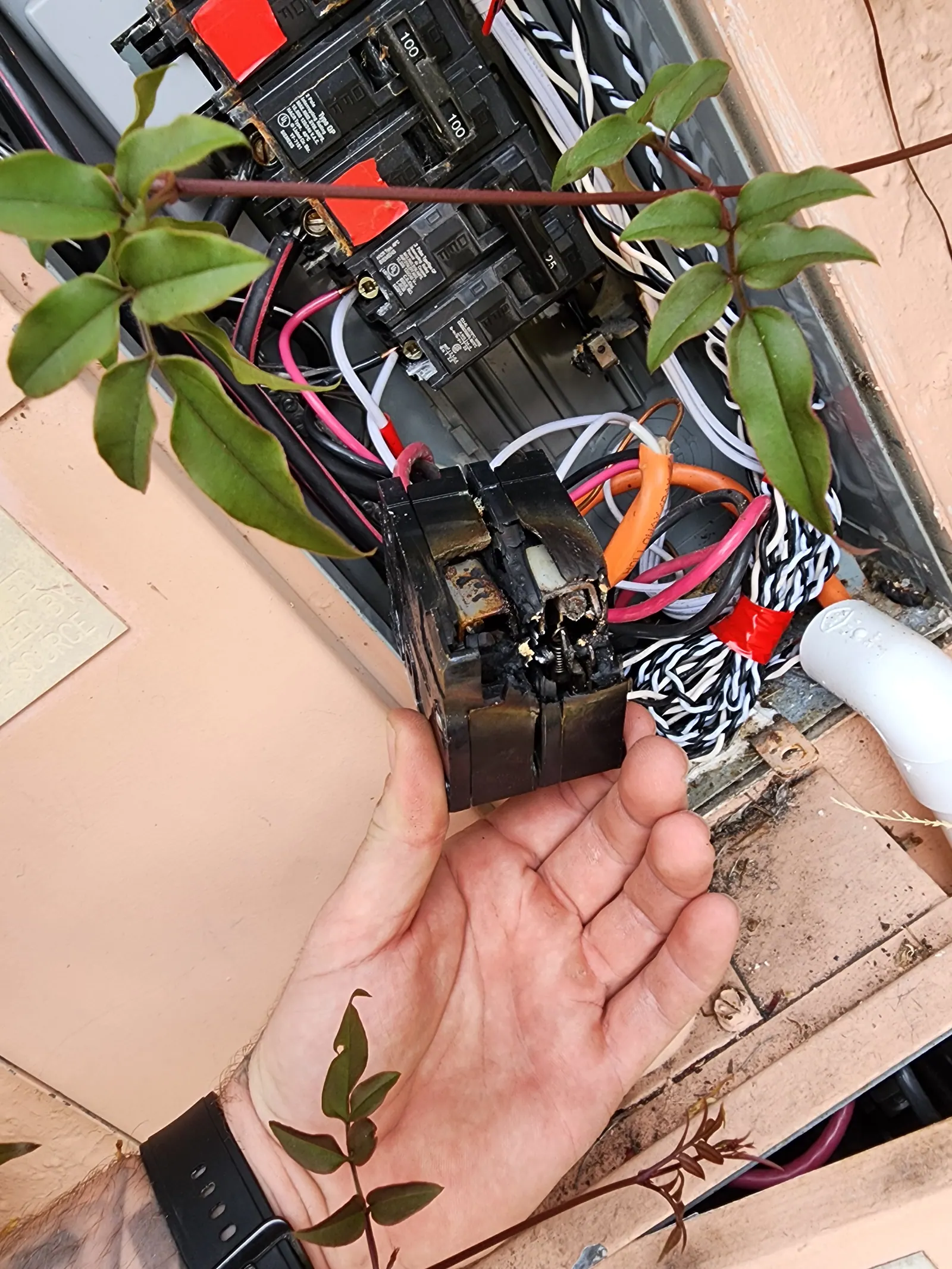
Breaker removed during field investigation, shown close to an open panel
CRE field photo · Breaker condition documented during a service call

Plan the work

Immediate danger

Call emergency services first

Smoke, fire, sparking, a downed line, or a person in danger calls for leaving the area and calling 911.

  • Do not touch downed lines or anything touching them.
  • Do not use water on an electrical fire.
  • Call 911 before seeking contractor help.
Utility outage

Use the utility outage channel

A neighborhood or utility-side outage is not a home wiring repair. Check the PG&E outage map or report the outage to PG&E after addressing any emergency.

  • Check whether nearby properties are out too.
  • Avoid generators and candles used unsafely.
  • Keep clear of utility equipment and fallen lines.

Property-side fault

Describe what changed

A partial outage, recurring trip, heat, or damaged device needs diagnosis of the affected circuit and equipment.

  • Note what lost power and what was operating.
  • Do not repeatedly reset a tripping breaker.
  • Keep access to the panel and affected area clear.

Know when the situation is a 911 emergency

If you see smoke, fire, sparking equipment, or a downed electrical line, leave the area and call 911. Do not approach a fallen line or an object it may be energizing. A contractor is not a substitute for fire, medical, or utility emergency response.

If it is safe to do so and you know which circuit is involved, stop using the affected equipment. Do not remove a panel cover, touch damaged conductors, or use water on an electrical fire.

Separate an outage from a home electrical fault

A whole-neighborhood outage, utility work, or a downed line belongs with PG&E and public-safety channels. The City directs people to report downed lines to 911 and PG&E, and its outage information points residents to PG&E updates.

A problem limited to one room, one circuit, or one piece of equipment may be on the property side. That still needs diagnosis rather than assumptions: a tripped breaker can be caused by a load, appliance, wiring, device, or panel issue.

Symptoms that need prompt electrical attention

A warm or discolored outlet, burning smell, buzzing, repeated breaker trip, flickering lights, or a shock or tingling sensation are reasons to stop using the affected circuit and seek help. These symptoms do not identify the cause remotely.

When you call, tell us what is affected, when it began, whether there was water exposure or recent work, and whether the problem is isolated or widespread. That information helps determine the safest next step and current scheduling options.

What diagnosis needs to establish

The goal is to locate the fault and understand whether a repair can address it safely. Accessible equipment, circuit behavior, visible damage, and the recent history of the problem all matter.

Some faults lead to a device, breaker, or connection repair. Others reveal older wiring, a damaged circuit, service equipment, or water intrusion that needs a broader scope. The proposal should distinguish the urgent correction from any longer-term recommendation.

Prepare the home for a safe visit

Keep people and pets away from the affected area, provide clear access to the panel, and avoid plugging additional loads into the circuit. If water has reached electrical equipment, do not use it until it has been evaluated.

Call to check current service availability. For immediate danger, leave the area and call emergency services; report utility outages or damaged utility equipment to PG&E.

From our field photos

Document the condition after the area is safe

This close field view records a removed breaker. It illustrates why a symptom such as heat or an electrical odor needs investigation rather than repeated resetting. Do not approach arcing equipment or remove covers to copy this view. For smoke, fire, or immediate danger, leave the area and call emergency services.

Safety first, then diagnosis

A clear distinction between emergency response, utility outages, and property-side diagnosis helps homeowners act safely before a repair scope is considered.

  1. Make the area safe

    Leave and call 911 for fire, sparking, downed lines, or immediate danger.

  2. Identify the category

    Separate a utility outage from an affected home circuit.

  3. Assess the property-side fault

    Review accessible equipment and define the appropriate repair scope.

Common questions

What counts as an electrical emergency?

Smoke, fire, sparking, a downed line, or immediate shock danger requires 911. Other dangerous symptoms should be isolated if safe and assessed promptly.

Should I reset a breaker that keeps tripping?

Do not repeatedly reset it. Leave the affected circuit off if safe and have the cause evaluated.

Who handles a neighborhood outage?

Use PG&E outage information or reporting channels. Call 911 for downed lines or immediate danger.

Can you guarantee an emergency arrival time?

No. Availability and travel conditions vary; emergency services and PG&E should handle immediate hazards.

Tell us about your project.

Share your city, the work you need, and any equipment or plans you already have.

408-614-4451
Loading the inquiry form…
Call (408) 614-4451Request an estimate