Equipment
Start with product information
A self-contained spa, pool pump, electric heater, and control system can have different supply and connection requirements.
- Share model documentation
- Identify locations
- List planned loads
Hot Tub and Pool Electrical Installation
A new spa or pool equipment upgrade needs an electrical plan before the pad, deck, or paving is finished. Start with the equipment models, their locations, and the route back to the home’s electrical service.
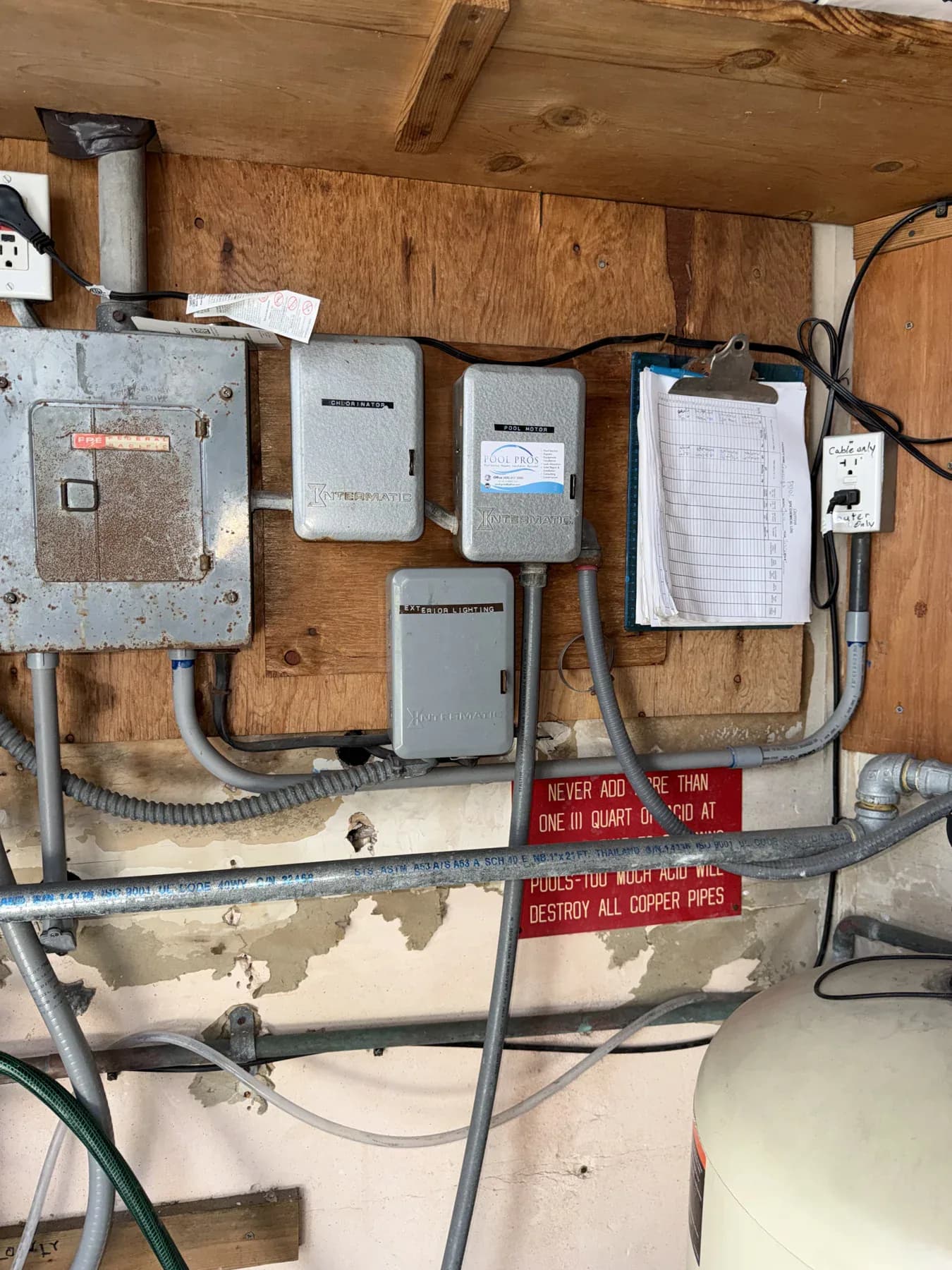
Equipment
A self-contained spa, pool pump, electric heater, and control system can have different supply and connection requirements.
Route
Locate the electrical route while the deck, equipment pad, and landscaping can still be coordinated.
Capacity
Include the new water equipment in a review of the service and other major household loads.
Select a photograph to view it at full size.
Provide exact model information and equipment location so planning begins with selected products rather than a generic backyard package.
Manufacturer instructions and local requirements govern the finished work. The circuit, disconnect, bonding, trench route, and inspection plan must be specified for this installation.
Review the panel, equipment pad, deck, landscape, retaining walls, and planned hardscape. A route on a drawing can change once access and finishes are considered.
Pool builder, spa supplier, landscape contractor, and electrician responsibilities should be identified early.
Bring each electrical nameplate or installation sheet, including controllers, pumps, heaters, and accessories. Mark planned pad positions, delivery path, service clearance, and the route that remains accessible after decks, concrete, and planting are complete.
An equipment map lets the builder and electrician separate physical placement from the electrical route and avoids discovering owner-supplied accessories after the pad and finishes are complete.
Identify who sets equipment, provides excavation and restoration, assembles owner-supplied products, and performs manufacturer-directed startup. Those tasks may belong to different parties in one backyard project.
The electrical scope should identify agreed testing or closeout responsibility without representing product operation, water commissioning, landscaping repair, or pool construction as included electrical work.
The home service, panel condition, planned loads, and equipment documentation all matter. A water-equipment project can overlap with EV charging or an outdoor kitchen.
Panel capacity is evaluated against the existing household loads and the equipment you plan to add. Include future heat pumps, EV charging, and other backyard appliances in that review.
Send cut sheets, a site plan or photos, panel photos, and the construction schedule. The final scope can identify actual work, assumptions, exclusions, and coordination points.
For a replacement pump, heater, or spa, send the existing and proposed model information. An existing connection is a starting point for inspection, not proof that it suits the replacement. Equipment ratings, control arrangements, the condition of the supply, and the new installation instructions can change the electrical scope.
For a new installation, map the entire path from the panel to the equipment before finalizing paving or a deck. Identify who will arrange required approvals, excavation, inspections before concealment, and surface restoration. Keep the electrical work on the same schedule as the pool or spa delivery.
A pool equipment area may include a circulation pump, heating equipment, lighting, sanitation equipment, and automation. List each component, even if it comes from a different supplier. A gas-fired heater may still have electrical controls; its fuel and ventilation work belongs in the appropriate trade scope.
Decide where you want to operate the equipment and which controls are part of the purchased system. At handoff, request circuit identification and the agreed electrical checks, and confirm who performs equipment startup. Keep the manuals and installation records together for future maintenance or replacement.
Document products, site, route, service, and trade handoffs together.
Share products and location plan.
Review panel, access, route, timing.
Document work and handoffs.
No. Selected equipment, site, local requirements, and manufacturer instructions determine the plan.
Yes. Early coordination helps identify locations, routes, and handoffs.
That requires review of the panel, existing loads, and selected equipment.
Electrical scope is separate from pool construction and other trades.
Share your city, the work you need, and any equipment or plans you already have.
408-614-4451