Service review
Check the actual starting point
Panel, service, existing loads, and planned charger all matter.
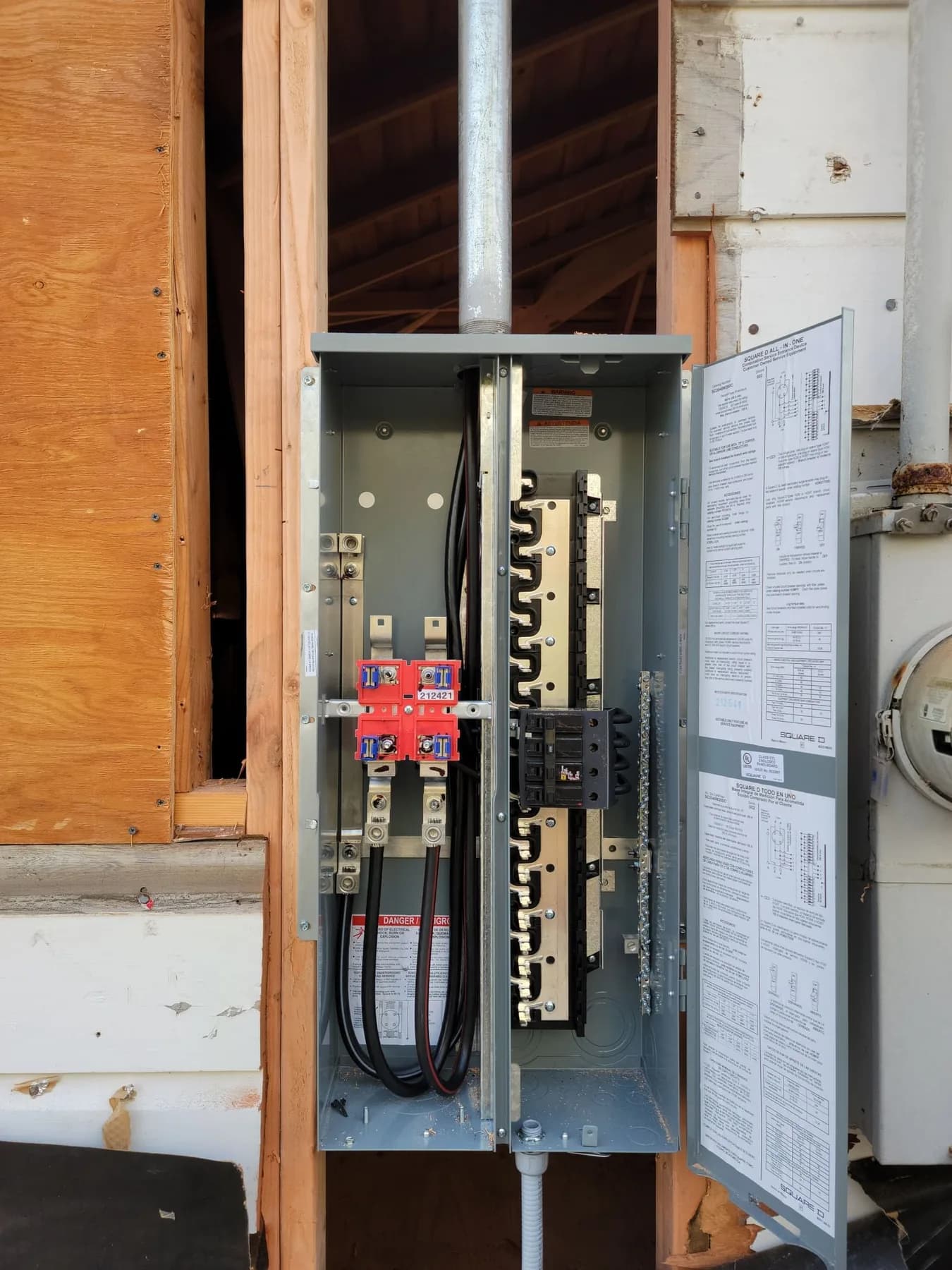
- Send panel and meter photos.
- List major electric loads.
- Name the vehicle and charger.
EV Charging and Home Power Management
Some homes can add charging without changing the main panel; others need distribution or service work first. The answer depends on the existing service, calculated demand, charger, route, and equipment options, not an online promise.
Service review
Panel, service, existing loads, and planned charger all matter.
Demand and charging need
Daily driving, available charging hours, calculated demand, and other planned electric loads shape the capacity decision.
Capacity options
Circuit sizing, scheduling, managed loads, and eligible utility equipment can be evaluated.
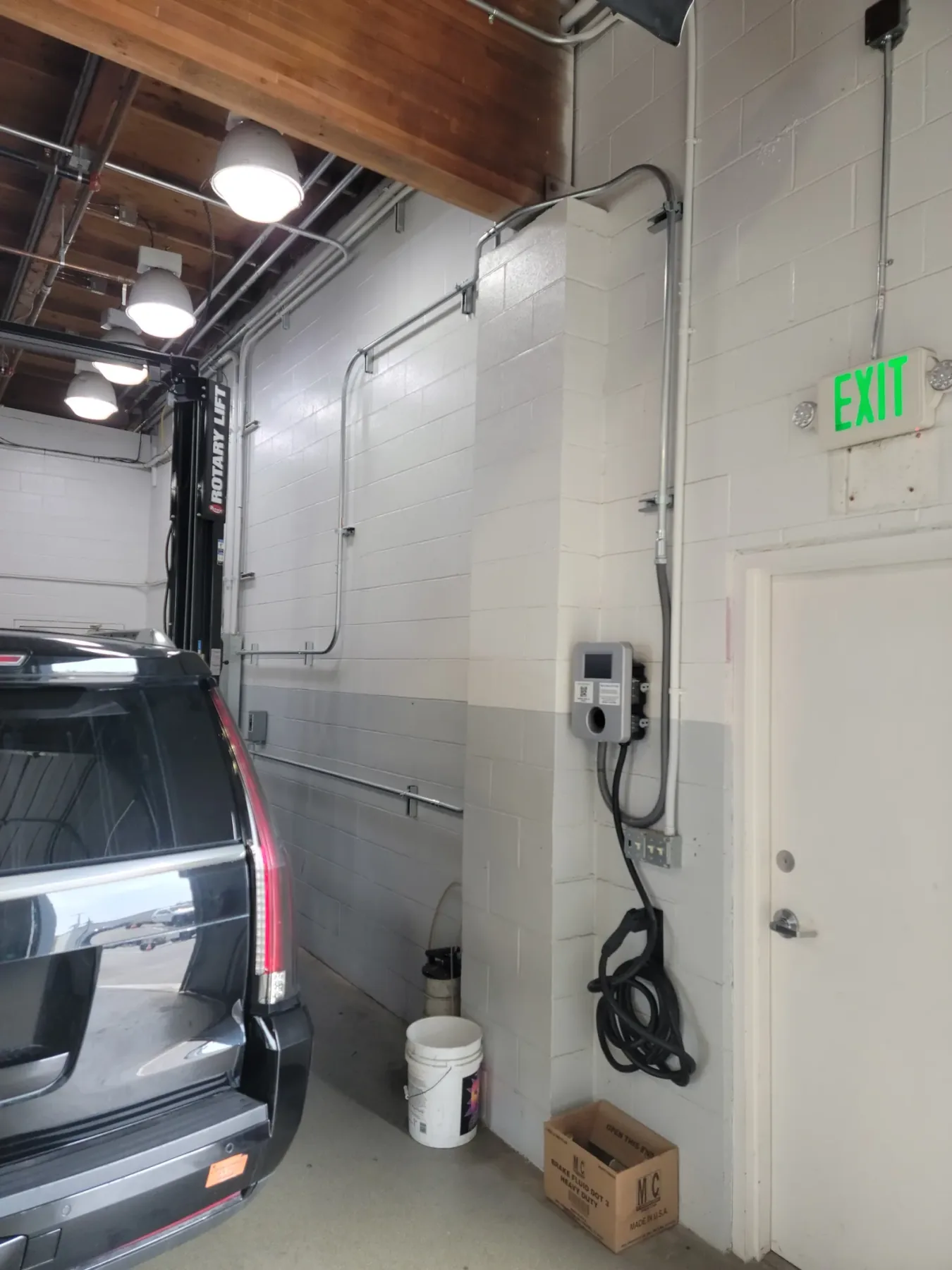
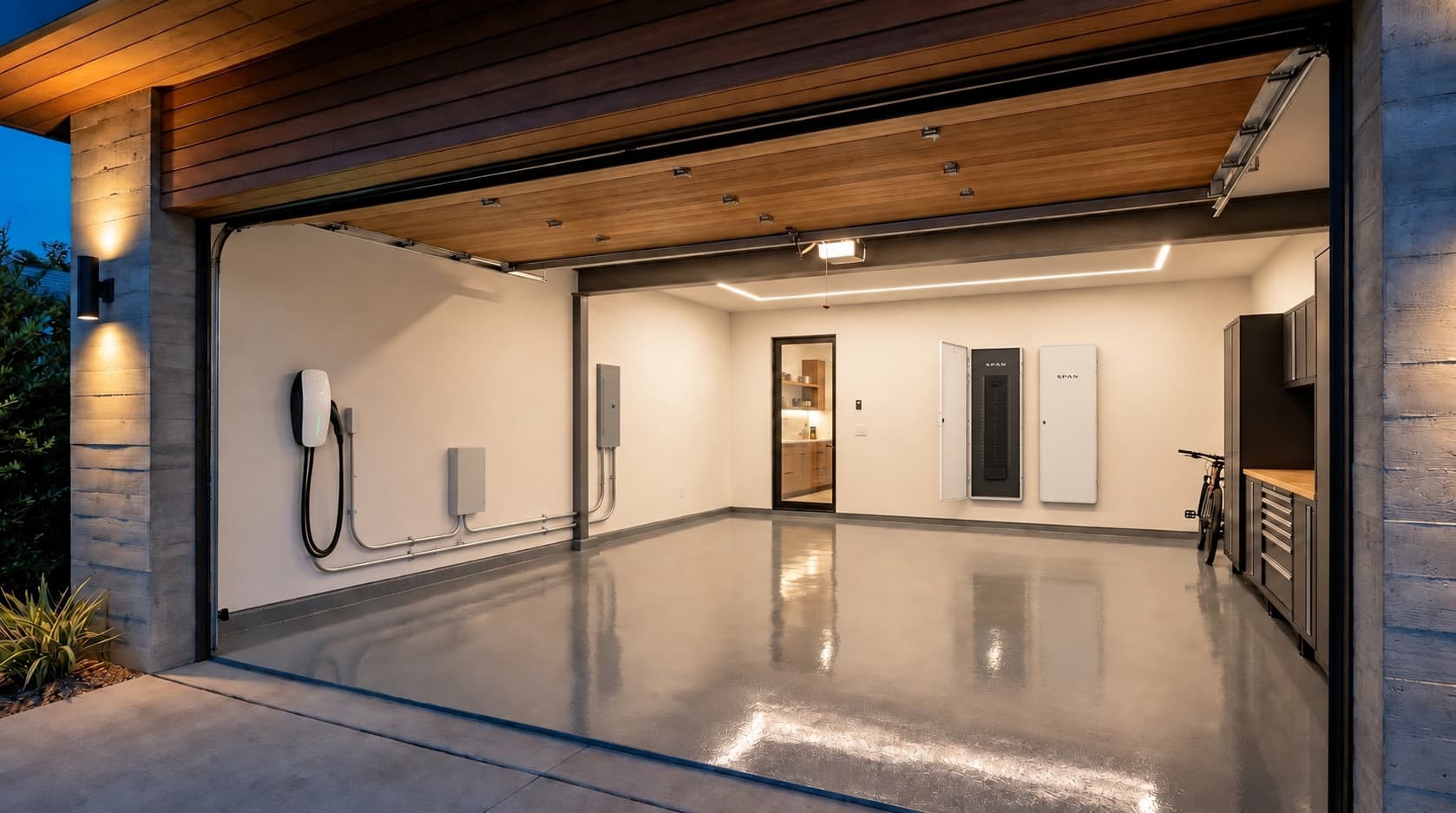
An EV charger can share the home’s existing capacity only when the actual service, household loads, charging equipment, and applicable requirements support the plan. Load management can be one approach, but it is selected for the actual equipment and property rather than assumed from a panel photo.
Share the charger model, parking location, panel and meter photos, and other planned major loads. The written scope distinguishes the charging circuit, any selected management equipment, and any separate panel or service work.
The existing electrical service and the home’s calculated demand determine whether charging can fit. Empty breaker space alone does not answer the capacity question. Other large loads and their use patterns matter.
A site review identifies the panel, service, route, charger, and household loads before selecting the work scope.
A dedicated charging circuit may be appropriate where the service and load review support it. Scheduling or managed-load equipment may be another option in an approved design. PG&E says eligible meter socket adapters can connect EV charging, solar, or storage without a panel upgrade.
That PG&E option is not available for every service and does not replace project-specific utility and equipment review.
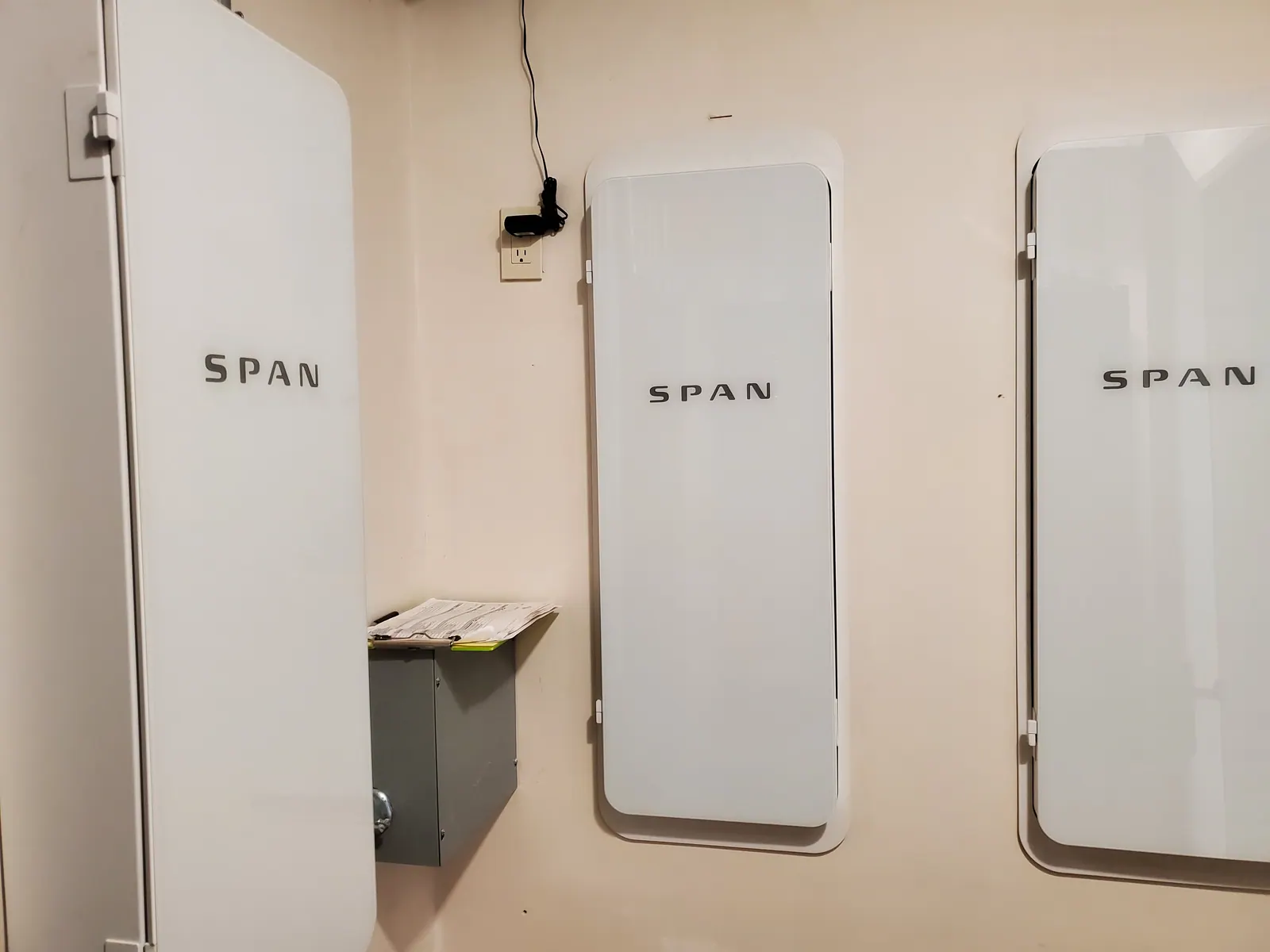
A charger installation adds the charging equipment and circuit. A panel replacement changes distribution equipment. A service upgrade concerns utility capacity. A smart panel may offer a managed-load feature for some configurations. The proposal should say which work is included and why.
The assessment determines whether the existing service can support the selected charging arrangement or whether additional electrical work is needed.
The written review should state the existing service and panel information considered, the charging need, the calculated demand, other planned loads, and the selected path. That path may be a supported dedicated circuit, compatible automatic load management, eligible utility equipment, or separate panel or service work.
This page answers whether the existing electrical system can support a charging approach. The EV charger installation page covers the physical charger, circuit route, mounting location, commissioning, and installation sequence once that capacity decision is made.
Daily driving needs, the vehicle, and the hours available to charge guide the charger and circuit discussion. A higher charging output is useful only when the home, equipment, and route support it. The assessment documents the manufacturer requirements rather than assigning an output from a vehicle name alone.
Timers can move charging to chosen hours, but they do not measure or respond to every simultaneous household load. Automatic load-management equipment may coordinate charging in supported configurations; it still requires an approved service and equipment review. A timer or app setting is not proof that an existing service will support any charger.
EV charging photo planner
A closed panel, meter, or label view from a safe distance.
Show where the vehicle normally parks and the likely charger wall.
A wide view of the accessible path. Do not open walls or equipment.
Ready to include with your inquiry
Up to 10 files and 4.0 MB total can be sent with the inquiry. The final scope follows an on-site review.
The service review determines whether charging can fit and what equipment path is appropriate.
Review the service, loads, parking location, and route.
Compare dedicated-circuit, management, and service options.
Coordinate the final equipment and required approvals.
No. The service, demand, charger, and equipment path must be reviewed for the home.
No. Capacity requires a service and load review.
It may be an option in some configurations, subject to equipment compatibility and the site review.
Send panel and meter photos, vehicle and charger details, parking location, and planned loads.
Check the electricity provider on your bill, then look at the programs below. Eligibility depends on your home, equipment, and project. Confirm funding and any required approval before work starts.
Program details checked September 17, 2026.PG&E electric customers • Includes community-choice customers
Up to 50% of the equipment purchase price
The Standard option covers approved equipment, not installation. You must own or lease an eligible EV. Apply within 180 days of equipment purchase, after installation; one rebate per eligible household.
Check rebate rules and how to applyPG&E electric customers • Income-qualified households
Up to $2,000 for charger installation, or up to $5,000 with a qualifying panel upgrade
Rebate Plus requires an eligible EV and income qualification. Get preapproval and use a PG&E Trade Ally contractor. The panel option requires a necessary upgrade from below 200 amps to 200 amps for Level 2 charging; it does not cover a 400-amp upgrade.
Check rebate rules and how to applyCity of Santa Clara • Silicon Valley Power customers
Up to $350 per charger
For an eligible new Level 2 station; limit two per account. Portable charging cords do not qualify. Apply within 60 days of permit issuance, or purchase if no permit is required.
Check rebate rules and how to applySilicon Valley Clean Energy customers
$500 for an eligible EV charging circuit
This pays toward wiring, not the charger. It must accompany another qualifying home electrification or wiring project. An EV circuit alone does not qualify. Reserve the rebate before installation.
Check rebate rules and how to applyShare your city, the work you need, and any equipment or plans you already have.
408-614-4451