Infrastructure · Generator & Temporary Power
Temporary Power & Commercial Generators in Santa Clara County Construction Temp Power. Standby Generators. Transfer Switches.
Temporary power keeps job sites running. Standby power keeps businesses open. Our team installs commercial standby generators, transfer switches, generator docking stations, and job site temporary power distribution for businesses across Santa Clara County.
- Automatic transfer for commercial
- ATS readyAutomatic transfer for commercial
- Temporary distribution and spider boxes
- Job site powerTemporary distribution and spider boxes
- California electrical contractor
- C-10 #1144031California electrical contractor
- Emergency temporary power response
- Same-dayEmergency temporary power response
Quick answer
Commercial power scope
What generator and temporary power work covers
Two different problems land on the same page. One is a job site that needs power before the permanent service exists. The other is a business that cannot afford to be dark when the utility drops. Our team carries the electrical scope on both.
| Scope item | Typical requirement | Permit required |
|---|---|---|
| Temporary power service (NEC 590) | Temp pole or pedestal, meter socket, main disconnect, GFCI-protected distribution | Yes |
| Job site distribution | Feeder cable, spider boxes, temporary panels, task and egress lighting circuits | Yes |
| Generator docking station | Cam-lok tap box and manual transfer means so a rental unit connects in minutes | Yes |
| Automatic transfer switch (ATS) | Listed transfer equipment at the service or main distribution, sized to the backed-up load | Yes |
| Permanent standby generator | Housekeeping pad, conduit and feeders, terminations, grounding, fuel and exhaust coordination | Yes |
| Load study and generator sizing | Measured peak amps per leg over an operating cycle, converted to kW with reserve capacity | No |
| Commissioning and transfer test | Transfer tested under load, timing verified, panel schedules and close-out documents delivered | Included |
| Utility and AHJ coordination | Temporary service application, inspection, and re-energization with PG&E or Silicon Valley Power | Coordinated |
Temporary power, defined
What a temporary power service actually is
A temporary power service is a real, metered utility service installed for the construction period only, then removed. It exists because the permanent service does not yet: the building is a slab and a frame, the switchgear has a lead time, and the trades still need power for hoists, welders, compressors, trailers, and lighting. NEC Article 590 is the article that governs it, and the word that matters in that article is temporary. The installation is permitted, inspected, energized by the utility, maintained through the build, and taken back out at the end.
That is a different animal from a standby generator, and the two get blurred constantly on bid walks. Temp power replaces a service that does not exist yet. A standby generator backs up a service that already exists and might fail. Temp power is normally fed from one source at a time and needs no transfer switch. A standby generator always needs listed transfer equipment so it cannot backfeed the utility. Same contractor, same license, genuinely different scopes. Our team carries both, and on a phased project they overlap, because the temporary service has to stay alive until the permanent one is energized and signed off. The other call we get is from a building that already has a standby set and found out the hard way that it does not start, which our guide to a standby generator that failed to start covers, and which is usually the reason a site ends up needing rental power on no notice.
The temporary service gets sized from the site equipment list, not from square footage: the hoist or crane, welding receptacles, compressors, temporary heat or dehumidification, pumps, the office and change trailers, and the lighting load, with headroom for the trades that stack up mid-schedule rather than the ones on site in week one. Most temporary services land at 100 or 200 amps single-phase, and step up to 400 amps or greater three-phase when a hoist or a large welder demands it. That break is a schedule item, not a trivia point: PG&E handles single-phase temporary service of 200 amps or less through its expedited “Express Connections” path, while three-phase at 400 amps or greater runs the full application process. The rules for both live in PG&E’s Electric and Gas Service Requirements (TD-7001M), the Greenbook ↗, Section 5, Temporary Power. Undersizing shows up as nuisance trips and a service that has to be re-permitted and re-set with a crew already mobilized.
Temp pole or pedestal
A braced pole or a skid-mounted pedestal set where the utility can reach it and where it will not sit in the path of the excavation, the crane pad, or the permanent service trench.
Meter socket and service disconnect
A utility-approved meter socket, a fused or breakered main disconnect sized to the temporary load, and a grounding electrode driven and bonded at the disconnect.
Temporary distribution panel
The branch panel that feeds trailers, the hoist, welding receptacles, compressors, and the feeders that walk power into the structure floor by floor as it goes up.
Spider boxes and cord sets
GFCI-protected 120-volt receptacles staged where the trades actually work, fed from dedicated circuits, with strain relief at every entry and cable kept off the deck and out of standing water.
Task and egress lighting
String and area lighting for work areas plus stair and exit paths, which the general contractor and the Cal/OSHA inspector both expect in place before the trades stack up.
Removal at close-out
Temporary wiring is required to come out when the work it served is finished. We plan the demo and the permit close-out into the schedule instead of leaving it for punch.
From the field
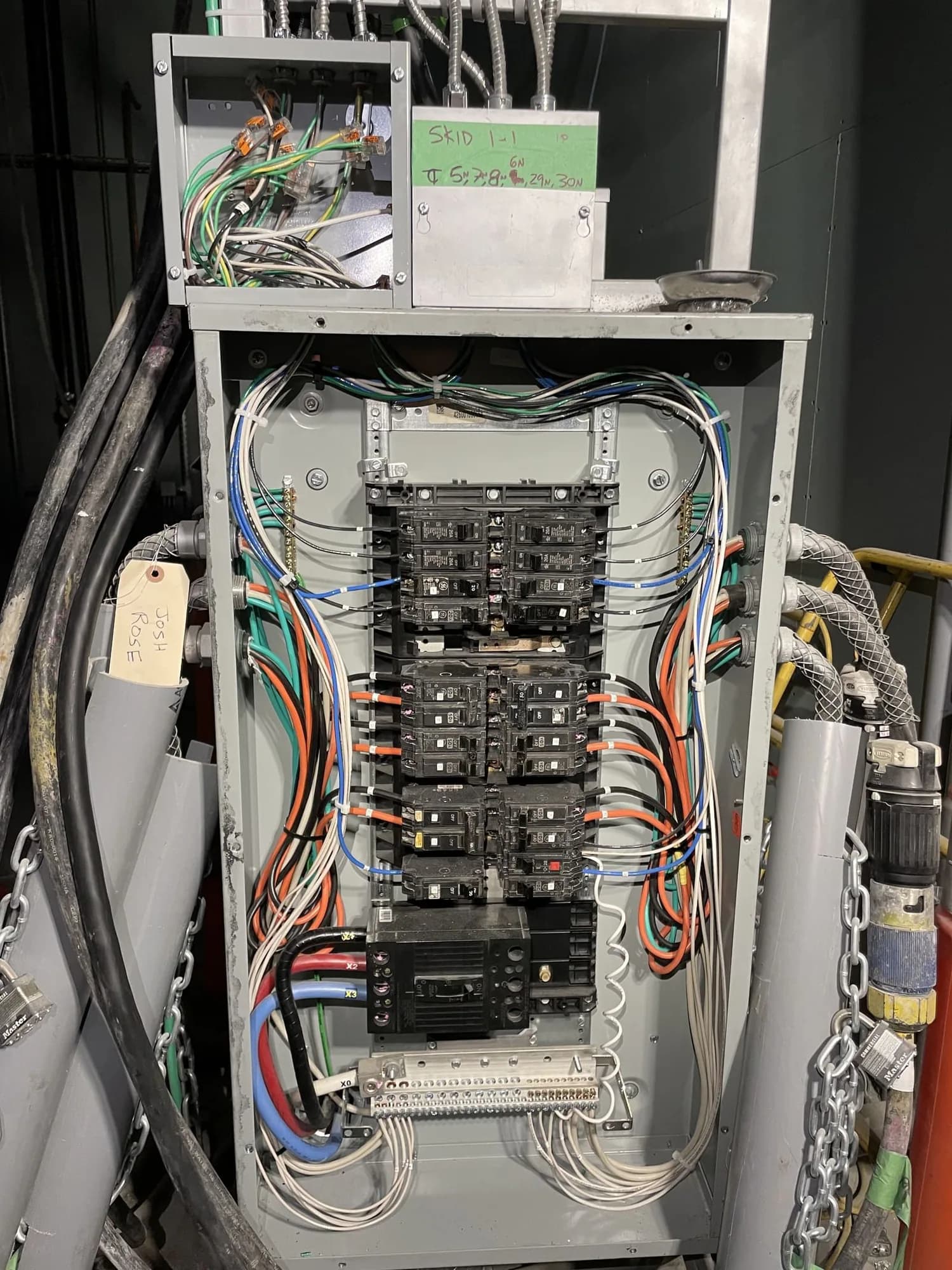
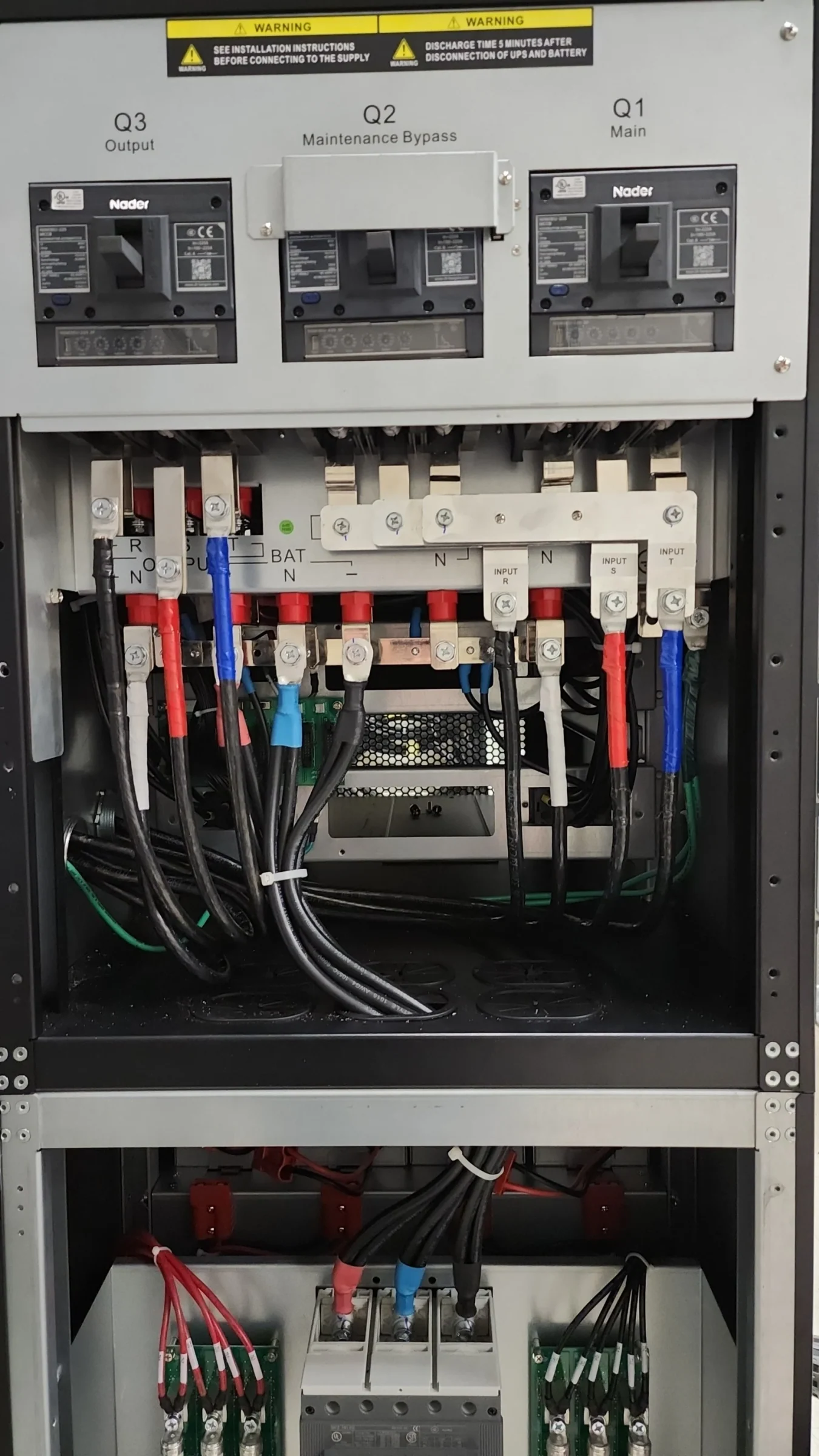
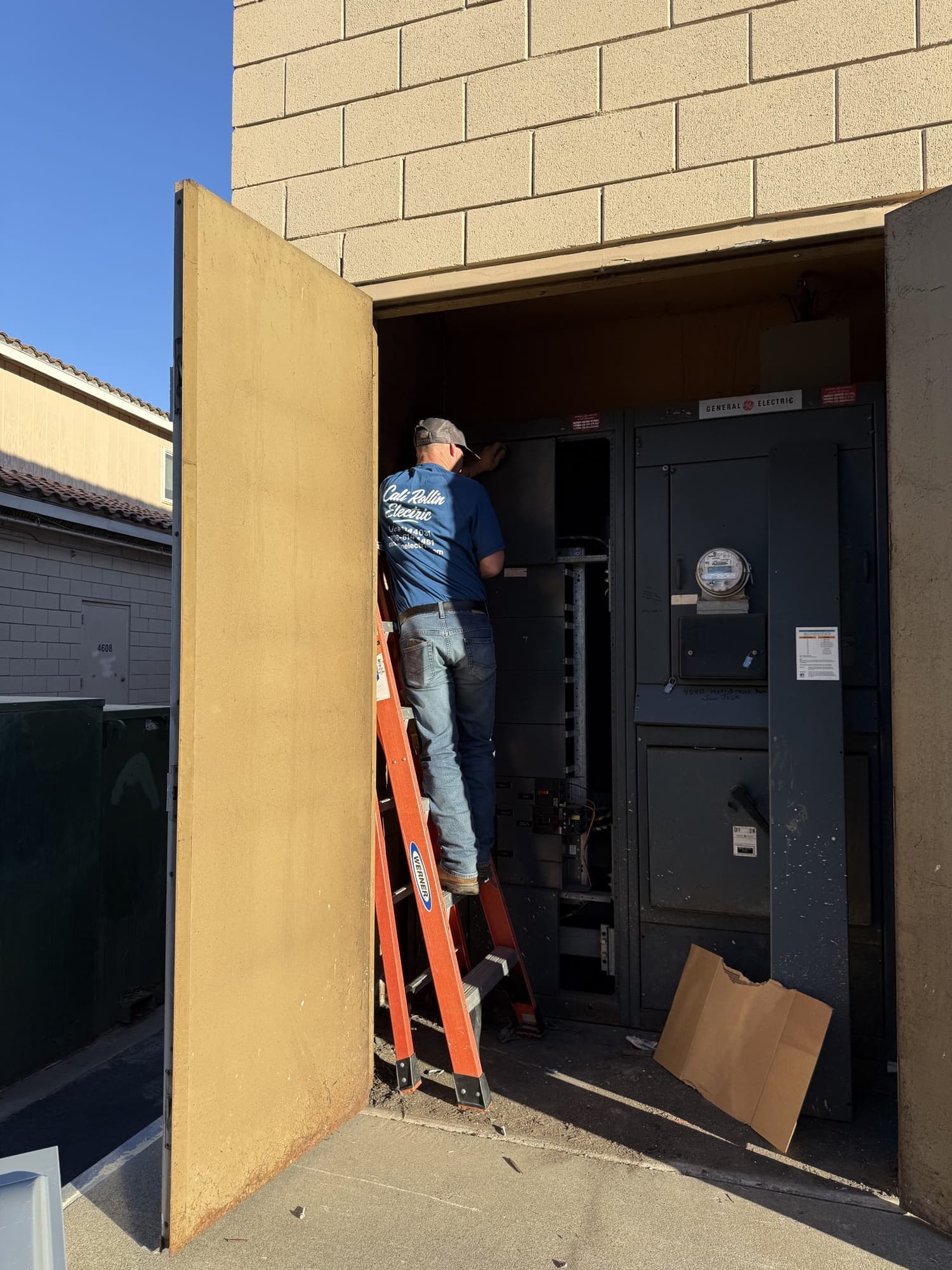
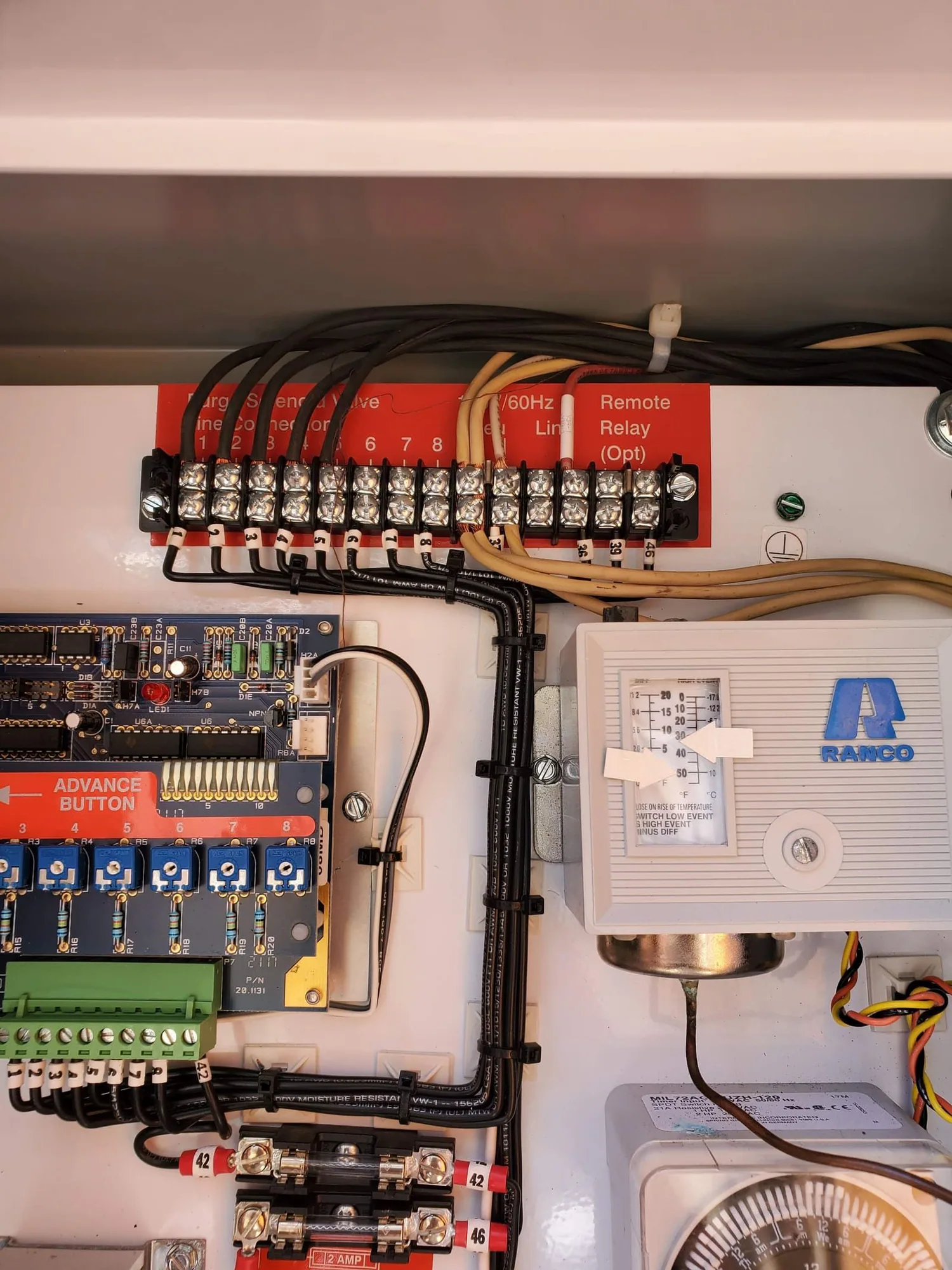
Generator and temporary power work across the county


Temporary vs permanent commercial power
Scope comparison: job site vs business standby
Temporary power for job sites and permanent standby backup for businesses are distinct scopes. Both need an electrical contractor, but the permit type, the equipment, the code basis, and the timeline all differ.
| Scope | Temporary power | Permanent standby ★ |
|---|---|---|
| Use case | Construction site, events, interim facility | Business continuity, critical load protection |
| Power source | Generator or temporary utility service feeding a distribution board | Standby generator connected through transfer equipment |
| Duration | Project-based (days to months) | Permanent installation |
| Permit required | Temporary service permit | Full electrical permit, plus gas or fuel-tank review |
| Transfer equipment | Not typical (the site is fed from one source at a time) | Required so the generator cannot backfeed the utility |
| Utility disconnect | Not required | Coordinated with the serving utility |
| Code basis | NEC Article 590, OSHA 29 CFR 1926.405, Cal/OSHA Title 8 Section 2405.1 | NEC Articles 700, 701, 702 and 708, plus NFPA 110 where the system is classed as a Level 1 or Level 2 emergency power supply system (NFPA 110 does not reach optional standby) |
| Typical lead time | Days once the temporary service is permitted and set | Weeks to months (equipment lead time, air district and fire review) |
Emergency response
Same-day temp power
Business down?
We target same-day assessment for commercial emergencies.
Standby backup
Never down again
A permanent generator and transfer switch pick the load up in seconds.
Load assessment included. We size the generator before recommending equipment.
Utility, GC, and contractor
Who supplies what on a temporary power service
Most temp power schedule slips are not technical. They happen in the seams between the general contractor, the electrical contractor, the building department, and the serving utility, where everyone assumed someone else had it. Here is how our team splits it so nothing sits in the gap.
| Item | Who owns it | What that means on site |
|---|---|---|
| Pole location and site access | General contractor | Where the temp service can sit without fighting the excavation, the laydown yard, or the permanent service route. Our team walks it with you before anything is set. |
| Load list for the site | General contractor and our team | The hoist, welders, compressors, temporary heat or dehumidification, trailers, and lighting. We build the temporary service size from that list, not from a square-foot rule. |
| Electrical permit | Cali Rollin Electric | Filed as the electrical contractor of record with whichever Santa Clara County city or the county building department has jurisdiction over the site. |
| Utility service application | Cali Rollin Electric | Our team opens the temporary service application with the serving utility. The account is set up in the name of whoever is paying for construction power, usually the GC or the owner. |
| Temp pole, meter socket, disconnect, grounding | Cali Rollin Electric | Built to the serving utility’s published service requirements, PG&E’s Greenbook (TD-7001M, Section 5, Temporary Power) across most of the county, so the set is not rejected on arrival. |
| Service drop or lateral, meter, energization | Serving utility | PG&E across most of Santa Clara County, Silicon Valley Power in the City of Santa Clara. The utility owns everything on its side of the meter. |
| Inspection and release | City or county AHJ | The rough inspection on the temporary service and the release that tells the utility it may energize. |
| Site distribution, spider boxes, lighting | Cali Rollin Electric | Installed and maintained by our team. Day-to-day cord and tool inspection stays with the GC’s site safety program. |
The sequence before a job site gets energized
Nothing here can be skipped or reordered, and every step has a different party holding the pen. Knowing the order is what lets a superintendent tell the owner a real date instead of a hopeful one.
- 01Load list built and the pole or pedestal location agreed with the GC.
- 02Electrical permit filed with the AHJ and the utility service application opened in parallel, not after.
- 03Pole or pedestal set, grounding electrode driven, meter socket and service disconnect installed.
- 04Rough inspection on the temporary service, covering the disconnect, bonding, and the grounding electrode.
- 05Signed release goes to the serving utility.
- 06Utility sets the drop or lateral and installs the meter.
- 07Site distribution built out: temporary panels, feeders, spider boxes, task and egress lighting.
- 08Site energized, temporary wiring maintained through the build, then removed and the permit closed.
Code and compliance detail
What an inspector looks for on temporary power
Temporary wiring gets treated as disposable on a lot of job sites, and that is exactly why it produces shock incidents and red tags. NEC Article 590 allows relaxed methods for the construction period, not relaxed safety. Ground-fault protection is required for the 125-volt, 15, 20, and 30 ampere receptacles workers plug into, an assured equipment grounding conductor program covers the cord sets and tools that fall outside that, and the temporary installation has to come out when the project is finished.
On top of the NEC, federal OSHA 29 CFR 1926.405 governs temporary wiring methods and 1926.404(b)(1) governs ground-fault protection on construction sites, with Cal/OSHA Title 8 Section 2405.1 applying in California. The practical failure list is short and repeatable: cable lying in standing water, missing strain relief at a spider box, a bonding jumper left off the temporary panel, damaged cord jackets, and a grounding electrode that was never driven or never inspected.
The sequencing matters as much as the hardware. A temporary service needs a permit, a rough inspection of the pole and grounding, and then a utility set. Filing the utility application in parallel with the permit, instead of waiting for the inspection to pass, is usually the difference between a site that energizes on schedule and one that idles a crew for two weeks.
On the permanent side, the details that decide whether a system passes are the transfer scheme and the grounding. Whether the transfer switch switches the neutral determines if the generator is treated as a separately derived system, which changes where the grounding electrode conductor and the main bonding jumper land under NEC 250.30. Working clearance around the transfer switch and distribution gear per NEC 110.26 gets designed in early, because it is expensive to discover at final inspection.
Public works ready
Prevailing wage
DIR registration 2000016468, with certified payroll submitted through the DIR system on public works job sites.
Certifications
SB and SB-PW certified. DUNS 134763821.
Phased construction
Temporary power to permanent service, without a dark week in between
The temporary service is not finished when it energizes. It has to stay reliable through the messiest part of the build and then hand off cleanly. Two decisions made at the very start determine whether that handoff is a scheduled outage or a fire drill. The first is where the temp pole or pedestal sits: put it in the path of the permanent service trench, the transformer pad, or the switchgear room, and it has to be moved mid-project with the site fully dependent on it. The second is starting the permanent service application on its own track early, because that path runs through the utility, plan check, and gear with real lead time, and it does not compress just because the temporary service is working fine.
On a phased occupancy we walk loads onto the permanent panels in stages, so finished floors or suites can be turned over and energized while the rest of the building still runs on temporary power. That means the permanent panel schedules, the feeder routing, and the cutover order get planned while the temporary distribution is still being built, not after. When the last load moves over, the temporary wiring comes out, the site is re-walked for abandoned cable and orphan spider boxes, and the permit closes.
When there is no utility power to tap yet. Remote sites, early grading, and utility work-order delays all produce the same problem: the site needs power and the meter does not exist. In that case the source is a generator rather than a temporary service, and the distribution downstream is nearly identical. Our team plans the docking or tap point, the cable route, and the grounding and bonding arrangement so the rental unit can be dropped and carrying load quickly, and so it is treated correctly as a separately derived system or not, depending on how the neutral is handled. GFCI protection and the assured equipment grounding program still apply. Fuel access, refueling logistics, and where the noise lands relative to the neighbors are scoped up front, because on a long build those are what actually make a generator setup workable or miserable.
Protecting a house, not a job site? This page covers commercial and construction scopes. Residential backup is a different scope with different equipment, permitting, and sizing, and it lives on our home standby generator installation page.
What to budget
Commercial generator & temporary power costs
Temporary power for a job site (a distribution board connected to a generator or a temporary utility service) is the most straightforward scope and typically the fastest to execute. Job site temporary power setups start at $1,500 and go up based on panel size, circuit count, and how far the feeders have to run.
Commercial standby generators require transfer equipment tied into the main distribution. Generator size depends on which loads have to be backed up, critical circuits only versus full facility coverage, so we perform a load assessment before specifying equipment. The cheapest mistake to avoid is buying a generator first and asking whether the service can accept it second.
Commercial emergency power, meaning a business that is down right now with no utility service, is a priority response. Call (408) 614-4451 directly for a same-day assessment.
01
Load and site assessment
Critical loads identified and measured at the service. Temporary power requirements or permanent transfer scope defined, along with the tie-in point and cable route.
02
Permit and coordination
Electrical permit filed with the city having jurisdiction. Utility coordination opened for a temporary service or a permanent tie-in, plus supplier and GC sequencing.
03
Installation
Distribution board, docking station, transfer switch, or permanent generator installed, terminated, grounded, and labeled to the approved drawings.
04
Testing and documentation
Transfer tested under load with timing verified, inspection closed with the city, and permit close-out plus panel schedules delivered for your records.
What drives the cost
| Backed-up load | Critical circuits only versus whole-facility coverage changes the kW rating and the gear |
| Transfer scheme | Manual docking station, a single ATS, or multiple ATS units by load class |
| Distance and routing | Pad location, feeder length, trenching, and core drilling to reach the distribution |
| Fuel and exhaust | Diesel tank and air district review, or a gas line and meter capacity confirmed |
| Site conditions | Occupied building phasing, after-hours work, and how much of the tie-in can be de-energized |
| Scope | Range |
|---|---|
| Temporary power distribution board (job site setup) | $1,500 – $4,000 |
| Commercial ATS installation (transfer switch to panel) | $4,000 – $10,000 |
| Commercial standby generator + ATS (20–100 kW) | $15,000 – $60,000+ |
| Emergency temporary power (same-day generator connection) | $1,000 – $3,500 |
| Permit (commercial electrical, varies by city) | $750 to $2,500 or more depending on jurisdiction and job valuation |
A written, line-item quote is provided before any work begins. Standby generators and job site temporary power do not carry a utility rebate program in Santa Clara County, so every number above is priced on real scope rather than on an assumed incentive.
Why Cali Rollin Electric
We own the electrical scope so other trades can sequence
Commercial generator and temporary power work sits between three parties: the electrical contractor, the generator supplier, and sometimes the gas contractor, the GC, and the utility. When nobody owns the electrical scope, the schedule slips in the gaps. Our team, with 15+ years in the trade, takes the panel connection, the transfer equipment, the load calculation, and the permit, so the rest of the job has a firm milestone to build around.
C-10 #1144031. Load study before equipment. Written quote before work. (408) 614-4451.
We own the electrical scope
Panel connection, transfer equipment, load calculation, and permit sit with our team, so the other trades sequence around a defined completion milestone instead of a moving target.
Load measured before equipment is specified
We record peak amps on each leg through a normal operating cycle and add reserve capacity, rather than sizing a generator off square footage.
Rental-ready connection points
A pre-planned docking station and cable route means a rental unit can be dropped, connected, and carrying load quickly during an outage.
Three-way supplier coordination
Our team works the electrical integration with the generator supplier and, on permanent units, the engineer or GC, so sizing and compatibility are settled before anything ships.
Public works ready
DIR registration 2000016468 and SB and SB-PW certifications, with certified payroll on prevailing-wage job sites.
15 Santa Clara County cities
Every incorporated city across Santa Clara County, one standard of work.
Related commercial work
Not quite what you need? Here is where to go next
Three-phase electrical contractor
208V and 480V three-phase service, feeders, and equipment connections. Most standby generators land on a three-phase distribution, so the two scopes usually run together.
Commercial service and panel upgrades
Service entrance, meter stacks, and switchgear from 200A to 800A. If the service has no room for a transfer switch, this is the page you want first.
Emergency commercial electrician
Fast response for a dead service, a tripped main, or failed gear that has your building down and needs temporary power today.
Tenant improvement electrical
Build-out power, lighting, and panel work coordinated with your GC and the plan check, including temporary power during the build.
Serving businesses, property managers, and general contractors across all 15 Santa Clara County cities, or see every commercial service.
Verified reviews
See what facility managers and building owners are saying about us
Common questions
Commercial generator & temporary power: FAQ
What is temporary power on a construction job site?
Temporary power is a short-term electrical system installed only for the duration of a project to run tools, lighting, trailers, and equipment until permanent power is available. It can be supplied by a temporary utility service (temp power pole, meter, and distribution panel) or by portable generators feeding spider boxes and temporary panels. By code, temporary wiring is regulated under NEC Article 590, OSHA 29 CFR 1926.405, and California Title 8 Section 2405.1, and must be removed when the project is complete. All receptacles used by workers must have GFCI protection, and the setup must pass inspection before the utility will energize it. Temporary wiring is not a permanent solution. One rule gets misquoted constantly, including at inspection counters: the 90-day limit in Article 590 applies to holiday decorative lighting and similar purposes, not to construction. Construction temporary power is permitted for the whole period of construction, remodeling, repair, or demolition, however long that runs. If a schedule conversation on your job has been anchored on 90 days, that is worth correcting before it costs anyone a remobilization.
What is the difference between temp power and a standby generator?
They solve opposite problems and the equipment is not interchangeable. Temp power exists because the permanent service does not yet, so it is a short-lived service built to run a job site and then removed: a temp pole or pedestal, a meter and disconnect, a temporary panel, and GFCI-protected distribution out to the trades. A standby generator exists because the permanent service can fail, so it is a permanent installation that sits idle behind listed transfer equipment and picks the building up when the utility drops. Temp power is usually fed from one source at a time and needs no transfer switch. A standby generator always needs transfer equipment so it cannot backfeed the utility. Different permits, different code basis, different lifespan. Our team carries both scopes, and on a phased project they overlap, because the temporary service has to stay alive until the permanent service is energized and inspected.
How do you size temporary power for a construction site?
From the equipment list, never from square footage. Our team builds the temporary load from what the site will actually pull at peak: the hoist or crane, welding receptacles, compressors, temporary heat or dehumidification, pumps, the office and change trailers, and the task and egress lighting, then accounts for the trades that stack up in the middle of the schedule rather than the ones on site the first week. Most temporary services land at 100 or 200 amps single-phase, and step up to 400 amps or greater three-phase when the total or a hoist or large welder demands it. That break also changes the utility path: PG&E processes single-phase temporary service of 200 amps or less as an expedited "Express Connection," while three-phase at 400 amps or greater runs the full application (PG&E Electric and Gas Service Requirements, TD-7001M, Section 5). Undersizing shows up as nuisance trips and a service that has to be re-permitted and re-set mid-project, which costs far more than building it right the first time. Oversizing mostly costs money up front. We would rather have the equipment list and the schedule in hand and get it right once.
Who applies for the temporary utility service, the GC or the electrical contractor?
On our jobs, our team files both the electrical permit and the temporary service application with the serving utility (PG&E across most of Santa Clara County, Silicon Valley Power in the City of Santa Clara). The account itself is set up in the name of whoever is paying for construction power, usually the general contractor or the owner, so that billing detail comes from you. The general contractor owns the pole location and site access, and the utility owns everything on its side of the meter: the drop or lateral, the meter itself, and the energization. The AHJ owns the rough inspection and the release that tells the utility it may energize. The sequence only breaks when the utility application is opened after the inspection passes instead of alongside the permit, which is the most common reason a site sits dark with a crew already mobilized.
What happens to the temporary power when the permanent service is energized?
The temporary service stays live until the permanent service is energized and signed off, then the site is cut over on a scheduled outage and the temporary wiring is removed. Two things decide whether that goes smoothly. The first is location: if the temp pole was set in the path of the permanent service trench or the switchgear pad, it has to move mid-project, which is avoidable with a five-minute conversation at the start. The second is sequencing the permanent service application on its own track early, because that path involves the utility, plan check, and often gear with a real lead time. On a phased occupancy we walk loads onto the permanent panels in stages so finished areas can be turned over while the rest of the building still runs on temporary power. Removing the temporary installation is not optional housekeeping, it is required when the work it served is complete, and it is part of closing the permit.
What size generator does a commercial facility need?
Commercial generator sizing is based on measured load, not guesswork. The proper process measures peak amps on each leg of your service during normal operations, converts to kilowatts, and adds 25% reserve capacity for motor starting and growth. As a quick planning ballpark: typical commercial or office space needs approximately 50 kW plus 5 watts per square foot. Retail and restaurant spaces need approximately 50 kW plus 10 watts per square foot due to refrigeration and kitchen loads. These are planning estimates only. Cali Rollin Electric performs a formal load study and coordinates with life-safety requirements under NEC Articles 700, 701, 702, and 708 before recommending a specific kW rating. The right size depends on your actual connected loads, not square footage alone.
Do you coordinate with the generator supplier?
Yes. For both permanent and rental generators, best practice is three-way coordination among the electrical contractor, generator supplier, and for permanent units the engineer or GC. The supplier confirms fuel type, kW rating, voltage, and physical requirements including weight, footprint, exhaust, and clearances. Cali Rollin Electric designs and installs the electrical integration: pads, conduits, cabling, terminations, and transfer equipment. For rental generators we pre-plan connection points and cabling so the generator can be dropped in and connected rapidly during an outage. This coordination prevents sizing or compatibility mistakes and speeds up both installation and any future emergency deployments.
Is an ATS required for commercial backup power?
Yes, for any permanently installed generator that ties into a building's electrical system, a transfer switch is required by code to prevent dangerous backfeeding onto the utility grid. Emergency systems under NEC Article 700 and code-mandated standby systems under Article 701 (egress and exit lighting, fire pumps, and some medical loads) must use automatic transfer equipment so power is restored without operator intervention. Optional standby systems under Article 702, installed purely for business continuity, may use manual transfer in some cases, but once you are feeding building wiring a listed transfer device, manual or automatic, is still mandatory. In practice nearly all commercial facilities choose an Automatic Transfer Switch so that power restoration is automatic, predictable, and consistent with insurer and authority having jurisdiction expectations.
How quickly can you set up emergency temporary power?
If you already have an identified tie-in point and a suitable rental generator is available, emergency temporary power can often be set up within hours to a day. A portable generator rental can typically be arranged on short notice: same day or next day for commercial units. On-site setup requires a qualified electrician to handle cabling, grounding, and connection to your distribution system or temporary panels. If a new temporary power service with a pole and utility meter is needed, the process is longer: design, permit, inspection, and utility scheduling can take weeks to months, so that path is for planned projects, not same-day emergencies. Cali Rollin Electric works with key commercial clients to pre-plan load priorities, safe connection points, and cabling routes in advance so that in an actual outage we can bring in a rental generator and restore power as fast as logistics allow.
Who pulls the permit for a temporary power service, and how long does it take?
Cali Rollin Electric pulls the electrical permit as the C-10 electrical contractor of record with whichever Santa Clara County city or the county building department has jurisdiction over the site. A temporary power service also needs a service application with the serving utility (PG&E across most of the county, Silicon Valley Power in the City of Santa Clara), because the utility sets the temporary service and installs the meter. Commercial electrical permits generally run $750 to $2,500 or more depending on jurisdiction and job valuation. The realistic schedule driver is not the permit fee, it is the sequence: permit issuance, then rough inspection of the temp pole and grounding electrode, then the utility set. Opening the utility application at the same time as the permit, rather than after the inspection passes, is usually what keeps a job site from sitting dark for two extra weeks.
Diesel or natural gas for a commercial standby generator?
Both are common in Santa Clara County and the right answer depends on runtime, siting, and permitting. Diesel units carry their own fuel, start quickly, and hold full load well, which is why they dominate life-safety applications, but a stationary diesel standby engine generally needs an air district permit from the Bay Area Air Quality Management District and fire department review for the fuel tank, plus a fuel maintenance and polishing plan. Natural gas units draw from the utility gas main, so there is no tank and no fuel storage review, but the gas service and meter have to be confirmed to carry the added demand, and a larger meter or regulator can add lead time. Runtime during a regional event also depends on the gas system staying up. Our team scopes the electrical integration either way and flags the permitting path before equipment is ordered, so the schedule reflects the real approvals rather than an optimistic one.
How often does a commercial standby generator need to be tested?
A generator that has never been exercised is a very expensive assumption. Which rulebook applies depends on what the generator is. NFPA 110 reaches emergency power supply systems classed Level 1 or Level 2, and it excludes optional standby systems outright (1.1.3), so a set installed under Article 702 to protect a business rather than life safety is not an NFPA 110 system. Where the system is in scope, NFPA 110 requires the emergency power supply system to be exercised under load at least once monthly for a minimum of 30 minutes (8.4.2). That is a requirement with a hard floor, not a rule of thumb. On a diesel the run has to reach at least 30 percent of the standby nameplate kW rating, or the minimum exhaust gas temperature the engine manufacturer specifies (8.4.2.1.1), and a supplemental load bank is permitted to get there (8.4.2.1.1.1). Spark-ignited units, natural gas sets included, run the available load with no percentage floor at all (8.4.2.1.2). A diesel installation that cannot reach the monthly minimum on building load owes the annual supplemental load bank test instead: 50 percent of nameplate for 30 continuous minutes, then 75 percent for one continuous hour (8.4.2.4). That annual test is conditional and diesel only, not something every generator owes. On an optional standby set, where NFPA 110 does not apply, the manufacturer service schedule governs, and our team still uses the NFPA 110 intervals as the practical benchmark because the failure modes are identical. Fire and building officials, and most commercial insurers, expect a maintenance and test record for any system serving egress lighting or a fire pump. The failure modes we see in the field are boring and preventable: a dead starting battery, stale fuel, a closed fuel valve, a block heater that quit, or an ATS that has never actually transferred under real load. We commission the system with a transfer test under load and document the result, and we can scope recurring testing alongside our commercial maintenance work.
Do you handle temporary power on prevailing-wage and public works job sites?
Yes. Cali Rollin Electric is registered with the California Department of Industrial Relations (DIR registration 2000016468) for public works and holds SB and SB-PW certifications, so our team can carry the electrical scope on a prevailing-wage project and submit certified payroll through the DIR system. On public works job sites the temporary power scope usually carries extra documentation: the approved temporary service drawing, grounding electrode verification, GFCI and assured equipment grounding records for cord and plug tools, and a removal plan for the temporary wiring at close-out. We plan that paperwork into the schedule at the start rather than chasing it during punch.
Get started
Commercial power consultation request
Tell us what you are protecting or powering: the building or job site, the loads that cannot go down, and your timeline. Send your plan set, single-line, or equipment schedule and our team will come back with questions and an assessment date. We respond the same day during business hours. For an outage in progress, call.
- Load study before any equipment is specified
- Permit and utility coordinated (PG&E or Silicon Valley Power)
- Email info@calirollinelectric.com
- Hours Mon to Fri, 7:00 AM to 4:00 PM. Emergency electrical services available 24/7
Generator and temporary power service area: Santa Clara County