Lifeline · Thermal Imaging
Most Electrical Failures Announce Themselves Hours Before They Happen.
Thermal Imaging Finds Them First.
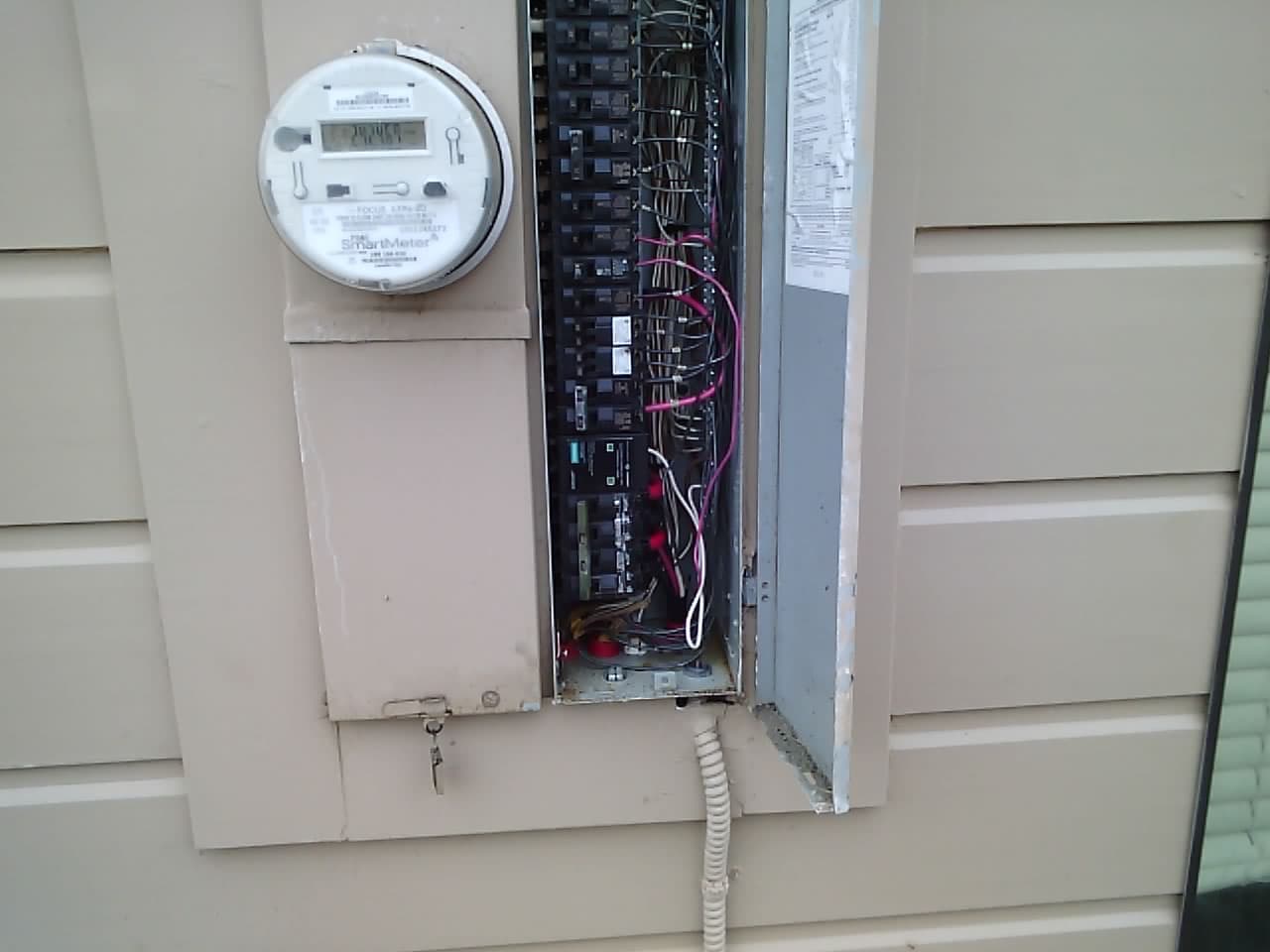
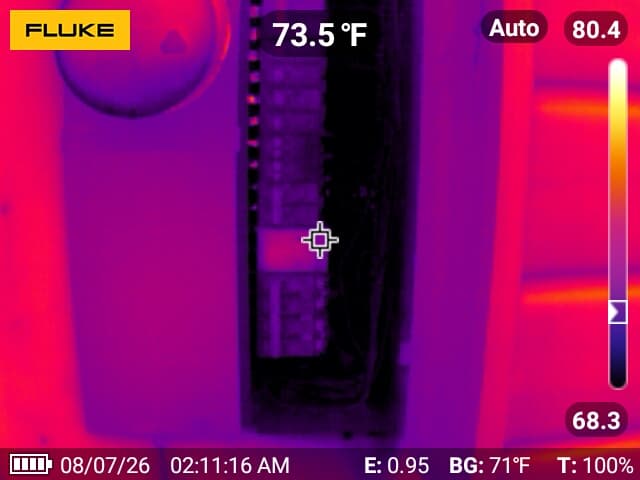
Loose connections, overloaded circuits, failing breakers, and corroded bus bar connections generate heat before they fail. An infrared camera inspection at the panel and throughout accessible wiring makes invisible problems visible — before they become outages, fires, or failed inspections.
- C-10 #1144031Licensed
- Bonded& Insured
- 15+ YearsExperience
- Santa Clara CountyService Area
Standard Inspection vs Thermal Imaging
What Each Inspection Method Finds
| Inspection Method | What It Finds | What It Misses |
|---|---|---|
| Visual inspection only | Physical damage, obvious wiring issues, code violations | Internal connection failures, overloaded circuits not yet tripping, corroded bus connections |
| Thermal imaging + visual | Everything above, plus hot spots at connections, overloaded breakers, unbalanced loads, failing components | Faults under insulation (IR sees surface temp only) |
| Best for residential | Thermal + visual combined | — |
| Best for commercial | Thermal + visual, NFPA 70B-aligned | — |
| Insurance value | Visual only — limited documentation | — |
| Insurance value with IR | Thermal image report — carrier documentation accepted | — |
What Thermal Imaging Finds
- →Loose connections— resistance creates heat before arcing
- →Overloaded circuits— conductors running hot under load
- →Failing breakers— internal resistance rise before failure
- →Bus bar corrosion— detected before connection failure
Inspection Process
Thermal Imaging Inspection — How It Works
The value of thermal imaging is in the interpretation. A temperature anomaly on a screen is a data point — knowing what it means for safety and reliability requires electrical knowledge.
Thermal Imaging Pricing
| Residential thermal imaging inspection (up to 2,000 sq ft) | $450 – $650 |
| Residential — larger home (2,000–3,500 sq ft) | $600 – $850 |
| Commercial thermal imaging inspection — small suite | $600 – $900 |
| Thermal + standard safety inspection (combined) | $650 – $950 |
| Written report with thermal images | Included |
| Follow-up remediation quote | Included if hot spots found |
Thermal images and remediation scope included in written report.
NFPA 70B
Thermal Imaging as an NFPA 70B Recommended Practice
NFPA 70B — Recommended Practice for Electrical Equipment Maintenance — specifically identifies infrared thermography as a recommended inspection technique for electrical equipment. The standard provides guidance on inspection frequency, acceptable temperature differentials, and documentation requirements. Our thermal imaging inspections follow NFPA 70B methodology for temperature differential interpretation and finding classification.
NFPA 70B identifies infrared thermography as a core maintenance inspection method — not an optional upgrade.
Why Cali Rollin Electric
Thermal Imaging Is a Precision Tool — the Value Is in the Interpretation
Thermal imaging is a precision tool — the value is in the interpretation. A hot spot at a bus bar connection looks like a color gradient on a screen. Knowing whether that represents a cleaning issue or an imminent failure requires electrical knowledge, not just a camera.
C-10 #1144031. Radiometric IR camera. Written report with thermal images delivered. 408-614-4451.
Frequently Asked Questions
Thermal Imaging Inspection — FAQ
What does thermal imaging detect in electrical systems?+
Thermal imaging detects abnormal heat patterns on energized electrical equipment — hot spots that indicate hidden problems such as loose or corroded connections creating high resistance at a lug, breaker, or bus bar; overloaded circuits or breakers running above their intended load; unbalanced 3-phase loads and failing components including motors, transformers, and contactors; failing breakers, fuses, lugs, or terminations that are heating internally before they actually fail or trip; and in some cases insulation damage or moisture causing localized heating in cables or gear. Because most of these issues heat up long before they trip a breaker or start a fire, thermal imaging is ideal for early detection. Cali Rollin Electric uses calibrated radiometric thermal imaging cameras and delivers a written report with thermal images, temperature data, and severity ratings for every anomaly found.
When should I schedule a thermal imaging inspection?+
For commercial and industrial properties, NFPA 70B recommends at least once every 12 months for all major electrical equipment including panels, switchgear, MCCs, busways, and large disconnects, and every six months for equipment in poor condition or critical operations. Schedule a thermal imaging inspection before peak load seasons — summer for HVAC loads and wildfire and PSPS season in California. Schedule after major changes including panel upgrades, large new equipment like EV chargers, CNC machines, or HVAC, or service changes. Schedule any time you have had unexplained breaker trips, burning smells, or repeated equipment failures. For homeowners, a thermal scan is especially valuable in older homes, homes with known aluminum or knob and tube wiring, or before purchasing a property as a supplement to a standard inspection.
How is thermal imaging different from a standard electrical inspection?+
They answer different questions and work best together. A standard electrical inspection is primarily de-energized work — panel covers are removed to inspect wiring, breaker sizes, terminations, and code issues, devices are tested for GFCI and AFCI function and polarity, and visual condition is assessed. Thermal imaging is non-contact work done with equipment energized and under load — you see how things behave in real operation. It quickly scans many components to find heat-based anomalies invisible to the eye including loose lugs, overloaded circuits, and failing components. A traditional inspection checks whether this is wired and sized correctly. Thermal imaging checks whether anything is heating up abnormally when it runs. Cali Rollin Electric offers a combined thermal and standard safety inspection starting at $650–$950 — the most comprehensive single-visit electrical assessment available.
Does thermal imaging require opening the electrical panel?+
Yes — for quality results panels and gear are scanned with covers removed by a qualified electrician using proper PPE and safety procedures, while equipment is energized and under at least approximately 40% of typical load. Scanning with covers removed allows the camera to see bus bars, lugs, and breaker bodies directly — surface scanning through a closed panel door misses the most important components. In some facilities IR viewing windows are installed on switchgear and critical panels so thermography can be performed without removing covers — common in higher arc flash installations. Where no IR window exists and arc flash risk is manageable, Cali Rollin Electric removes covers under controlled conditions to get accurate readings.
Can I use the thermal report for insurance purposes?+
Yes — many insurers now request or require thermal imaging as part of their loss control and underwriting process, especially for commercial and industrial properties. Insurers use IR reports to verify you are proactively managing electrical fire risk, document compliance with NFPA 70B requirements for regular infrared inspections, identify and prioritize corrective work, and confirm that identified issues have been corrected. Some carriers treat documented thermography programs as a credit factor and view customers with regular IR inspections as lower risk, and may require updated IR reports at renewal or after major modifications. For homeowners, a thermal report can help demonstrate that hazards have been identified and corrected, especially in older or higher-risk homes. The written report with thermal images is included with every Cali Rollin Electric thermal imaging inspection.
What happens if a hot spot is found?+
A hot spot is a diagnostic flag, not an automatic emergency, but it must be taken seriously. Cali Rollin Electric follows a closed-loop process: detect, investigate, repair, verify, and document. First we confirm and classify — comparing the suspect component temperature to similar components under the same load, evaluating how many degrees hotter it is against NFPA temperature rise guidelines, and assigning a severity level of monitor, schedule repair, or immediate action. Then we investigate cause by de-energizing as appropriate and performing a close visual and mechanical inspection for loose or corroded lugs, undersized conductors, overloaded circuits, damaged insulation, or failing breakers. Corrective action depends on findings and may include retorquing or reterminating connections, replacing a failing breaker, redistributing load across circuits or phases, or scheduling a planned outage for more invasive repairs. After repairs the equipment is re-energized and re-scanned to confirm the hot spot has returned to normal temperature. The updated thermogram and repair notes are added to your maintenance documentation.
Schedule a Thermal Inspection
Schedule an InspectionBest scheduled during operating hours — system under load.
Get In Touch
Thermal Imaging Inspection Request
Let us know if this is residential or commercial, the property size, and your preferred scheduling window. We'll confirm availability and timing.
- →Schedule under load— daytime / operating hours
- →Written report delivered— thermal images included
- →C-10 #1144031— licensed CA electrician
Thermal Imaging Electrical Inspection
See What a Standard Inspection Can't.
Thermal Imaging Inspection Service Area — Santa Clara County