Most electrical failures give weeks of warning. Schedule your inspection before they don't. 408-614-4451

Lifeline · Preventive Maintenance

Electrical Preventive Maintenance in Santa Clara County. NFPA 70B-Aligned.

Electrical systems that are never maintained are systems that fail unexpectedly. Loose connections tighten again before they arc. Failing breakers get replaced before they fail to trip. Overloaded circuits are identified before they become outages. Preventive maintenance is the difference between a scheduled service call and an emergency.

Baseline infrared interval
Annual IRBaseline infrared interval
Maintenance framework
NFPA 70BMaintenance framework
Service documentation every visit
Written recordService documentation every visit
California electrician
C-10 #1144031California electrician

Quick answer

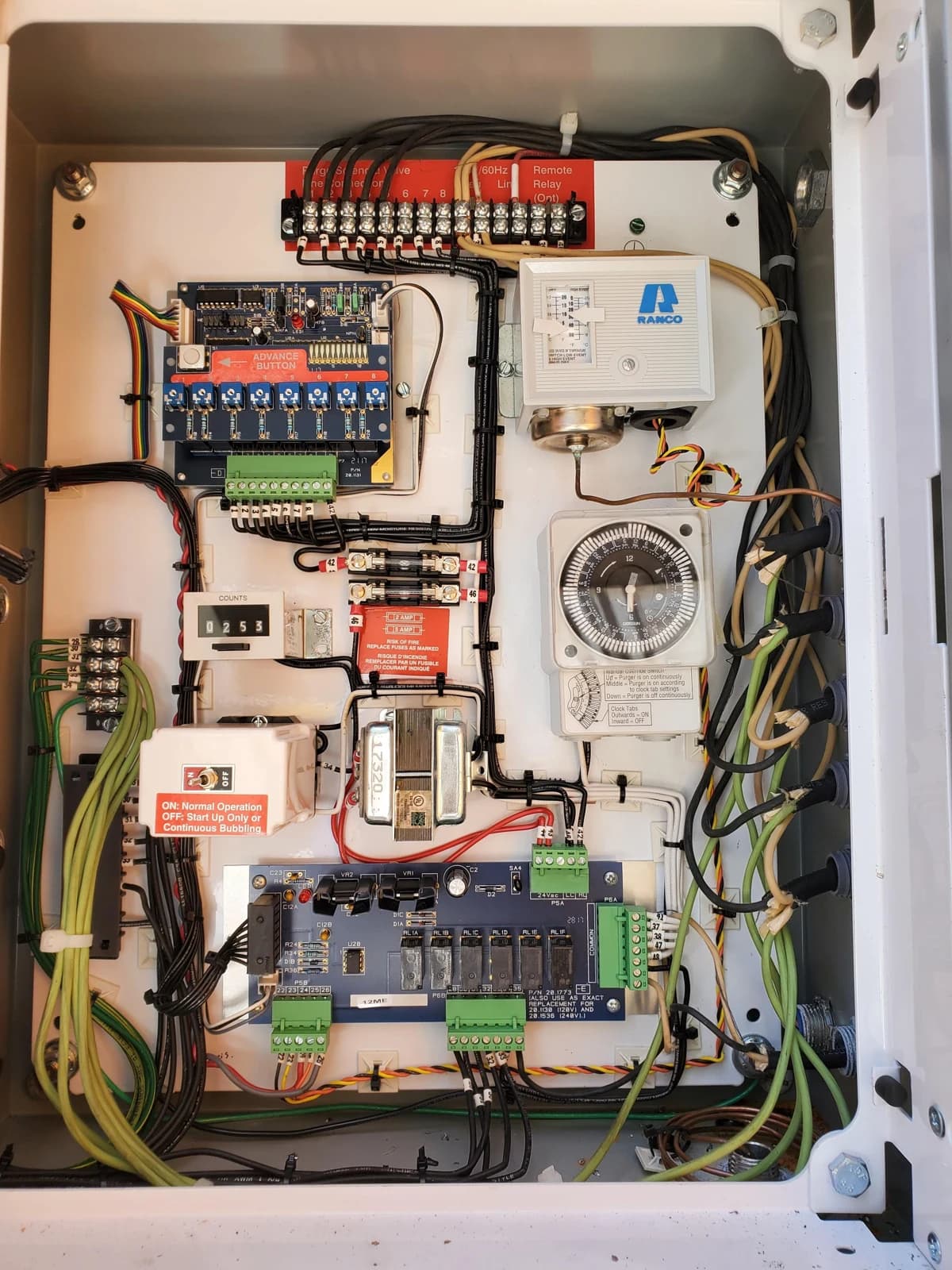
A preventive maintenance visit is hands-on work, not a walkthrough: our crew inspects the service and panels, retightens terminations within the 90 percent ceiling NFPA 70B sets for hardware already in service, verifies breakers, tests GFCI and AFCI devices, scans energized gear for hot spots, and leaves a written service record. Most properties run on an annual cycle, twice a year where equipment is in poor condition. Residential programs run $500 to $900 per year, small commercial from $900, across Santa Clara County. Verify our license is C-10 #1144031 at the CSLB before we arrive.

Visit scope

What a maintenance visit actually consists of

Electrical preventive maintenance visit scope by item and reference standard
Visit itemWhat our crew doesReference standard
Service, panels, disconnectsVisual inspection for overheating, corrosion, water intrusion, physical damage, and code issuesNFPA 70B
TerminationsAccessible lugs and terminations checked and retightened to no more than 90 percent of the initial torque spec from the manufacturer, the ceiling NFPA 70B sets for hardware already in serviceNFPA 70B 7.2.1.4.1
Overcurrent devicesBreaker operation verified, heat discoloration and damage notedNFPA 70B
GFCI and AFCI devicesTested at every installed location, which is our own scope rather than a published maintenance interval: the California Electrical Code sets where the protection has to exist, and the device manufacturer sets how often it gets testedManufacturer instructions
LoadingVoltage and current sampled to confirm circuits are inside their ratingCRE scope
Infrared scanEnergized gear scanned for hot spots from loose connections and overloadsNFPA 70B
Cleaning and clearancesDust and debris removed from panels and gear, ventilation openings and airflow paths kept clear, and working clearance checkedNEC 110.13(B) / 110.26
DocumentationPanel schedules updated, results logged, written service record deliveredNFPA 70B

The infrared portion is where most failures announce themselves early. If you want the technique behind it, how a thermographer reads a hot termination and what temperature rise means, that is covered on our thermal imaging inspection page.

Every visit includes

  • Panel inspection (condition, breakers, labeling)
  • Connection torque check (at all panel terminations)
  • GFCI testing (all installed locations)
  • Written service report (delivered after every visit)

Cadence

How often maintenance should happen

NFPA 70B sets the baseline intervals, and equipment condition moves them. We set your cadence at the first visit based on what we find, not on a generic plan tier.

Every 12 months

Baseline interval

Infrared thermography of panels, switchgear, MCCs, and other critical gear under normal load, which is the one NFPA 70B interval that reaches all equipment, plus whichever equipment-specific visual and functional checks come due that year. This is the standard interval for most properties.

Every 6 months

Equipment in poor condition

Gear that is deteriorated or highly critical (Condition 3 under NFPA 70B) gets its infrared scan twice a year instead of once, and its hands-on checks move up the same way where its own interval tightens. Deterioration is not the only way in: equipment that simply missed its last two scheduled cycles is Condition 3 on that fact alone. We set the grade at the baseline visit, per equipment, not per building.

Every 3 to 5 years

Deeper maintenance

Breaker and relay testing, insulation resistance testing, cleaning of switchgear interiors, and updated system studies. The short-circuit, coordination, and incident energy studies are reviewed at intervals not exceeding five years under the standard, and sooner whenever the distribution changes in a way that could affect the result. Where the manufacturer publishes a maintenance interval for a piece of gear, that interval governs, shorter or longer, and the interval table in the standard fills in only where the manufacturer is silent.

Reactive vs preventive

What changes when the work is scheduled

Reactive maintenance compared with preventive maintenance
FactorReactivePreventive
Electrical failuresDiscovered when equipment failsDetected during scheduled inspection
Repair costEmergency call plus potential equipment damageScheduled repair, planned cost
DowntimeUnplanned, disrupts operationsScheduled, planned and minimized
NFPA 70B standingNo documentation, no maintenance historyDocumented service record per NFPA 70B
Insurance standingNo maintenance record, potential claim complicationsDocumented maintenance history
Property value impactDeferred maintenance visible at inspectionDocumented maintenance record at sale
Typical cost comparisonEmergency call: $350–$1,500 per incidentAnnual maintenance: $500–$2,000 per year

Program process

How a maintenance program runs

The first visit establishes a baseline: full assessment of the electrical system, documented deficiencies, and a service record. Every visit after that builds on the same history, which is what makes the second year more useful than the first.

01

Initial assessment

The first visit covers a full system assessment: panel, wiring, GFCI, grounding, and service capacity. The baseline gets documented.

02

Schedule set

Annual or semi-annual cadence established per the equipment we found. Calendar reminders go out ahead of each visit.

03

Scheduled visit

Panel inspection, connection torque check, GFCI testing, infrared scan where included, and a deficiency list.

04

Service record and remediation

A written report is delivered after each visit. Minor repairs are quoted and completed the same day when possible.

When we find a deficiency

  1. Document it and rate it: monitor, schedule the repair, or immediate action where there is fire or shock risk.
  2. Make it safe now if the rating calls for it, by de-energizing the circuit or reducing load on the spot.
  3. Correct it: tighten or reterminate conductors, redistribute load, replace breakers or damaged components, fix code violations.
  4. Minor items are handled at the same visit when you authorize them. Larger items are quoted, scheduled, and performed under permit where required.
  5. Re-check the equipment visually, mechanically, or with an infrared scan, then update the service record so the fix is documented.

Program pricing

What a maintenance program costs

Preventive maintenance program pricing by property type and interval
Annual maintenance, residential (up to 2,500 sq ft)$500 – $900 / year
Semi-annual maintenance, residential$800 – $1,400 / year
Annual maintenance, small commercial suite$900 – $1,800 / year
Semi-annual maintenance, commercial$1,500 – $3,000 / year
Written service reportIncluded every visit
Minor remediation at visitQuoted and completed same day when possible

The written service report and minor remediation are included at each visit. Square footage, panel count, and equipment condition move the number, so we confirm your range after the baseline assessment. Where corrective work needs a permit, permit and inspection fees run $500 to $1,000 on residential work and $750 to $2,500 or more on commercial, depending on jurisdiction and job valuation, and are quoted separately.

A note on scope: the program is built on the NFPA 70B framework, and the standard names industrial plants, institutional and commercial buildings, and large multifamily residential complexes, while excluding consumer appliances and equipment intended primarily for home use. It does not govern a single-family house call. On a house we bring the same discipline and the same written service record, without claiming the standard applies to it.

NFPA 70B

Why preventive maintenance is functionally mandatory

NFPA 70B (Standard for Electrical Equipment Maintenance) exists because fixing equipment after it fails is more expensive, more dangerous, and more disruptive than maintaining it on a schedule. It sets the inspection intervals, the maintenance procedures, the documentation requirements, and the qualification standard for the people doing the work. For any operation that depends on electrical reliability, that is not a regulatory checkbox. It is the minimum standard of care.

NFPA 70B makes preventive electrical maintenance functionally mandatory for operations that cannot afford unplanned downtime.

C-10 #1144031 ↗Insured & BondedServing all 15 Santa Clara County cities

Why Cali Rollin Electric

Maintenance works best when the crew knows your system

Our team brings 15+ years in the trade to a program that gets more valuable every year: we know the panel was last opened eight months ago, that a lug was re-torqued at the last visit, that one circuit has been running hot since spring. That history is the whole point. It is a maintenance relationship, not a one-time service call, and it comes with a written service record every visit.

Scheduled, not reactive

Visits are planned on your calendar, not called in during a failure.

Written service record

Every visit documented: service history for insurance, sale, and compliance.

NFPA 70B-aligned

Maintenance framework, inspection scope, and documentation follow NFPA 70B.

Minor remediation included

Small repairs (connections, breakers, devices) addressed at the maintenance visit.

Same-day urgent response

Maintenance clients get priority response for unplanned electrical issues.

15 SCC cities

Every incorporated city across Santa Clara County.

Verified reviews

See what property owners are saying about us

★★★★★

Frequently asked questions

Preventive maintenance: FAQ

What is included in an annual electrical maintenance visit?

An annual preventive maintenance visit is a hands-on service visit, not just a quick look. A typical NFPA 70B-aligned visit includes: systematic visual inspection of main service, panels, disconnects, transformers, and the feeder and service conductors feeding that equipment, which is where the cable scope of the standard actually stops (NFPA 70B Section 18.1.2 covers the run from the supply source to the final branch-circuit overcurrent device, and 18.1.3 excludes the wiring downstream of that device out to the outlets), for overheating, corrosion, water intrusion, physical damage, and code issues; thermal imaging of energized equipment to find hot spots from loose connections, overloads, or failing components; mechanical and electrical checks including torque verification on accessible terminations, retightened to no more than 90 percent of the manufacturer's initial spec per NFPA 70B Section 7.2.1.4.1, verifying breaker operation, and sampling voltage and current to confirm proper loading; cleaning and minor servicing including removing dust and debris from panels and gear, checking ventilation and clearances; and documentation and reporting including updated panel schedules, logged inspection results, and a written report with findings and recommendations. We also test GFCI and AFCI devices at every installed location on the same visit, and that piece is our own scope rather than a 70B interval: the standard publishes no periodic GFCI test frequency and does not address AFCIs at all, so we run it on the California Electrical Code protection requirements and the device manufacturer's instructions. Cali Rollin Electric includes the written service report with every visit. Minor remediation found during the visit can be quoted and completed same day when possible.

Is electrical preventive maintenance required for commercial properties in California?

Not as a matter of law. NFPA 70B is a national consensus standard, not a statute, and it is not adopted into California law the way the California Electrical Code is. For most commercial and industrial properties the practical answer is still yes, which is why we call it functionally mandatory rather than legally required. The 2023 edition of NFPA 70B converted from a recommended practice into a formal consensus standard with mandatory shall requirements for electrical maintenance programs where adopted by an authority having jurisdiction, and the current 2026 edition carries that framework forward. Insurers increasingly ask for evidence of documented maintenance on commercial accounts, though whether it is actually required, and what it buys you on premium, depends on the policy, so check yours. While California does not send inspectors to every strip mall demanding an EMP, larger, more complex, or higher-risk commercial properties are now expected to have a documented preventive maintenance program in place.

How often should electrical preventive maintenance be performed?

NFPA 70B establishes a clear baseline. At least once per year: infrared thermography of panels, switchgear, MCCs, and other critical gear under normal load, which is the one interval in the standard that reaches all equipment, plus whichever equipment-specific visual and functional checks come due that year. Every six months: the infrared scan on equipment in poor condition or with high criticality (Condition 3 under NFPA 70B, a grade equipment also lands in when its last two successive maintenance cycles were missed outright), with its hands-on checks moving up the same way where that equipment has its own tighter interval. Every three to five years, or on the manufacturer interval where one is published: deeper maintenance including breaker and relay testing, insulation resistance tests, and cleaning of switchgear interiors. Separately, the system studies covering short-circuit analysis, coordination, and incident energy (arc flash) are reviewed at intervals not exceeding five years, and sooner whenever the distribution changes in a way that could affect the result. Cali Rollin Electric preventive maintenance plans start at $500 to $900 per year for residential and $900 to $1,800 per year for small commercial suites on an annual schedule, and $800 to $1,400 per year for residential and $1,500 to $3,000 per year for commercial on a semi-annual schedule.

What is the difference between a safety inspection and preventive maintenance?

Think of them as check versus fix. A safety inspection is primarily an assessment, a mostly visual and non-invasive check to see if equipment appears safe and compliant at a point in time. It focuses on finding obvious hazards, damage, or code issues and ends with a written report and recommendations. Preventive maintenance is a program of scheduled work that includes inspection plus specific maintenance actions (tightening, cleaning, adjusting, testing, replacing wear components, and updating documentation) designed to prevent failures and extend equipment life. An inspection tells you what is wrong or at risk. Preventive maintenance actually does something about it on a planned schedule. Cali Rollin Electric offers both standalone safety inspections and ongoing preventive maintenance programs. The right choice depends on your property type, risk profile, and whether you need a one-time assessment or long-term documented maintenance.

Can you set up a preventive maintenance program for my rental property?

Yes. A preventive maintenance program makes just as much sense for rental properties as for owner-occupied or commercial buildings, especially where you have older wiring or panels, multiple tenants including duplexes, fourplexes, or small multi-family, or heavy electric loads like EV chargers, electric heat, or older HVAC. A right-sized rental program typically includes annually: panel inspection and tightening, GFCI and AFCI testing, infrared scan of panels, and a safety walk of common area lighting and receptacles. At tenant turnover: a quick safety check in the unit covering outlet tests, obvious damage or DIY wiring, and smoke and CO alarm verification. Every three to five years: deeper check of service capacity, grounding and bonding, and any known legacy issues like FPE, Zinsco, knob and tube, or aluminum wiring. This documented program is built on the same framework NFPA 70B sets for commercial equipment, and it helps satisfy insurer and lender questions about how you manage electrical risk in your portfolio.

What happens when a deficiency is found during a maintenance visit?

NFPA 70B treats deficiencies as part of a closed-loop process: find, assess, correct, verify, and document. Our crew documents what is wrong (an overheated lug, overloaded circuit, deteriorated insulation, or code violation) and assigns a severity and priority level from monitor to schedule repair to immediate action required if there is fire or shock risk. For critical issues, temporary safeguards like de-energizing a circuit or reducing load may be implemented immediately. Specific corrective actions are recommended: tightening or reterminating conductors, redistributing load, replacing breakers or damaged components, or correcting code violations. Many minor deficiencies can be corrected on the same visit if authorized. Larger items are quoted, scheduled, and when required performed under permit. After repairs the affected equipment is re-checked visually, mechanically, or with an infrared scan as appropriate to confirm the issue is resolved. The maintenance records are updated so you can demonstrate that the deficiency was addressed, which is exactly what NFPA 70B requires and what insurers and safety auditors want to see.

Get started

Set up a maintenance program

Tell us the property type, residential or commercial, its approximate age, and whether there is any existing maintenance history. We will schedule the baseline assessment visit, set the cadence from what we find, and put the calendar reminders in place.

Call (408) 614-4451Free quote