Selected heater
Plan around the listed appliance
Voltage, load, mounting, and clearance information belongs to the selected product.
- Share model information
- Confirm intended mounting
- Review manufacturer instructions
Outdoor Heater Installation
An outdoor heater installation starts with the heater’s actual listing and instructions, the mounting location, and the route back to the electrical source.
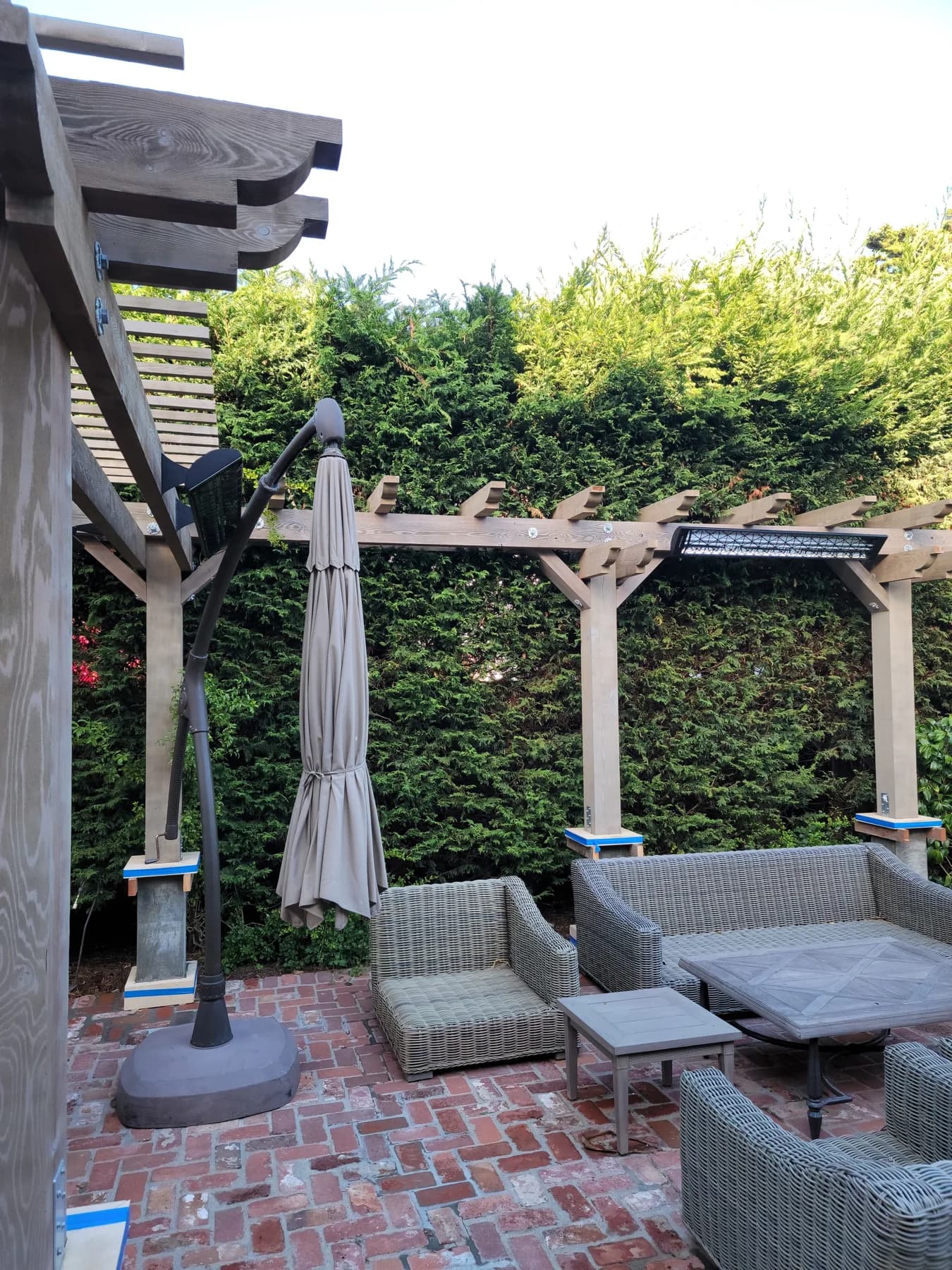
Selected heater
Voltage, load, mounting, and clearance information belongs to the selected product.
Outdoor room
Ceiling, wall, pergola, and seating layouts affect where a heater can be considered.
Electrical route
Panel capacity, route length, walls, and landscape work affect electrical scope.
Select a photograph to view it at full size.
Outdoor electric heaters are not interchangeable. The product’s listed voltage, load, mounting method, clearance, and control instructions define the starting point for the electrical plan.
Share the manufacturer and model before a site review. The selected heater instructions and mounting structure determine the circuit and clearance requirements.
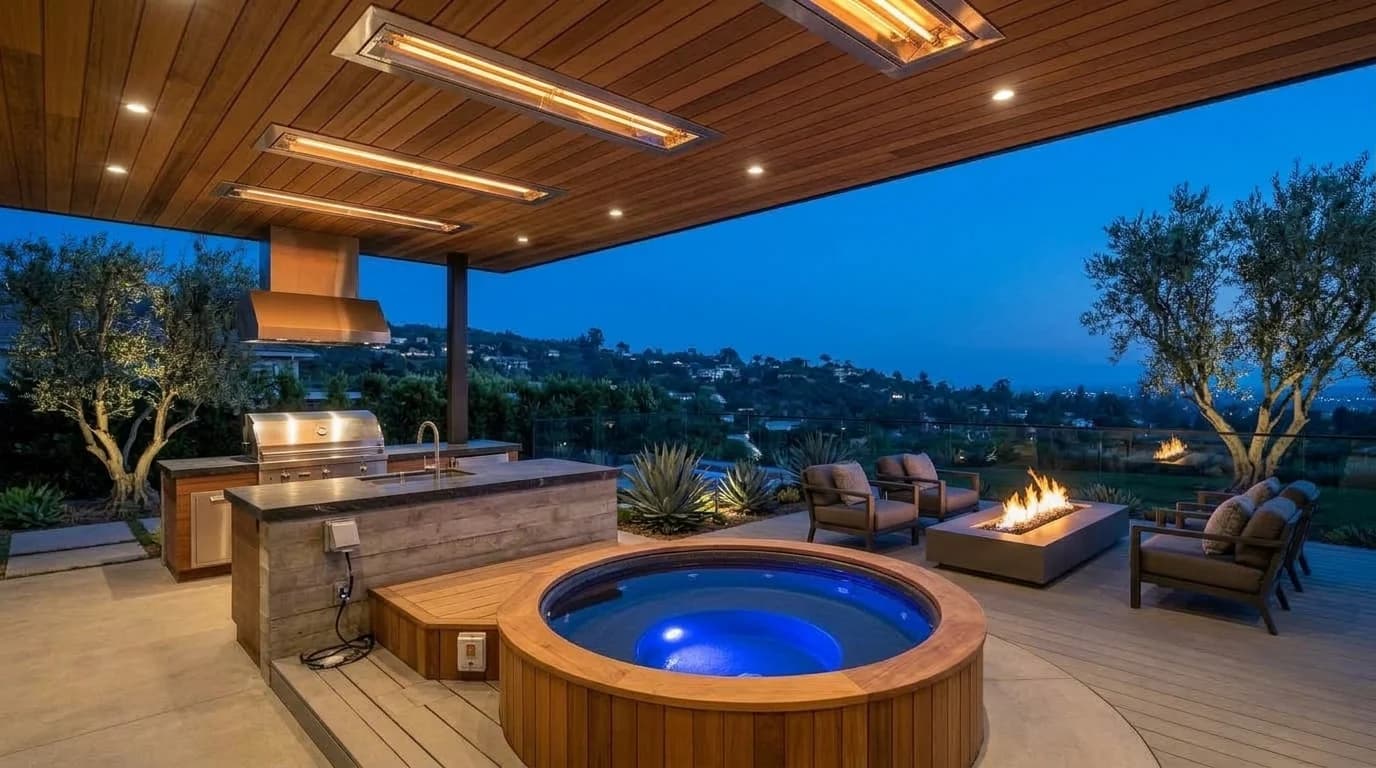
The seating arrangement, ceiling or pergola construction, wind exposure, combustible surfaces, and desired control location all shape the conversation. A mounting surface is not automatically suitable just because a heater can be pictured there.
Coordinate the heater with lighting, fans, and outdoor kitchen work so the physical layout and electrical routes can be considered together.
The existing panel, available capacity, route through the house, exterior wall conditions, and landscape access influence what is practical. A long or concealed route is a project variable, not a promised package.
If underground work, structural mounting, gas service, or appliance assembly is involved, describe the responsible trade and scope before work begins.
A control should be convenient for the people using the patio and appropriate for the selected equipment. Discuss whether the goal is a simple local control or a broader controls plan, then verify the product’s options.
Remote control, scheduling, coverage, and weather performance depend on the selected heater, its controls, mounting location, and site conditions.
Send the heater model, photos of the intended location and panel, a simple layout, and any construction schedule. This lets the electrical work be evaluated alongside the real appliance and structure.
The resulting scope can state what electrical work is included and what remains with the heater supplier, builder, or other trade.
A heater supplier or designer can select an appliance for the intended comfort zone. The electrical review then considers the selected heater instructions, mounting support, control arrangement, and route back to the service equipment.
Electric and fuel-fired heaters are different projects. Fuel piping, combustion equipment, and appliance performance are not implied by an electrical installation discussion.
Bring the mounting detail for the actual ceiling, wall, or structure. The selected product instructions and structure determine its support, clearances, weather exposure, and the access needed for the agreed work.
Discuss where the control will be used from and whether the heater is part of a larger patio lighting or controls plan. A control location should suit the selected equipment, occupied areas, and daily use.
A responsible heater plan ties a specific listed product to a real structure, seating plan, control location, and electrical route.
Start with the model and intended outdoor room.
Review electrical access and mounting conditions.
Coordinate electrical work with product instructions and other trades.
We first review the selected product, site, instructions, and agreed electrical scope.
Coverage and equipment selection are manufacturer and site decisions. Share the model and outdoor layout for planning.
It depends on the structure and the heater’s mounting and clearance requirements; review both before committing.
Yes. Coordinating the layout early can make controls and routes easier to discuss.
Share your city, the work you need, and any equipment or plans you already have.
408-614-4451