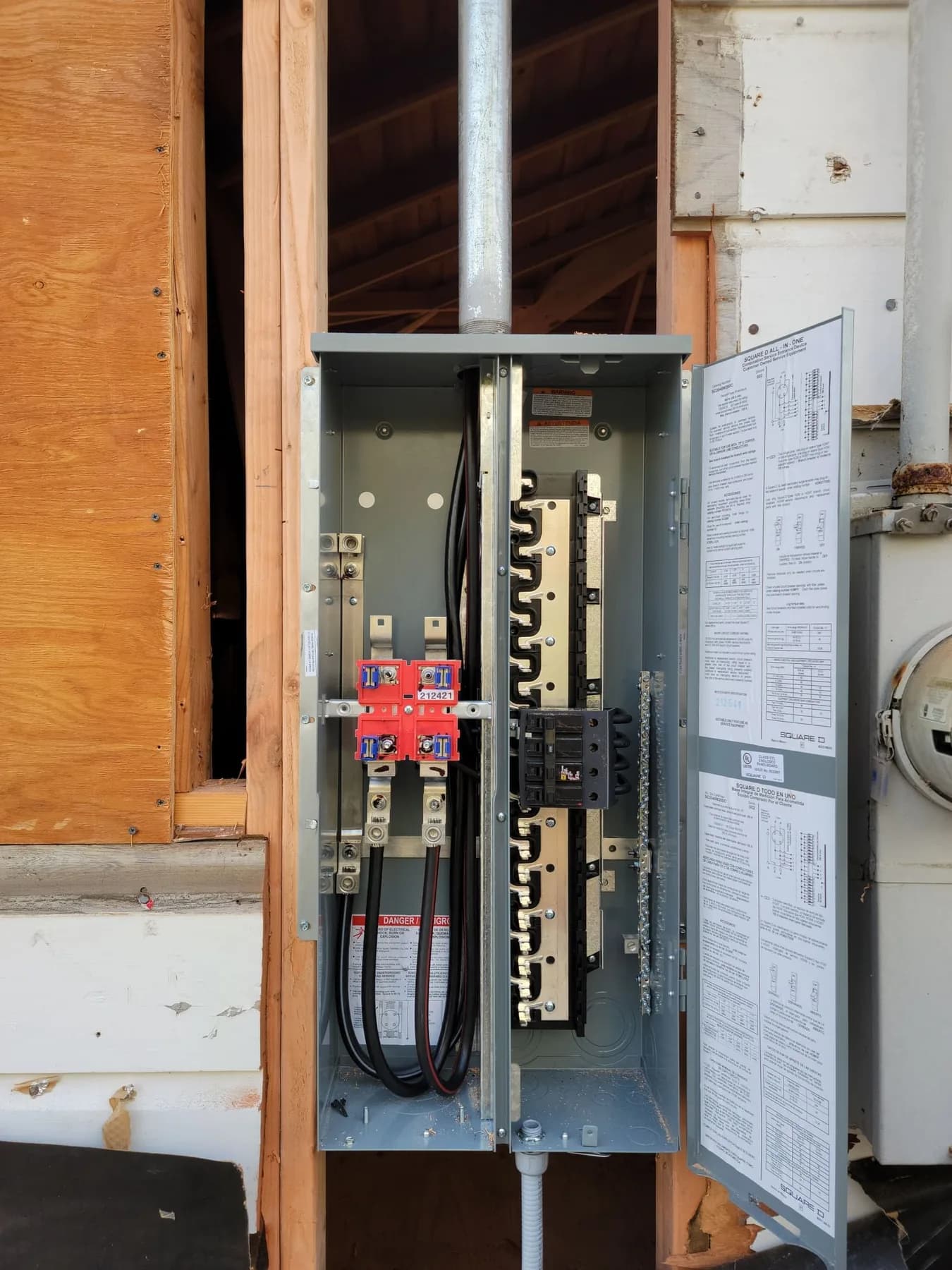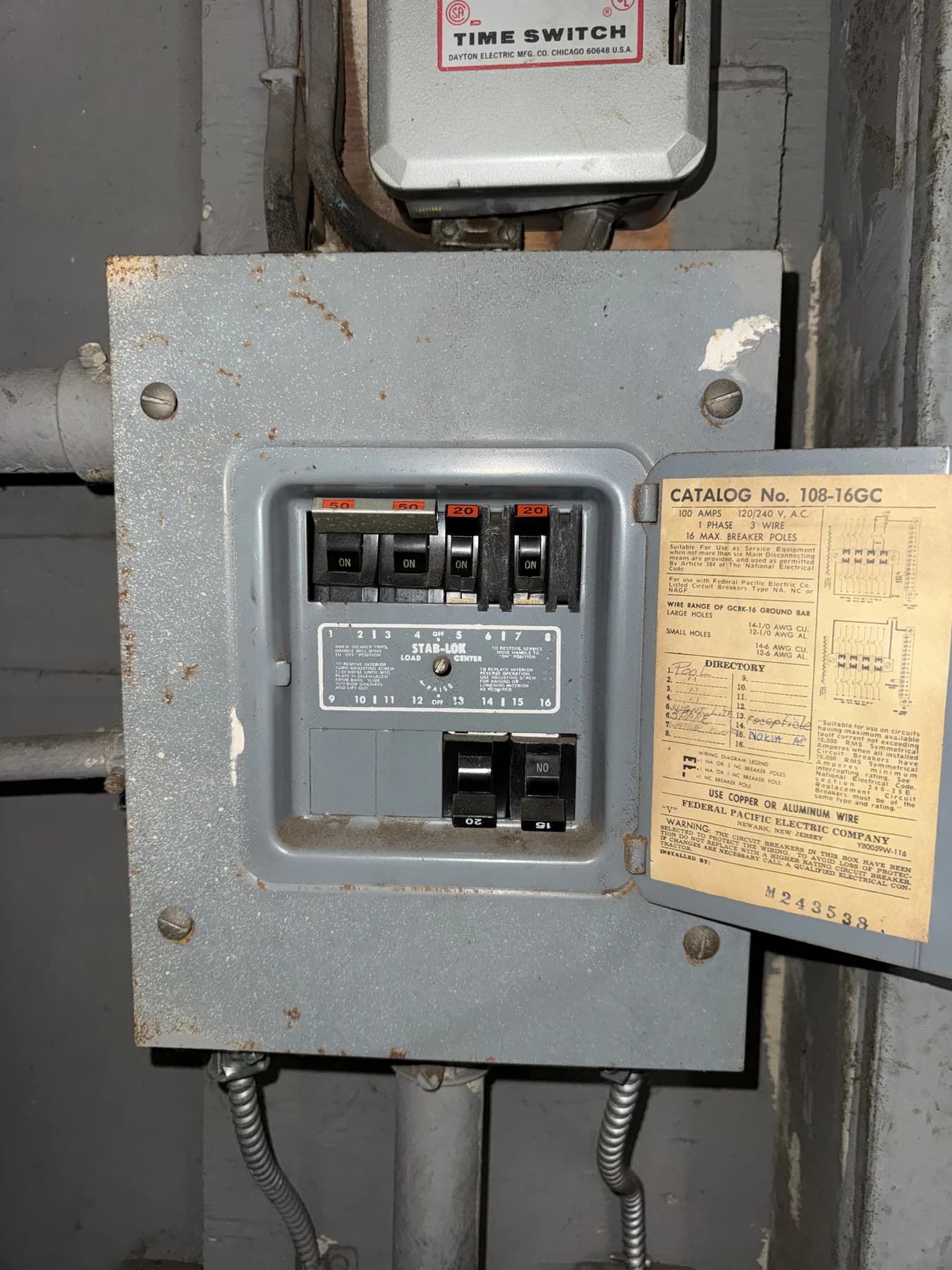
Service assessment
Review the actual service arrangement
The accessible service equipment establishes what can be evaluated.
- Send panel and meter photos.
- Describe known alterations.
- Include inspection notes.
Home Grounding, Bonding and Outlet Upgrades
Review grounding from the service equipment to the outlets you use every day. We assess accessible service connections, bonding, and branch-circuit wiring, then explain the scope for the home and the rooms that need attention.
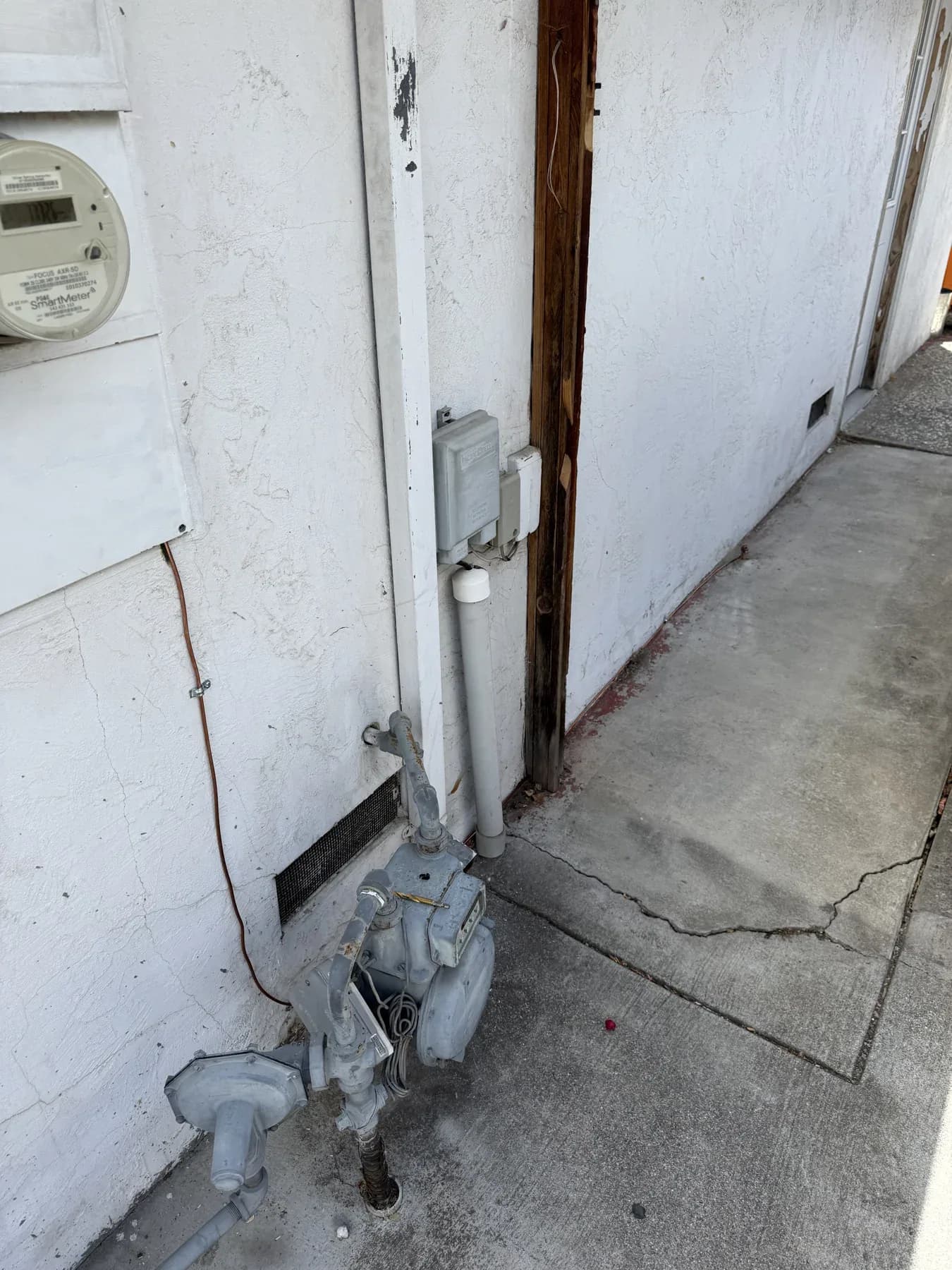
Service assessment
The accessible service equipment establishes what can be evaluated.
Verify the circuit
A receptacle appearance or a plug-in tester result is not a complete wiring assessment.
Choose the protection
A grounding conductor upgrade, GFCI protection, or circuit replacement solve different problems.
Panel or equipment work
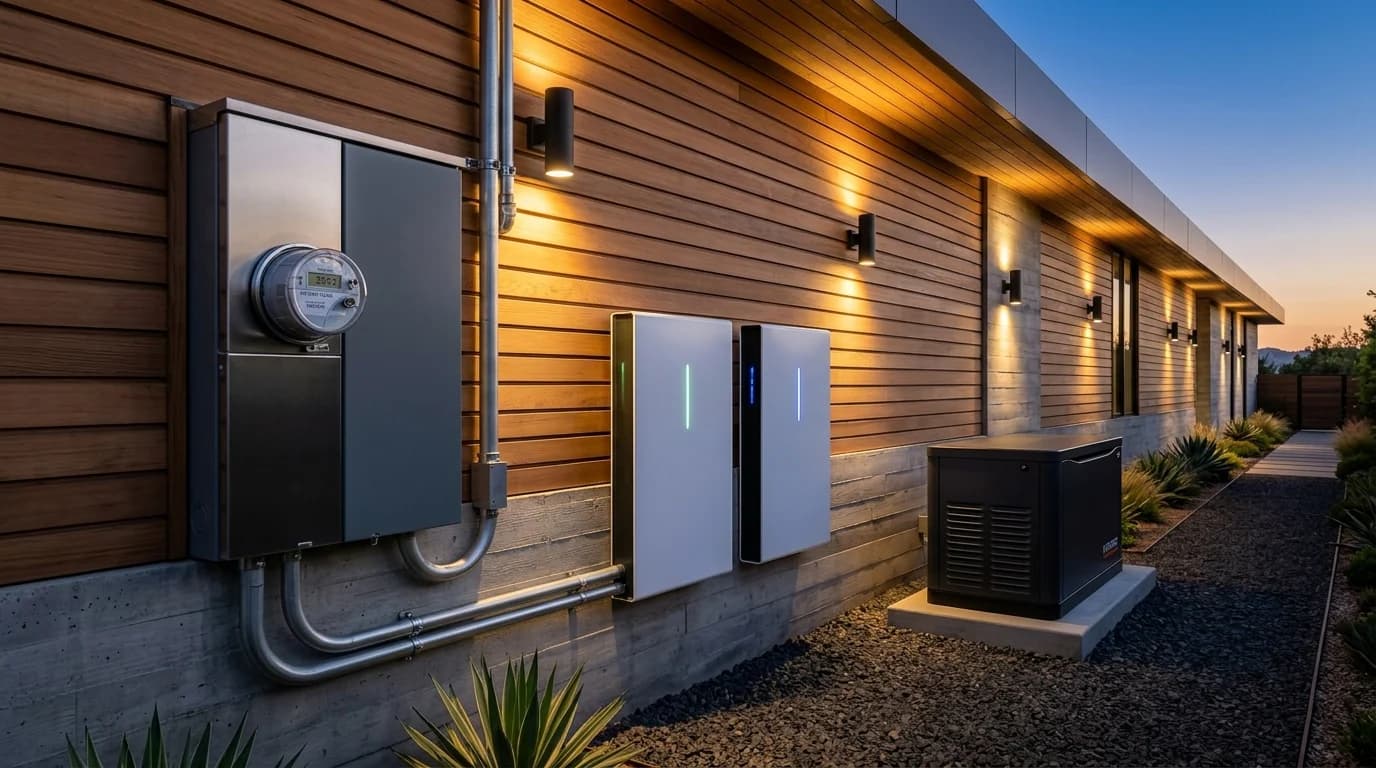
A panel replacement, surge device, battery, or EV project may prompt a service-side review.
Select a photograph to view it at full size.
Grounding connects the electrical system to earth through the applicable electrode system. Bonding connects metal parts and equipment so a fault has an effective path back to the source, allowing protective devices to operate as intended.
These terms are often used together, but they are not interchangeable. A site review should identify the service equipment and accessible existing connections before recommending a correction.
An equipment grounding conductor provides a path intended to reduce shock risk when a fault energizes exposed metal. Older homes may have polarized two-wire circuits without that conductor.
A grounding-type receptacle should not be treated as evidence of a valid ground simply because it has three openings. The box, circuit wiring, and route back to the service equipment must be assessed.
GFCIs are designed to interrupt power when they detect leakage current. They are important protection in locations where water and electricity can meet, but they do not add an equipment grounding conductor to an old circuit.
The correct approach depends on the circuit and location. A visit can distinguish a wiring replacement or grounding upgrade from an appropriately protected existing circuit.
The assessment can consider the meter and service equipment, panel, visible grounding-electrode conductors, accessible metal piping and bonding, and prior electrical modifications. What is appropriate depends on the property and local requirements.
A remote image cannot establish every connection or hidden condition. The written scope should say what was observed, what work is included, and what depends on further access or jurisdiction review.
Manufacturer guidance describes GFCI replacement options for some existing nongrounding receptacles, with the required labeling. That can provide ground-fault protection, but the outlet still does not have an equipment grounding conductor. The appropriate option must be selected for the existing circuit and applicable requirements.
Tell us what you intend to plug in. Equipment instructions may call for a grounded connection, which changes the choice between a protected replacement and new grounded wiring. An outlet correction also does not increase the capacity of the branch circuit or repair damaged wiring elsewhere on it.
A water-service replacement, plumbing remodel, panel change, or addition can be relevant to the accessible grounding and bonding arrangement. Provide the records you have and point out where work occurred, including changes outside the house. This gives the electrician a more useful starting point than the age of the home alone.
Grounding at the service and grounding at an individual receptacle are separate questions. If your concern is a two-slot outlet or equipment that needs a grounded connection, include those rooms in the request so the branch-circuit wiring can be reviewed as well. Adding a service-side connection does not by itself install a missing conductor in an older outlet circuit.
A documented assessment connects service grounding and bonding with outlet and circuit conditions, so the scope addresses the actual concern at each location.
Review accessible panel, meter, grounding connections, outlet boxes, and the rooms included in the request.
Separate observed conditions from work that needs further access or approval.
Complete the approved changes with the related electrical project where useful.
No. Grounding connects the system to earth; bonding connects metal parts and equipment to provide an effective fault-current path.
The existing circuit must be evaluated first. A three-prong face alone does not create equipment grounding.
No. GFCI protection and equipment grounding serve different functions.
It is an unsafe improper connection that can make an outlet appear grounded. It needs professional correction.
No. Photos help prepare an assessment but may not show all service-side connections or conditions.
It can be useful to coordinate the review, but the existing installation determines whether work is needed.
Share your city, the work you need, and any equipment or plans you already have.
408-614-4451