Commercial downtime is expensive. Get same-week scheduling: 408-614-4451

Infrastructure · Commercial Service & Panel Upgrades

Commercial Electrical Service & Panel Upgrades in San Jose and Santa Clara County 200A to 800A. Meter Stacks. Switchgear.

Service entrance upgrades, multi-tenant meter stacks, switchgear replacement, and 200A to 800A commercial panels across Santa Clara County, planned around your operating hours so the upgrade does not cost you a day of business.

California electrical contractor
C-10 #1144031California electrical contractor
Single- and three-phase service
200A–800ASingle- and three-phase service
Multifamily & multi-tenant metering
Meter stacksMultifamily & multi-tenant metering
Utility cutover coordinated
PG&E / SVPUtility cutover coordinated

Quick answer

There is no honest flat price for a commercial service or panel upgrade. The number is set by your new service amperage and phase (a 200A single-phase job is a fraction of an 800A three-phase service), whether it is a panel swap or a full switchboard replacement, and whether PG&E or Silicon Valley Power has to set a new transformer. Our team runs an NEC 220 load calculation on your building's real connected load, gives you a written, line-item quote, and plans a phased cutover so the upgrade does not cost you a day of business. C-10 #1144031.

Commercial service scope

What a commercial service upgrade covers

Commercial service upgrade scope and permit requirement
Scope itemTypical requirementPermit required
Service entrance upgrade (200A to 800A)New mast/lateral, meter-main, NEC 250 grounding & bondingYes
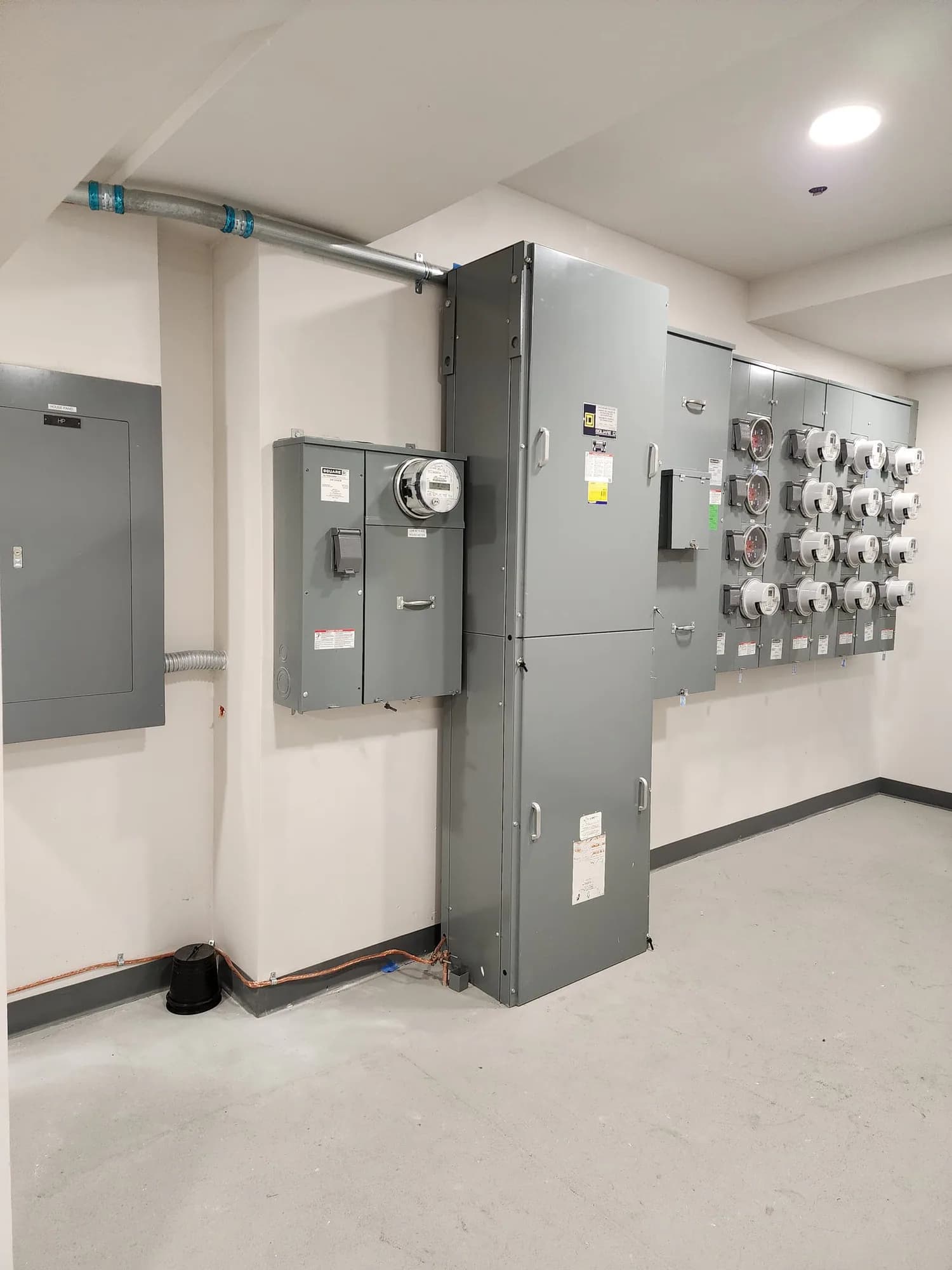
Meter stack (multi-tenant / multifamily)Per-unit metering sized to PG&E or SVP specYes
Main switchboard / switchgear replacementReplace obsolete or failed gear: FPE, Zinsco, Pringle, fused mainsYes
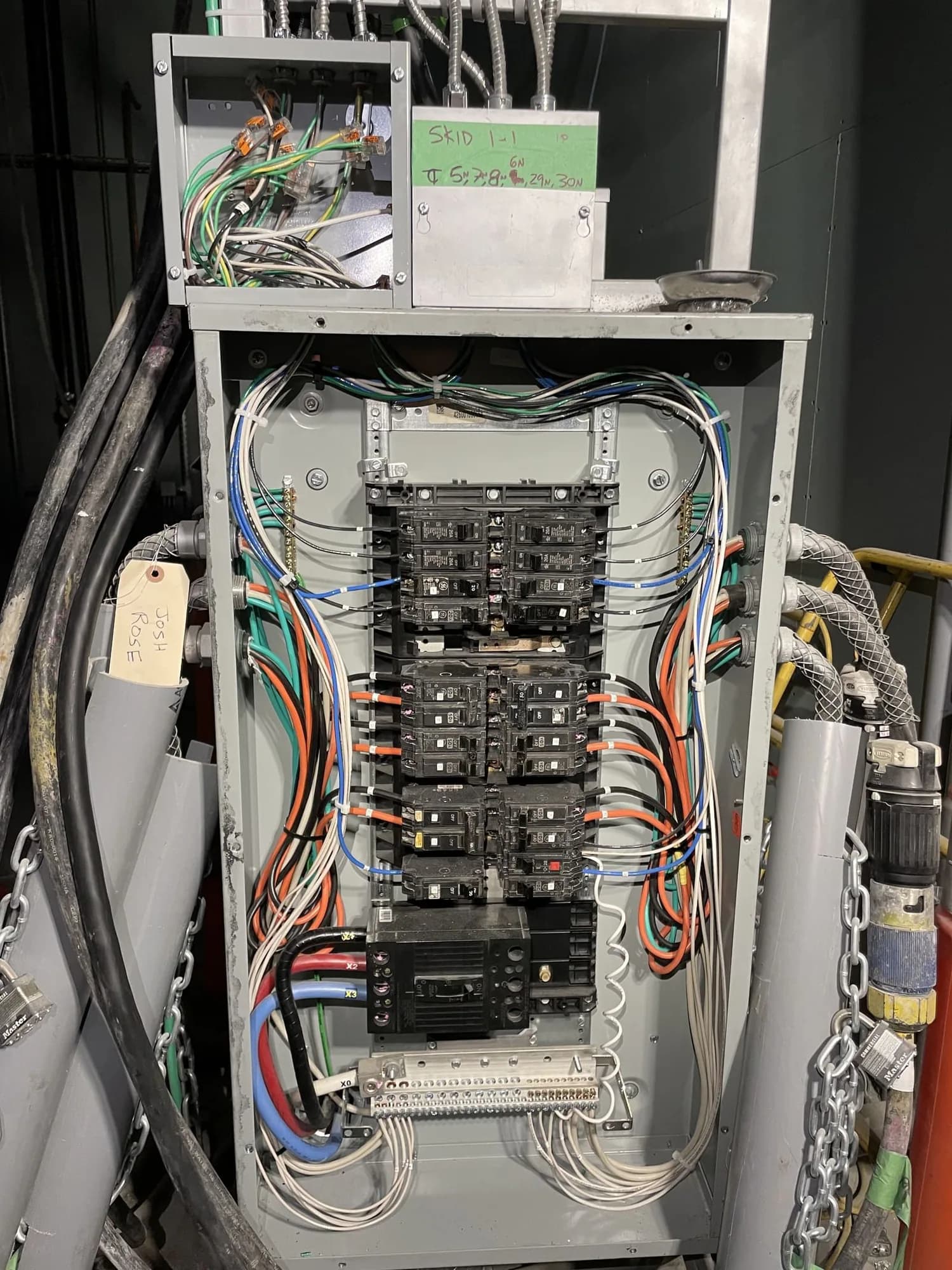
Distribution & sub-panel build-outNEC 220 load calc, feeder & conductor sizingYes
Single-phase to three-phase conversion208V or 480V service per equipment loadYes
Tenant submetering & dedicated feedersPer tenant use and connected equipmentYes
Utility service coordinationWill-serve, service planning, cutover with PG&E / SVPCoordinated
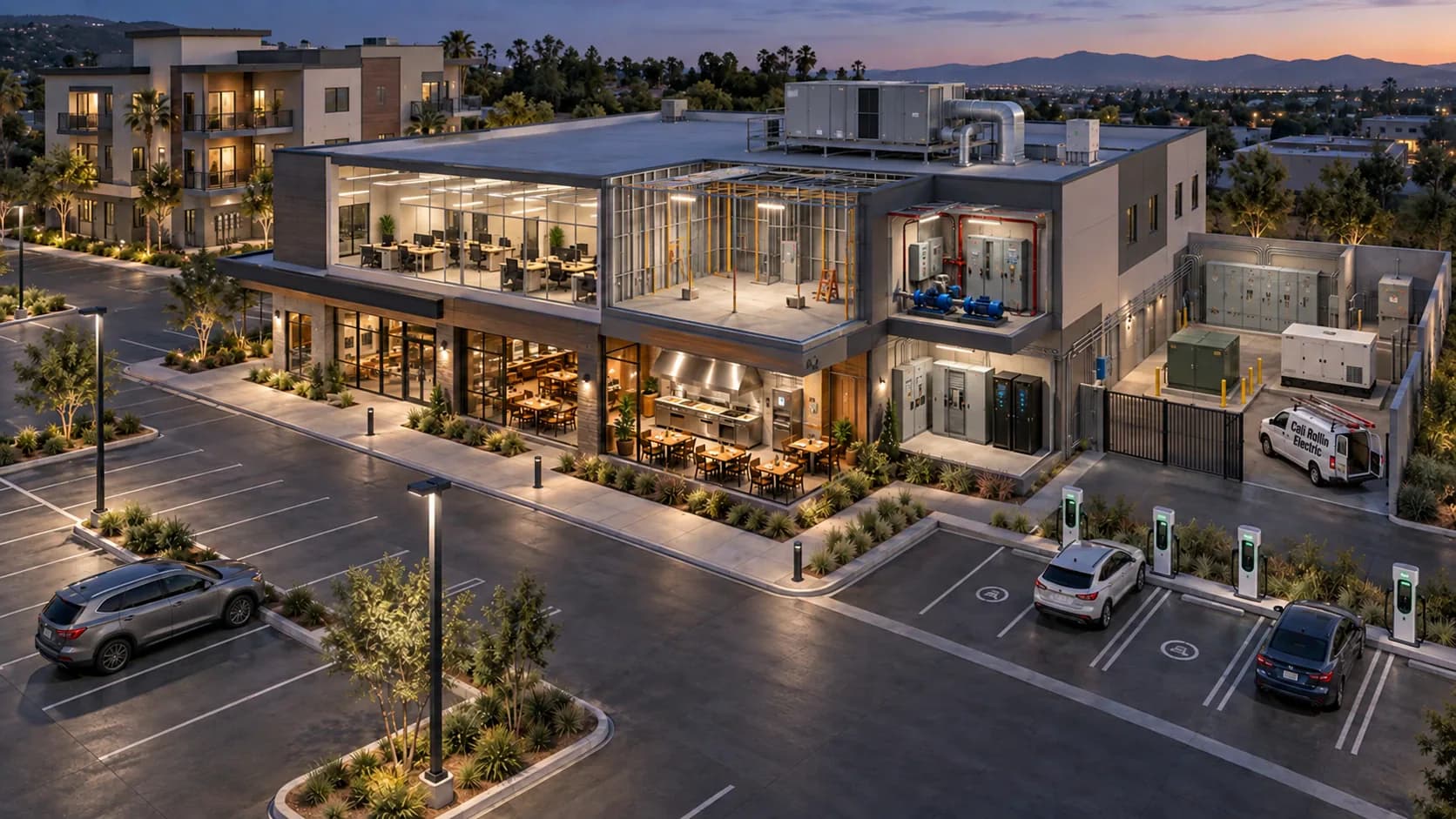
Cali Rollin Electric dismantling old switchgear during a commercial service upgrade
New commercial switchgear and meter mains installed by Cali Rollin Electric

Commercial vs residential

A commercial service is not a bigger house panel

Upsizing a storefront, warehouse, or restaurant service is a different job from a home panel swap. The voltage, the metering, the gear, and the utility process all change once you cross into commercial territory, and each one drives cost and schedule. Here is what our commercial clients are actually buying.

Three-phase power, not split single-phase

Commercial buildings usually run 120/208V or 277/480V three-phase to feed rooftop HVAC, motors, and 277V lighting, where a house runs 120/240V single-phase. Conductors, gear, and the load calc all change with it.

CT metering and a switchboard

Past roughly 400A, the utility meters the service through current transformers in a CT cabinet, and the service lands on a commercial switchboard or switchgear lineup, not a residential loadcenter. We build to PG&E metering and working-clearance requirements.

Service sizes from 400A upward

Commercial services commonly run 400A, 600A, 800A, or larger, with a main breaker or fusible service section and separate distribution. We size the service from a real NEC 220 load calculation, never a rule of thumb.

PG&E service planning, not a same-day swap

Larger commercial services move through PG&E service planning, which can involve a new transformer, primary work, or a vault, and a longer lead time. We open that application early so the utility is not what stalls your project.

Plan check and GC coordination

Commercial upgrades across Santa Clara County usually need stamped drawings, a plan check, and coordination with your general contractor and the other trades. We carry the electrical scope and keep it on the build schedule.

Staying energized through the cutover

A business cannot lose a day to a dark building. We plan temporary power and a phased cutover, and schedule energized work to NFPA 70E, so the switchover lands in a window that keeps you open.

How the work runs

From load calc to re-energization

A commercial service upgrade has three timelines running at once: the city permit, the utility, and your business hours. We sequence all three so the cutover lands in a window that keeps you operating. If you are trying to put a real date on the permit half, our guide to the commercial electrical permit timeline breaks down each stage and where the queues actually sit.

01

Load calc & service assessment

On-site review of existing service, meter, and switchgear. NEC 220 connected-load calculation to size the new service correctly.

02

Utility & permit coordination

Will-serve and service planning with PG&E or Silicon Valley Power. Electrical permit pulled directly by Cali Rollin Electric as the C-10 of record.

03

Phased cutover

De-energized cutover wherever the building allows it, temporary power where needed, and any step that genuinely has to stay live planned and documented to NFPA 70E, in a window scheduled around your operating hours.

04

Inspection & documentation

Final inspection coordinated with the city, utility re-energization, and a labeled panel-schedule package for your records.

What drives the cost

Amperage & phase200A single-phase to 800A three-phase changes everything downstream
Service configurationOverhead vs underground lateral, meter-main vs meter stack, run length
Switchgear vs panelFull switchboard replacement is a different scope than a panel swap
Utility upgradeWhether PG&E / SVP must set a new transformer or pull a new service
Downtime windowAfter-hours or weekend cutovers, plus temporary power, to keep you open

Written, line-item quote after an on-site NEC 220 load calculation. We do not price a service before we measure your load.

C-10 #1144031 ↗Insured & BondedServing all 15 Santa Clara County cities

Why Cali Rollin Electric

A service upgrade that does not close your doors

Most commercial service upgrades fail the owner in one of two ways: an unplanned shutdown that costs a day of revenue, or an undersized service that needs a second upgrade two years later. Our team, with 15+ years in the trade, plans for both, a real load calculation up front and a cutover scheduled around your hours.

C-10 #1144031. NEC 220 load calc. Utility coordination included. (408) 614-4451.

We keep you open

Phased cutovers, temporary power, and after-hours scheduling so a service upgrade doesn't cost you a day of revenue.

Load calc before the quote

NEC 220 commercial load calculation on your actual connected load, not a guess off square footage.

PG&E & Silicon Valley Power coordination

Will-serve letters, service planning, and the utility cutover handled end to end.

Obsolete gear replacement

FPE Stab-Lok, Zinsco, Pringle, and failed fused switchboards swapped for code-current gear.

Multifamily meter stacks

Per-unit metering and house-panel work for apartments and multi-tenant buildings.

15 Santa Clara County cities

Every incorporated city across Santa Clara County.

Verified reviews

See what building owners are saying about us

★★★★★

Frequently asked questions

Commercial service & panel upgrades: FAQ

How much does a commercial electrical service or panel upgrade cost in Santa Clara County?

There is no honest flat number, and any contractor who gives one before measuring your load is guessing. A commercial service or panel upgrade is priced off the actual scope: the new service amperage and phase (a 200A single-phase upgrade is a fraction of an 800A three-phase service), whether the work is a panel swap or a full main-switchboard replacement, the service configuration (overhead mast versus underground lateral, single meter-main versus a multi-tenant meter stack), and whether PG&E or Silicon Valley Power has to set a new transformer or pull a new service lateral. The single biggest cost driver most owners do not anticipate is downtime: keeping a building energized during a cutover with temporary power and after-hours labor costs more than a daytime shutdown, but it saves a day of lost revenue. Our team performs an NEC 220 load calculation on your real connected load and provides a written, line-item quote before any work begins. We do not put a price on a service upgrade before we measure what your building actually draws.

Can you upgrade my commercial service without shutting my business down?

In most cases, yes. A full daytime shutdown is the simplest path, but for restaurants, medical offices, manufacturing, and multi-tenant buildings a lost operating day is expensive, so we plan around it. Depending on your building, that can mean a temporary power feed during the changeover, an after-hours or weekend cutover window, or a phased approach where we energize the new service and migrate circuits in stages. Whichever path your building supports, the gear comes down first wherever it can, and the portion that genuinely cannot be shut off is planned and documented to NFPA 70E with the correct personal protective equipment and boundaries. This is the work where shortcuts get people hurt, and we do not take them. During the service assessment we will tell you honestly which approach your building supports and what the trade-off is between cost and downtime.

What size electrical service does my commercial building need?

Service size is determined by an NEC Article 220 load calculation, not by square footage or a rule of thumb. We total your connected load (lighting, HVAC and rooftop units, kitchen or process equipment, receptacle loads, dedicated equipment, and any planned EV charging or electrification) and apply the code demand factors and continuous-load adjustments. A small retail or office tenant often lands at a 200A to 400A service; a full-service restaurant, a multi-tenant building, or light manufacturing commonly needs 400A to 800A, frequently three-phase at 208V or 480V. If you are adding EV charging, electrifying gas equipment, or expanding production, we size for that planned load now so you are not paying for a second upgrade in two years. The load calculation is documented and is what we submit to the city and the utility.

Can you replace an FPE, Zinsco, or obsolete commercial panel or switchboard?

Yes. This is a core part of what we do. Federal Pacific (FPE) Stab-Lok, Zinsco, and Pringle equipment, along with old fused switchboards, are known to fail to clear faults reliably, and many commercial property insurers now flag or refuse to cover buildings that still have them. Replacement involves a load calculation to confirm the new gear is sized correctly, coordination with the utility if the service is being changed at the same time, and, where the building cannot be fully de-energized, a documented plan to NFPA 70E covering only the portion that has to stay live. We replace the obsolete gear with code-current switchgear or panelboards, label the new panel schedule, and provide documentation you can hand to your insurer or building inspector.

Do you install meter stacks for multifamily and multi-tenant buildings?

Yes. Apartment buildings, mixed-use properties, and multi-tenant commercial buildings need a meter stack or meter center that provides individual metering per unit plus a house panel for common-area loads. We size the meter stack and the main service to the building's total calculated load, coordinate the metering arrangement with PG&E or Silicon Valley Power to their current specification, and handle the house-panel work for common-area lighting, elevators, EV charging, and amenity loads. For property managers and owners we can also coordinate the work in phases across an occupied building to limit disruption to tenants.

Who pulls the permit and coordinates with PG&E or Silicon Valley Power?

Cali Rollin Electric does both, as the C-10 electrical contractor of record. We pull the electrical permit directly through whichever city has jurisdiction over your building. On the utility side, most of Santa Clara County is served by PG&E, while the City of Santa Clara is served by its own municipal utility, Silicon Valley Power; we handle the will-serve request, service planning, and the de-energize and re-energize coordination with whichever utility serves your address. You get a dedicated point of contact for the permit, the utility, the inspection, and the cutover schedule, backed by our team, instead of managing three separate timelines yourself.

Get started

Commercial service upgrade request

Tell us about your building: current service size, what is changing, and whether you can take any downtime. Send your plan set, single-line, or equipment schedule and our team will follow up with questions and an assessment schedule.

  • NEC 220 load calc before we quote
  • Utility coordinated (PG&E or SVP)
  • C-10 #1144031 (California electrical contractor)
Call (408) 614-4451Free quote