Residential Electrical Repair
Electrical repair in San Jose. We find it before we fix it.
Dead outlets, a breaker that keeps tripping, a switch that stopped working, lights that flicker on one circuit. We meter the circuit and find the actual fault first, then put the scope and the price in writing before anything gets opened up.
Burning smell, sparking, or a main breaker that will not reset? That is not a scheduled repair. Go to emergency electrical response.
- Meters before a parts list
- Diagnose firstMeters before a parts list
- Scope and price before the repair
- In writingScope and price before the repair
- 7:00 AM to 4:00 PM scheduled work
- Mon to Fri7:00 AM to 4:00 PM scheduled work
- All of Santa Clara County
- 15 citiesAll of Santa Clara County
Quick answer
Tonight or Tuesday
First question: does this need someone tonight?
Most electrical problems are not emergencies, and treating every one as an emergency costs money you did not need to spend. The left column needs a call now. The right column is what this page is for, and it schedules on a normal timeline.
Call tonight
- A burning or fishy smell at an outlet, a switch, or the panel
- Visible sparking, scorch marks, or a faceplate that is hot to the touch
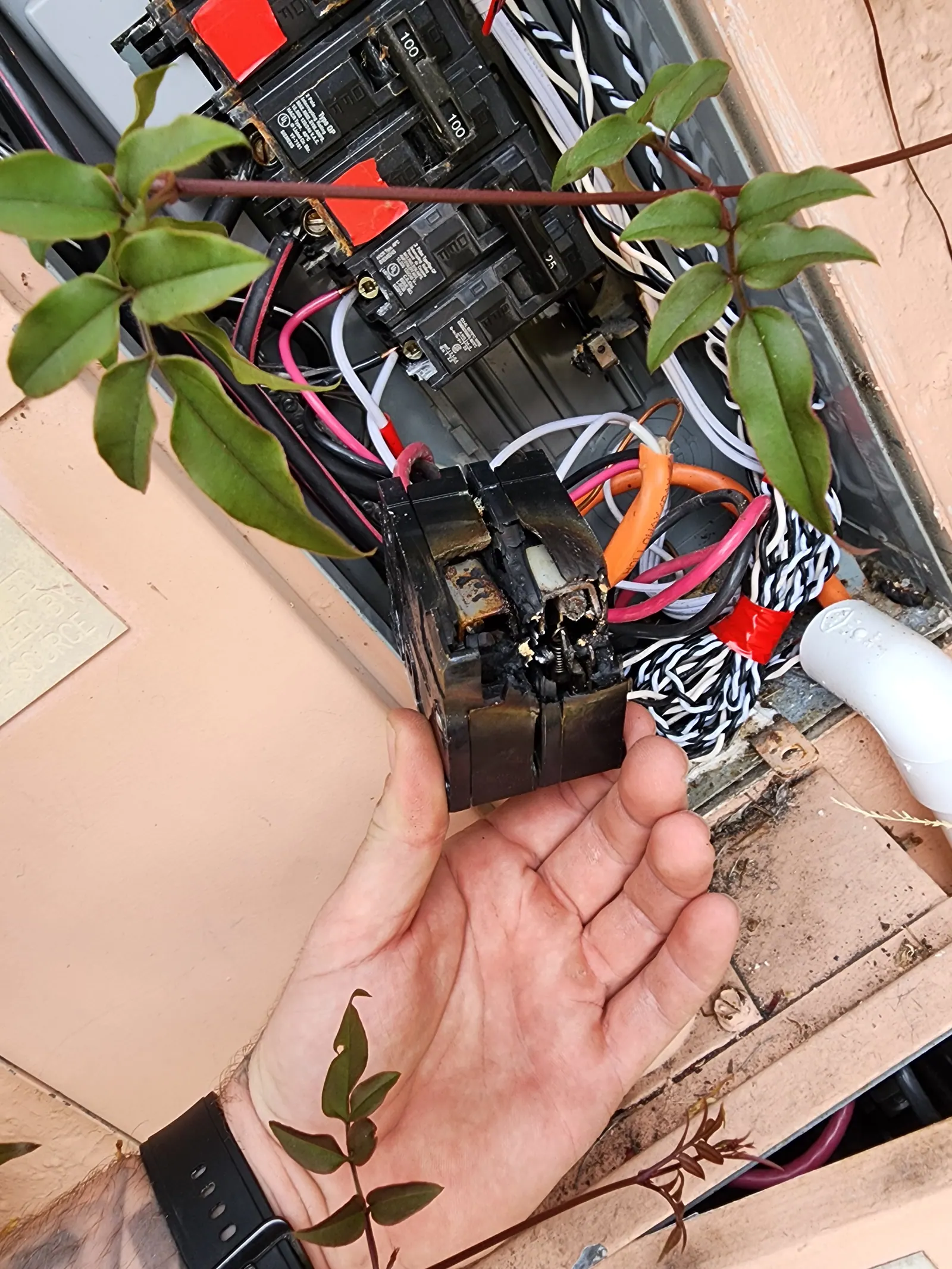
- Buzzing, humming, or crackling coming from inside the panel
- A main breaker that tripped and will not reset
- Water into a panel, a light fixture, or an outlet
- Anyone in the house has taken a shock from a device or a faceplate
These involve heat, arcing, or shock, and none improve by waiting. For an active fire, a downed power line, or anyone who has been shocked, call 911 first.
Schedule it
- One outlet dead and the GFCI protecting it has tripped
- One breaker that trips, resets, and then holds for a while
- A three-way switch that only works from one end
- A ceiling fan or a dimmer that buzzes or runs the wrong speed
- Lights that flicker on one circuit with no heat and no smell
- An old device you want swapped for a modern grounded or GFCI type
No heat, no odor, no arcing, and the rest of the house is behaving. These get a scheduled visit and a repair quoted before it starts.
If you cannot tell which column you are in, call and describe it. Our team will say plainly when something can wait until the next business day.
How we narrow it down
Symptom, likely cause, and what we actually put a meter on
Every symptom below has more than one possible cause, which is the whole reason a diagnosis exists. This is the short version of how each one gets narrowed. Where we have written a full guide, the link goes to the depth rather than repeating it here.
| Symptom | Likely cause | What we meter |
|---|---|---|
| A breaker trips every time you run the same applianceGuide: why your breaker keeps tripping → | Circuit loaded past its rating, or a fault that only shows up under load | Amp clamp on the branch conductor while the load runs, then insulation and continuity with the circuit dead |
| A burning smell near an outlet or a switchGuide: burning smell from an outlet → | A connection that overheated at a device terminal or a splice in the box | Thermal scan under load first, then voltage drop across the device and a look inside the box |
| A GFCI that will not resetGuide: GFCI outlet will not reset → | A real ground fault downstream, a wet exterior device, or a GFCI at end of life | Line and load separation at the device, insulation resistance to ground on each downstream leg |
| Half the outlets in the house are dead, breaker never trippedGuide: half my outlets are dead → | An upstream GFCI, a failed backstab or wire nut in the chain, or a lost service leg | Voltage leg to leg and leg to neutral at the panel, then continuity traced device by device |
| Lights flicker or dim when a large load startsGuide: why your lights keep flickering → | A dimmer and lamp mismatch on one circuit, or a loose neutral or lug if it is house wide | Voltage recorded at the panel during the start event, plus a thermal look at the lugs and neutral bar |
| An EV charger trips partway through a sessionGuide: why your EV charger keeps tripping → | A circuit sized for the nameplate rather than continuous duty, or the charger own ground-fault protection reacting | Which device tripped, then conductor temperature and terminal torque at both ends of the run |
| A switch does nothing, or a three-way only works from one end | A failed switch, a broken traveler, or a switch loop that lost its neutral in a past remodel | Continuity across the switch, then traveler identification with the circuit dead |
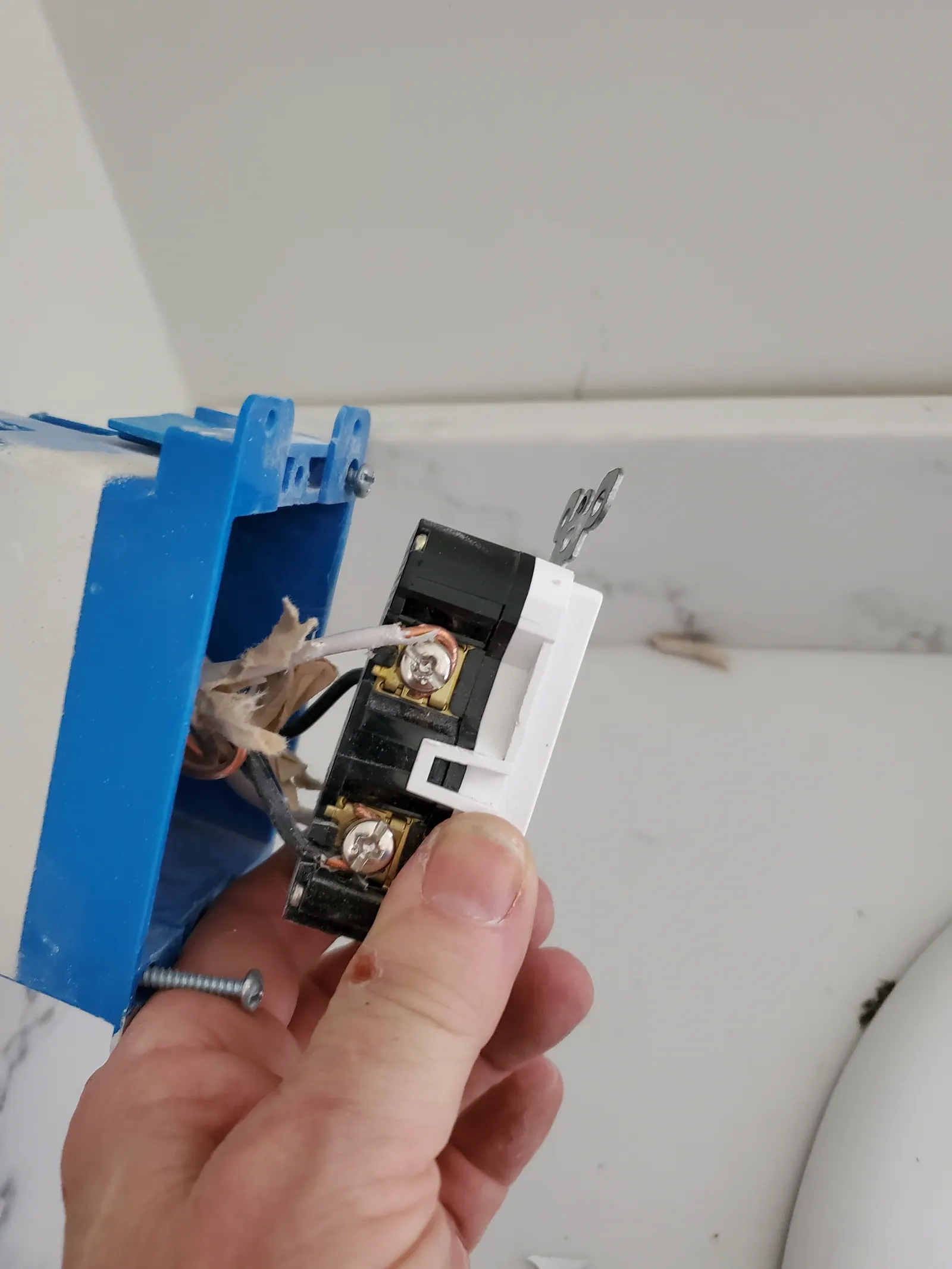
| An outlet is loose, warm, or drops the plug | Worn contacts or a backstabbed connection that has been arcing quietly for years | Voltage drop under a test load, thermal check, and a physical inspection of the terminations |
| A recessed can or fixture cuts out and comes back | The thermal cutout in the fixture doing its job, or a splice failing in the hot ceiling space | Temperature at the housing under load, then the splices in the junction box above |
| A new appliance or heater keeps nuisance tripping an AFCI | Shared neutral, a real series arc in the branch wiring, or electronic noise the breaker reads as arcing | Breaker trip code read out at the panel, circuit isolated leg by leg, then insulation testing |
Thermal imaging comes out on the calls where heat is the tell. An infrared camera sees a terminal running hot under load long before there is anything to smell in the room, which is why it rides on the repair truck rather than being a service you have to ask for. More on infrared electrical inspection.
What the visit looks like
How a repair call actually runs
Four steps, in this order, on every repair call. The order is the point: nothing is priced before it is diagnosed, and nothing is repaired before it is priced.
01
Diagnose before anything is quoted
The visit starts with meters, not a parts list. We reproduce the symptom, test the circuit from the panel outward, and identify the actual fault rather than guessing at the likeliest part.
02
Scope and price in writing first
You get the finding, the fix, and the number in writing before anything is opened up. If the diagnosis changes what the repair takes, you hear the revised number before we keep going.
03
Permit where the scope requires one
A like for like device swap needs no permit. A new circuit, panel work, or a service change does. We tell you which side of that line you are on, then file it as the contractor of record.
04
Tested, then documented
Every repaired circuit is tested before we leave: polarity, ground, GFCI and AFCI function, and load under real conditions. You get a written record of what was found, what was repaired, and anything we saw but did not repair. Where the work was permitted, the closed permit record goes with your address.
Scope
What we repair
Outlets, switches, and devices
Dead, loose, warm, or scorched receptacles, failed switches and three-way circuits, buzzing dimmers, and ungrounded two-prong devices brought to a compliant arrangement.
Breakers, panels, and subpanels
Breakers that trip, will not reset, or read hot at the bus, loose lugs and neutral bars, mismatched breakers, and subpanels missing their neutral and ground separation.
Branch circuit faults
Open neutrals, shorts, ground faults, broken splices in ceiling and wall boxes, and cable damaged during a past remodel.
Lighting and fixtures
Recessed cans that cut out, fixtures that flicker, exterior lighting that quit after a wet winter, and fan boxes never rated for the weight they carry.
GFCI and AFCI protection
GFCI devices that will not reset, kitchen, bath, garage, and exterior protection that was never installed, and AFCI breakers nuisance tripping on a shared neutral.
Service equipment faults
A lost leg of the service, a failing main breaker, a corroded meter main, storm damage to the weatherhead or mast, and the utility coordination that goes with it.
If a repair turns out to be the front end of a larger job, we scope that separately rather than folding it in quietly. See the residential electrical lineup or the San Jose service overview. If the list of small problems has gotten long, browse the guide library or book an electrical safety inspection.
Repair or replace
Four times we will tell you a repair is a stopgap
Selling a repair is easier than explaining why it will not hold. We would rather have the second conversation. In these four situations the equipment behind the symptom is the problem.
A panel that is full, hot, or undersized
Repairing one breaker in a panel that is out of spaces, running hot at the bus, or short on capacity buys months, not years. At that point the service upgrade is the cheaper answer per year of life.
Panel upgrade and replacement →A Federal Pacific Stab-Lok or Zinsco panel
These panels carry documented failure-to-trip concerns, and replacement breakers for them are a gamble. We will not sell a repair inside one and call the problem solved.
FPE and Zinsco replacement →Aluminum branch wiring behind the device
If the scorched receptacle is fed by solid aluminum branch wiring, swapping the device treats one connection out of dozens with the same problem. Real, but a stopgap, and we say so.
Aluminum wiring remediation →Knob and tube still carrying load
Active knob and tube has no ground, cloth insulation past its life, and insurers who will not renew around it. Splicing into it to fix one dead outlet is not something we will do.
Knob and tube replacement →When replacement is the right call, we quote it separately and you decide. We make the immediate problem safe either way.
Permits
Which repairs need a permit, and which do not
Replacing a device, a fixture, or a breaker with an equivalent one is maintenance, and it generally does not require a permit. Adding a circuit, altering existing wiring, replacing a panel, or changing the service does require one, and it gets inspected. We tell you which side of that line your repair falls on before we start rather than after, because that is the difference between a same-visit fix and a job with an inspection date attached.
When a permit is required, residential permit and inspection fees run $500 to $1,000 depending on jurisdiction. Santa Clara County has fifteen incorporated cities plus unincorporated county areas, and each building department sets its own fee schedule, so the number depends on your address and the scope. We identify the correct authority, quote the expected fee in the written estimate, and pull the permit as the contractor of record.
Skipping the permit is a false economy. Unpermitted work surfaces during escrow, stalls a sale while a buyer agent asks questions nobody has answers to, and gives an insurer a reason to look harder at a claim. If a repair escalates into permitted work once the circuit is open, you hear the revised scope, the revised price, and the permit implication before we keep going.
Local and credentialed
Cali Rollin Electric
Serving Santa Clara County
Headquarters in Morgan Hill, CA 95037, roughly 20 miles south of downtown San Jose
Local context
What breaks depends on when your block was built
San Jose is not one housing stock, it is several eras laid on top of each other, and the repair call tracks the era. Knowing which one you are in shortens the diagnosis before anyone opens a box.
Pre-1940 to 1950s tract: Naglee Park, downtown, Willow Glen, Cambrian, Blossom Valley
Knob and tube remnants and two-prong ungrounded circuits in the oldest pockets, then original 100-amp services and mid-century branch circuits carrying loads nobody planned for. Failed splices added in attics by people who were not electricians, warm devices, and loose panel lugs after decades of thermal cycling are the pattern.
Eichlers and mid-century moderns: Fairglen, Fairhaven
Radiant slab heating, no attic to run through, and post-and-beam ceilings with the wiring in the roof sandwich. Repairs here are as much about access strategy as the fault itself.
1960s and 1970s: Berryessa, Evergreen, Almaden
The aluminum branch-wiring era for part of this stock, plus aging panels from brands that later drew safety attention. Warm faceplates and recurring trips get checked at the device terminals first.
1980s to present: infill, North Berryessa, Communications Hill, Santana Row
Grounded copper branch circuits, but backstabbed devices, first-generation GFCIs past their service life, and DIY work from the era. Newer builds carry AFCI protection throughout, where the calls are usually nuisance tripping on a shared neutral, an EV circuit added later, or an exterior device that never got an in-use cover.
We work every city in Santa Clara County from our Morgan Hill headquarters, one standard of work in all of them.
What it costs
You know the visit rate before we come, and the repair price before we start
Diagnostic and repair service calls run on a standard service-call rate, and that rate is quoted up front before our crew begins. Call (408) 614-4451 and we will explain exactly what your visit will cost before anything is scheduled.
The repair itself is priced after the diagnosis, not before it, and you get it in writing. That order is deliberate. A dead outlet can be a worn device or a failed splice in a ceiling nobody can reach without cutting drywall, and a number quoted before anyone has metered the circuit is a guess. If the diagnosis changes what the repair takes, you hear the revised scope and the revised number before we keep working. Nothing appears on the invoice you have not already seen and approved.
Where the repair crosses into permitted work, permit and inspection fees run $500 to $1,000 depending on jurisdiction, and that line is called out separately in the written estimate rather than buried in a total.
Common questions
Electrical repair: FAQ
What does electrical repair cost in San Jose?
Troubleshooting and diagnosis are billed as a standard service call, and that rate is quoted up front before we schedule, so you know what the visit costs before anyone comes out. The repair itself is priced only after the fault is identified, and you get it in writing. A failed device, a broken splice in a ceiling box, and a lost leg at the service are three very different jobs behind the same dead outlet, so a number quoted before anyone has metered the circuit is a guess. Call 408-614-4451 and we will explain what your visit will cost.
Do I need an electrician tonight, or can this wait until next week?
Anything suggesting heat, arcing, or shock is a tonight problem: a burning smell, visible sparking, scorch marks, a hot faceplate, buzzing from the panel, water into electrical equipment, a main breaker that will not reset, or anyone who has taken a shock. Those go to our emergency line. A single dead outlet with a tripped GFCI, one breaker that resets and holds, a dead switch, or a flickering circuit with no heat and no odor schedules on a normal timeline, which is what this page covers. Not sure which side you are on? Call and describe it.
What counts as a minor electrical repair?
A minor repair is one where the fault sits at a single device or fitting and the branch wiring behind it is sound: replacing a failed receptacle or switch, swapping a dimmer mismatched to the lamps on it, replacing a GFCI at end of life, re-terminating a loose connection in an accessible box, or fitting a proper in-use cover outdoors. What makes a repair stop being minor is not the part, it is what the diagnosis finds behind it. A scorched receptacle on aluminum branch wiring is a different job than it looked from the doorway.
Do you diagnose before you repair, or just replace the part?
Diagnose first, every time. Replacing the part that failed without finding out why it failed is how the same call comes back in six months. A receptacle that cooked did so because a connection was carrying more heat than it should, and if the cause was a loose terminal upstream or an overloaded circuit, the new receptacle inherits the same problem. Our team meters the circuit, finds the mechanism, then prices the repair that addresses it. When the finding is bigger than the symptom, we tell you in writing.
Do electrical repairs need a permit in San Jose?
It depends on the scope. A like for like replacement of a device, a fixture, or a breaker is maintenance and generally does not require a permit. Adding a circuit, altering wiring, replacing a panel, or changing the service does require one, and it is inspected. We tell you which category your repair falls into before we start. When a permit is required, residential permit and inspection fees run $500 to $1,000 depending on jurisdiction, and we pull it as the contractor of record and see it through final inspection. Unpermitted work surfaces later during escrow or on an insurance claim.
When is repair the wrong answer and replacement the right one?
When the equipment behind the symptom is the problem. A panel out of spaces, running hot at the bus, or undersized for the loads the home now carries will keep generating repair calls. Federal Pacific Stab-Lok and Zinsco panels carry documented failure-to-trip concerns, so repairs inside them do not restore the protection you are supposed to have. A scorched device on solid aluminum branch wiring is one connection out of dozens sharing the same failure mode. Active knob and tube has no ground and no insulation life left. In those four cases we call the repair a stopgap and quote the permanent fix separately.
Do you repair aluminum wiring connections?
Yes, using methods our team is qualified to perform under the C-10 license: replacing devices with connections rated for aluminum conductors, and pigtailing to copper with listed connectors approved for that use. What we will not do is claim a credential we do not hold. Cali Rollin Electric is not a COPALUM certified installer, so we do not offer or price COPALUM crimps, and we say so up front rather than substitute something else and let you assume otherwise.
Can you tell me what is wrong over the phone?
Sometimes, partly. For a dead outlet or a breaker that tripped once, a call to 408-614-4451 can often tell you whether something is safe to check yourself first, like a GFCI in another room that protects the circuit. What a phone call cannot do is confirm a fault inside a wall, a panel, or a ceiling, and anything involving heat, odor, or arcing needs someone on site with instruments. If a question can be settled on the phone we will settle it there rather than book a visit you do not need.
How soon can you get out for a repair in San Jose?
Scheduled repair work runs Monday through Friday, 7:00 AM to 4:00 PM, and same-day or next-day slots are commonly available depending on the week. Our headquarters is in Morgan Hill, roughly 20 miles south of downtown San Jose, and we work every city in Santa Clara County from there. True emergencies are handled separately and around the clock. Describe the symptom when you call and we will book you into the right lane rather than treating everything as urgent.
Do you use thermal imaging on repair calls?
On the calls where it earns its place, yes. Heat is the signature of a failing electrical connection, and an infrared camera sees a terminal running hot under load before there is anything to see or smell in the room. It is most useful on a panel with a history of nuisance trips, on a circuit with several suspect devices, and after a repair to confirm the corrected connection runs cool. It is a diagnostic instrument, not a substitute for meters and physical inspection.
Book it
Describe the symptom. We will tell you what happens next.
Call (408) 614-4451 and you reach our team, not a dispatch center. Tell us what stopped working, what you have already tried, and roughly when the house was built, and we will tell you the visit rate and get you on the schedule. If it turns out to be something that cannot wait, we will say so.
Email: info@calirollinelectric.com