Level 2 EV Charger Installation
EV Charger Installation in Santa Clara County. Overnight, Not All Week.
A 120V wall outlet adds 3 to 5 miles of range an hour. A Level 2 charger on a dedicated 240V circuit adds 25 to 30. Our team installs Tesla, ChargePoint, Emporia, Wallbox, Grizzl-E, and hardware you supply, with the permit pulled and the inspection scheduled on every job.
- Standard Level 2 install
- $750Standard Level 2 install
- Range added per hour
- 25-30 mphRange added per hour
- Typical install time
- 2-4 hrTypical install time
- Typical dedicated circuit
- 240V / 50ATypical dedicated circuit
Quick answer
Charging options
Why Level 1 is a backup plan, not a charging solution
A standard 120V outlet was never designed for daily EV charging. The numbers make the case plainly.
| Feature | Level 1 (120V) | Level 2 (240V) ★ |
|---|---|---|
| Voltage | 120V | 240V |
| Typical amperage | 12–16A | 32–50A |
| Miles of range per hour | 3–5 miles | 25–30 miles |
| Full charge from empty | 20–40+ hours | 4–8 hours |
| Permit required | No (existing outlet) | Yes, new dedicated circuit |
| Best use case | Occasional top-offs only | Daily primary charging |
| NEC circuit requirement | Existing 120V outlet | Dedicated 240V / 50A breaker |
The math
Charge 60 miles with Level 1
12–20 hours
Charge 60 miles with Level 2
2–2.5 hours
For a driver commuting 40 miles a day, Level 1 needs the car plugged in 8 to 15 hours to fully recover. Level 2 recovers that range in under 2 hours, which is the difference between planning your day around the car and forgetting the car has to charge at all.
From the field
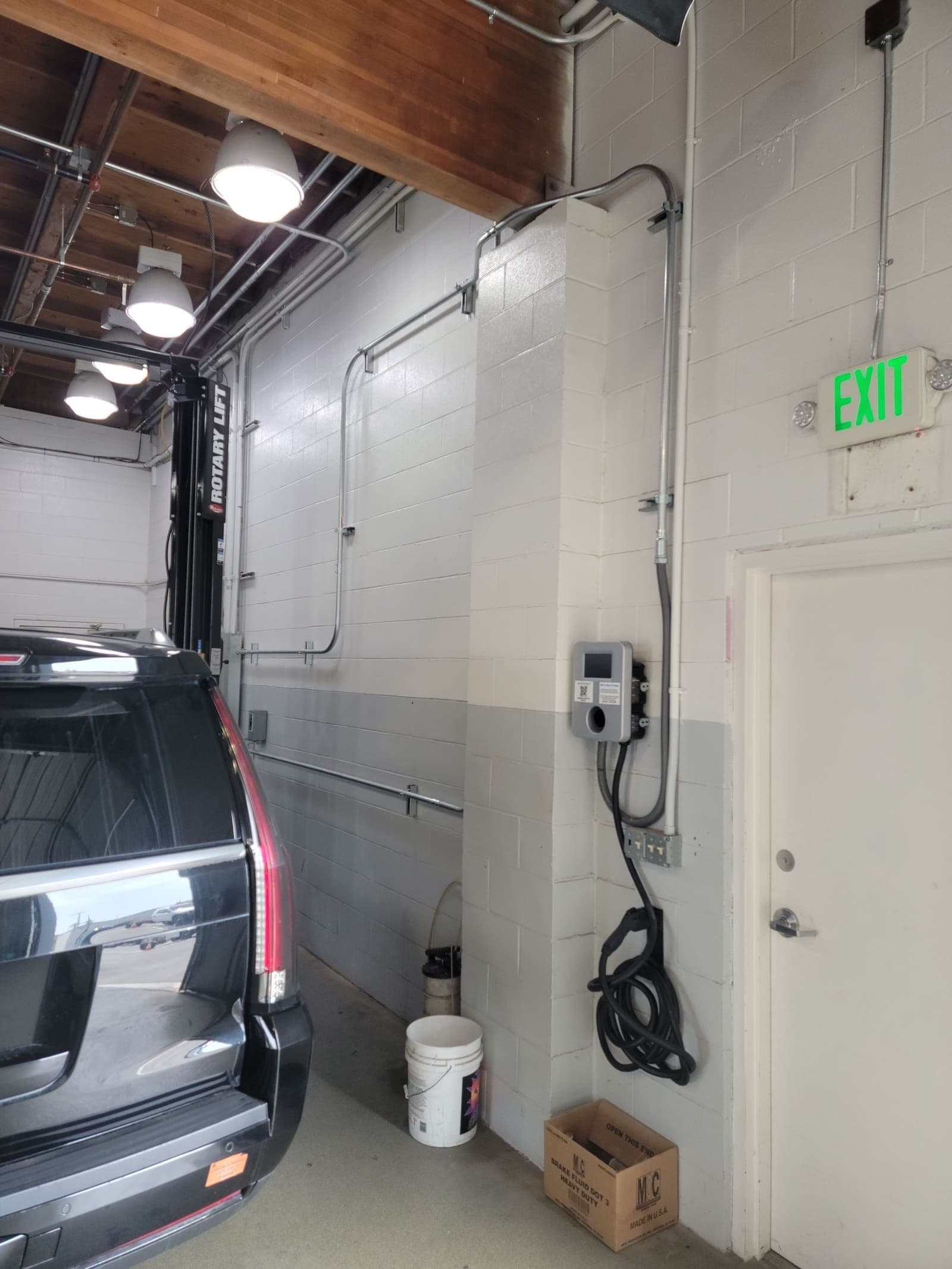
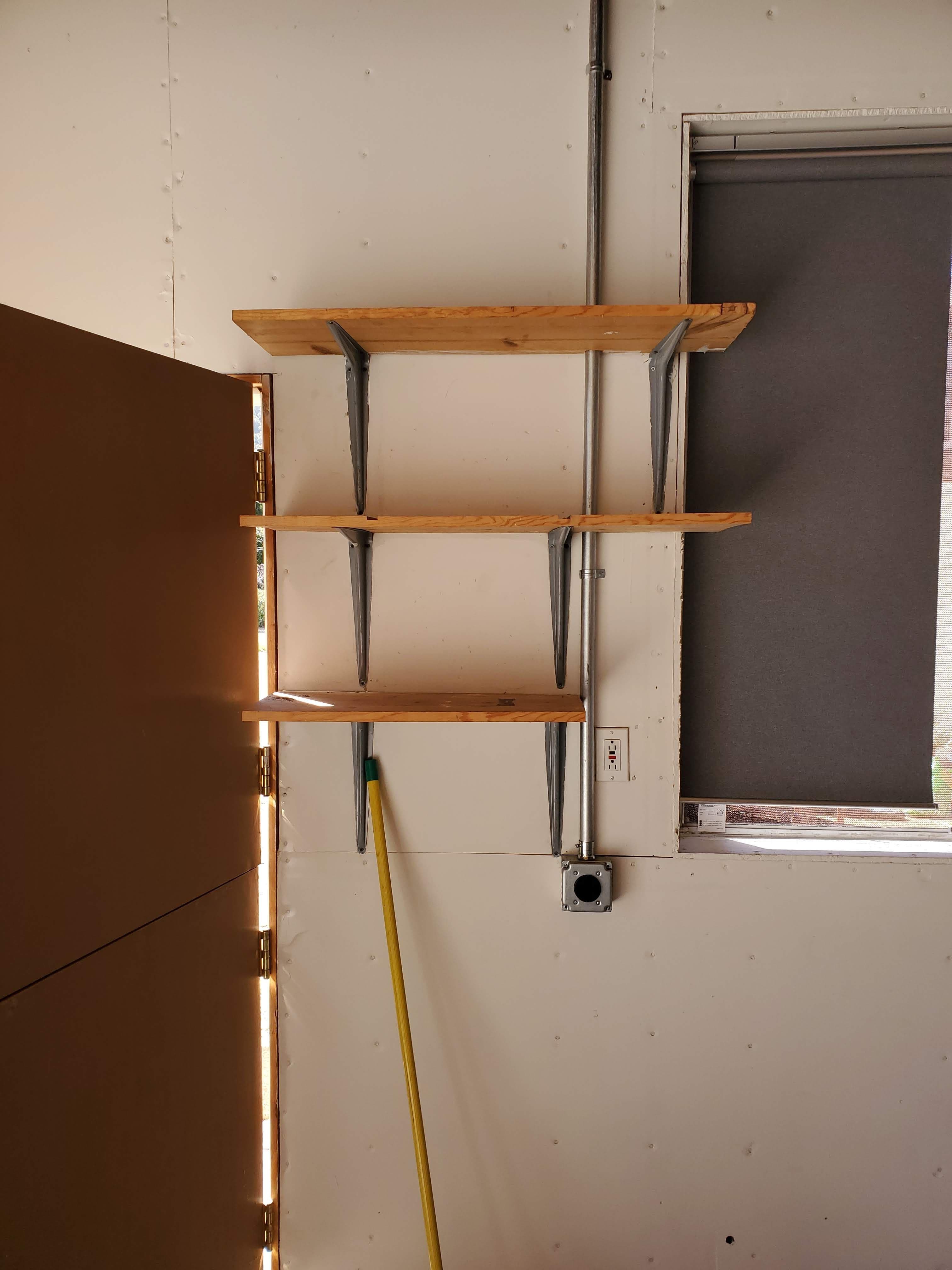
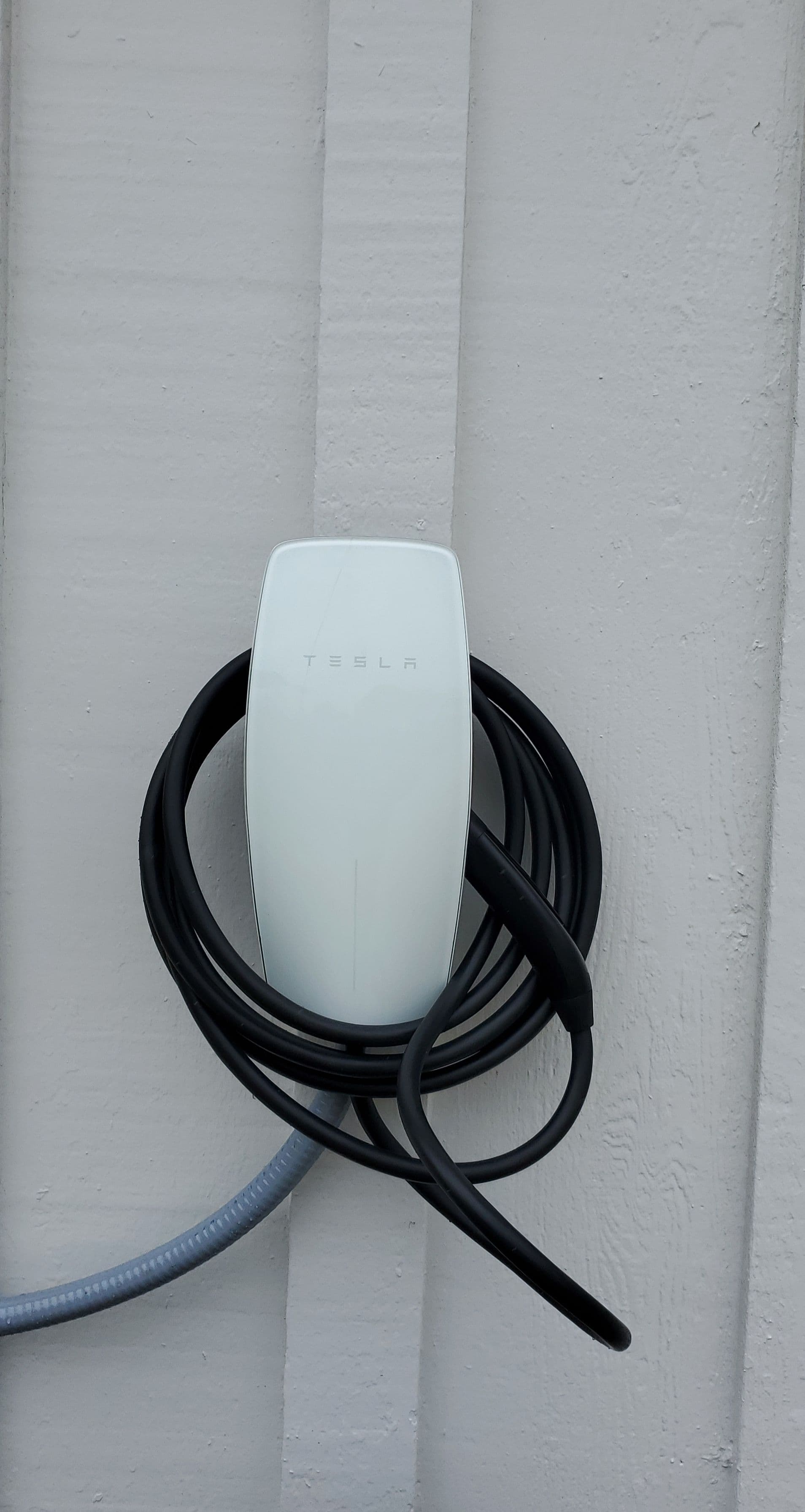
EV charger installs from our crew
What to budget
What makes one install $750 and another $3,000
The largest cost variable is the wire run distance from your electrical panel to the charger location. A garage directly adjacent to the panel is a straightforward install. A detached garage 60 feet away with an underground conduit run is a different project entirely.
Panel capacity is the second variable. Homes built across Santa Clara County before 1990 frequently still have their original 100A service, and tract subdivisions from that era were designed around a gas range, a gas dryer, and a single air conditioner. Adding a 240V 50A breaker to a panel already near its calculated limit takes a real load calculation, and sometimes a service upgrade. We assess that at the free estimate, not on installation day.
Charger type is the third. A NEMA 14-50 outlet install is simpler than a hardwired EVSE, but both take the same permit and the same inspection, and both are sized as a continuous load at 125% of the charger rating.
01
Free On-Site Assessment
Panel capacity evaluation, charger location, conduit routing, utility requirements. No charge. We identify everything before quoting.
02
Written Quote and Permit
Written itemized quote before any work begins. Permit filed with your city, typically 1–5 business days. No permit, no work.
03
Installation Day
Circuit run from the panel to the charger location. NEMA 14-50 or hardwired EVSE per manufacturer specs and NEC. Typically 2–4 hours.
04
Inspection and Close
City inspection coordinated. Permit close documentation delivered: a code-compliant install record for your insurer, HOA, or home sale.
| Scope | Range |
|---|---|
| Standard Level 2 install, 240V outlet already in place | $750 |
| You supply the charger, we run the circuit (NEMA 14-50) | $750 – $1,250 |
| Supply and install (Tesla, ChargePoint, Emporia, and others) | $1,500 – $3,000 |
| Underground run or detached garage | $750 – $2,000 |
| Panel upgrade (add-on, when the load calc calls for it) | $5,500 – $8,000 |
| Permits (varies by jurisdiction) | $500 – $1,000 depending on jurisdiction |
Permits vary by city and typically add $500 to $1,000 depending on jurisdiction. A written quote is provided before any work begins.
Panel too full? You may not need the upgrade.
When the panel is safe and sound but simply short on calculated capacity, a code-listed load management device can let a Level 2 circuit pass the load calculation without a service upgrade. See how EV charging without a panel upgrade works. When the service genuinely does need more capacity, we quote the panel upgrade straight, and we tell you which situation you are actually in.
Charger brands
We install all major EV charger brands
Supply-and-install or customer-supplied hardware, either way. We are brand-agnostic on purpose: the right charger is the one that fits your car, your garage, and your panel.
Tesla Wall Connector
Gen 3 · 48A hardwired · NEMA 14-50 adapter available
ChargePoint Home Flex
6–50A adjustable · NEMA 14-50 or hardwired · WiFi
Emporia Smart Charger
48A hardwired · load management · energy monitoring
Grizzl-E Classic / Smart
24A or 40A · IP67 rated · durable outdoor enclosure
Enel X JuiceBox 40 / 48
40A or 48A · smart connectivity · ENERGY STAR
Customer-supplied hardware
We install equipment you purchase, any brand
Code and permit detail
What the inspector is actually checking
California is on the 2025 California Electrical Code, which is based on the 2023 NEC, so every EVSE permit pulled in Santa Clara County today is judged against Article 625. A Level 2 charger is not a plug-in appliance in the eyes of the code. It is a new branch circuit with its own sizing, protection, and disconnect rules.
Permit handling differs by jurisdiction. Some Santa Clara County building departments issue a residential EVSE permit over the counter or online the same day, while others route it to plan review, especially when a service upgrade or a subpanel is bundled into the same application. That is the main reason the permit step runs 1 to 5 business days rather than a fixed number. Our team files the application, tracks it, schedules the inspection, and hands you the close-out documentation.
That paperwork is worth more than it looks. A permit number is what an insurer asks for after a garage fire, what a buyer's agent asks for during a home sale, and what several utility rebate programs ask for on the application form.
NEC 625.40
The EVSE gets its own branch circuit. Nothing else may share it, which is why a Level 2 charger cannot legally hang off the dryer or garage receptacle circuit.
NEC 625.41 / 210.19
EV charging counts as a continuous load, so the conductors and breaker are sized at 125% of the charger rating. A 40A charger needs a 50A circuit, and a 48A charger needs a 60A circuit.
NEC 625.43
Equipment rated above 60A or above 150 volts to ground needs a disconnecting means in a readily accessible location, lockable in the open position.
NEC 625.54
A receptacle-fed charger (the NEMA 14-50 route) requires GFCI protection. Hardwired EVSE has its own listed protection built in, which is one reason we often recommend it.
Local and credentialed
Cali Rollin Electric
Serving Santa Clara County
Headquarters in Morgan Hill, CA 95037
Current incentives
Rebates that are actually active
Which rebate applies depends on your city and your utility, and the funding pools move. The federal 30C EV charger credit expired June 30, 2026, and the 25C credit expired at the end of 2025, so any page still advertising them is out of date. Apply before you install where the program requires it, because several of these cannot be claimed retroactively.
PG&E Residential EV Charging Rebate
Covers up to 50% of an eligible Level 2 charger for PG&E residential customers, which is most of Santa Clara County. Income-qualified households can reach up to $2,000 through the Rebate Plus tier, or up to $5,000 when a panel upgrade is bundled in. First-come while funds last, so we verify the tier and the remaining funding at your estimate.
Silicon Valley Power residential EV charger rebate
Up to $550 per Level 2 charging station for SVP residential customers, and a multi-port unit counts as one station. Equipment must be new and UL or ETL listed (or City of Santa Clara approved), and the claim is submitted within 60 days of permit issuance. This program applies only inside the City of Santa Clara, where SVP is the utility.
SVCE Home Rebates (prewiring and circuits)
Pays $500 per circuit or device up to $2,000, or $750 per circuit up to $3,000 for income-qualified CARE and FERA customers. Two limits matter: prewiring for an EV circuit alone does not qualify (it has to include at least one other circuit), and a circuit pauser or splitter cannot be combined with the EV circuit rebate. Applies in SVCE member cities, which excludes San Jose, Santa Clara, and Palo Alto.
Beyond rebates, PG&E publishes an EV-specific time-of-use rate plan (EV2-A) that prices overnight charging well below peak hours, which is often worth more over a few years than the one-time rebate. We confirm every program against the current utility rules at quote time and document the install so the application has what it needs.
Why Cali Rollin Electric
What we bring to every EV install
Plenty of contractors treat an EV charger as a two-hour drop-off: send whoever is available, land a breaker, leave. That is how you end up with an undersized circuit, a receptacle that runs hot, and a permit that never closes. Our team, with 15+ years in the trade, runs the load calculation first, sizes the circuit for continuous duty, and stays with the job through inspection and close-out.
Load calculation before the quote
We size the circuit against your actual panel, not a guess, so nothing changes on install day.
Permit pulled on every job
Every Santa Clara County jurisdiction. No exceptions. Inspection scheduled and documented.
Brand-agnostic
Supply and install, or we mount and wire the unit you already bought. Your car, your call.
Clean conduit work
Surface runs strapped and squared, underground runs sleeved and depth-correct. It looks intentional.
Rebate paperwork support
We document the install so your utility rebate application has what it needs.
One-day installs
A straightforward Level 2 install is 2 to 4 hours on site, start to finish.
Related work
Not the right fit? Here is where to go next
EV charger without a panel upgrade
Panel too full for a new 50A circuit? Code-listed load management often gets you charging without a service upgrade.
Panel upgrade (100A to 200A)
When the service genuinely needs more capacity, this is the real upgrade, permitted and inspected.
SPAN smart panel
Per-circuit app control, solar and battery integration, and dynamic capacity for EV charging.
Emergency electrician
Tripped main, burning smell at the panel, or a dead circuit? Our team responds fast.
All residential services
See the full Sanctuary lineup: panels, EV charging, rewires, generators, and more.
Serving homeowners across Santa Clara County.
Common questions
EV charger installation: FAQ
What is the difference between Level 1 and Level 2 EV charging?
Level 1 uses a standard 120V household outlet and delivers 3 to 5 miles of range per hour, which is practical only for plug-in hybrids or drivers with very short daily commutes. Level 2 operates at 240V and delivers 25 to 30 miles of range per hour, so a fully depleted battery recharges overnight. Level 2 requires a dedicated 240V branch circuit installed under permit and inspected by your city. For any driver who relies on an EV daily, Level 2 is the standard choice.
How much does Level 2 EV charger installation cost in Santa Clara County?
At Cali Rollin Electric, a standard Level 2 install where a 240V outlet is already in place runs $750. If you supply the charger and we run a new circuit, expect $750 to $1,250. Supply and install with a Tesla Wall Connector, ChargePoint, Emporia, or similar unit runs $1,500 to $3,000. An underground run or a detached garage adds $750 to $2,000. If the load calculation shows the service needs more capacity, a panel upgrade add-on runs $5,500 to $8,000. Permits vary by city and typically add $500 to $1,000 depending on jurisdiction. Every job is quoted in writing before work starts.
Do I need a panel upgrade for a Level 2 EV charger?
Most homes do not, but it depends on your panel. A standard Level 2 install needs a dedicated 240V circuit and roughly 40 to 50 amps of available calculated capacity. A 200A panel with open slots is usually sufficient. A 100A panel often is not. Federal Pacific and Zinsco panels should be replaced regardless of capacity because they are a safety problem, not a capacity one. When the panel is safe but simply short on calculated capacity, a code-listed load management device can let the install pass without a service upgrade. Cali Rollin Electric runs the load calculation during the free estimate and gives you a precise answer either way.
Are there rebates for EV charger installation in Santa Clara County?
Yes, and which one applies depends on your utility. The PG&E Residential EV Charging Rebate covers up to 50% of an eligible Level 2 charger, with income-qualified households reaching up to $2,000 (or up to $5,000 when a panel upgrade is bundled in). Silicon Valley Power customers inside the City of Santa Clara can claim up to $550 per charging station, submitted within 60 days of permit issuance. SVCE member cities have a prewiring and circuits rebate of $500 per circuit up to $2,000, though an EV circuit on its own does not qualify. The federal 30C EV charger credit expired June 30, 2026, so any page still advertising it is out of date. Cali Rollin Electric confirms what is currently funded for your address at the estimate and documents the install for your application.
How long does EV charger installation take?
For a typical residential Level 2 installation with no major electrical complications, on-site work takes 2 to 4 hours. If a panel upgrade or significant rewiring is involved, it can extend to 6 or more hours, but is almost always completed in one day. From first contact to a fully operational charger, including permit issuance, scheduling, and inspection, the overall process typically spans 1 to 2 weeks for a straightforward residential install.
What charger brands do you install?
Cali Rollin Electric installs all major UL-listed Level 2 charger brands, including ChargePoint, Emporia, Tesla Wall Connector, Wallbox, Enel X JuiceBox, and Grizzl-E. Brand selection depends on your vehicle, whether you want smart load-management features, and any future plans for solar or battery storage. During the free estimate we recommend the right unit for your panel, your parking setup, and your charging habits. We are equally happy to install hardware you buy yourself.
Should I get a hardwired charger or a NEMA 14-50 outlet?
A NEMA 14-50 outlet lets you unplug and take the unit with you, and it suits a 40A charger drawing 32 amps continuous. Hardwiring is required above 48 amps, holds up better outdoors, and avoids the receptacle itself becoming the weak point, since a plug-and-cord connection is the part that heats up and loosens over years of daily cycling. Under NEC 625.54, a receptacle-fed charger also requires GFCI protection, and some chargers nuisance-trip on it. For a permanent home charger our team usually recommends hardwiring. Both routes need the same permit and the same inspection.
Can you install a charger in a detached garage, carport, or driveway?
Yes. A detached structure is fed either from an existing subpanel or with a new underground run from the main panel, typically in PVC conduit at code depth with a pull box where the run changes direction. Driveway and carport locations use an outdoor-rated (NEMA 4 or IP67) unit on a post or wall mount. The added trenching, conduit, and conductor length is what puts these jobs in the $750 to $2,000 range above a standard install. We walk the route at the free assessment so the number in the quote is the number on the invoice.
Is a permit required for EV charger installation?
Yes. Every jurisdiction in Santa Clara County requires an electrical permit for a Level 2 (240V) charging station at a residential property, because it is a new branch circuit. Skipping the permit can complicate a home sale, an insurance claim, or a utility rebate application that asks for a permit number. Cali Rollin Electric files the permit application, coordinates the inspection, and delivers the permit close documentation, so you never have to navigate that process yourself.
Get started
Get a free EV charger installation quote
Tell us where the car parks and where the panel sits. Our team responds the same day during business hours with a real load assessment and a written number, not a guess. Most installs are scheduled within the week, and there is no charge to find out what yours takes.