Whole House Rewire
Whole House Rewire in Santa Clara County. We Scope It Before We Quote It.
Knob and tube, aluminum branch circuits, cloth-insulated conductors, ungrounded outlets, and decades of uncoordinated add-ons all point to the same answer: a full rewire. Our team maps every circuit in the home before quoting, so there are no surprises and no change orders.
- Typical whole-house rewire
- $15,000+Typical whole-house rewire
- Typical project duration
- 1-2 weeksTypical project duration
- Complete replacement scope
- All circuitsComplete replacement scope
- Most common candidate era
- Pre-1960Most common candidate era
Quick answer
Scope options
Partial rewire vs. full whole house rewire
A partial rewire targets specific circuits or areas. A full rewire replaces every branch circuit in the home. For pre-1960 homes and most insurance situations, the full rewire is the cleaner path.
| Criteria | Partial Rewire | Full Rewire ★ |
|---|---|---|
| Scope | High-risk circuits, kitchens, baths only | All branch circuits, complete system |
| Permit complexity | Partial permit, limited inspection scope | Full permit package, all circuits inspected |
| Insurance outcome | May still have conditions from insurer | Full acceptance, no outstanding wiring concerns |
| Future work | Remaining old wiring still present | Blank slate, no inherited problems |
| Typical cost | $8,000 – $14,000 | $15,000 – $30,000+ |
| Disruption | Limited to scoped areas | Full home, planned by area and phase |
| Best for | Budget priority, newer partial update history | Pre-1960 home, K&T throughout, selling soon |
The case for full
Partial rewire leaves
Old wiring in the walls
And the condition open with your insurer
Full rewire delivers
Every circuit closed out
One permit package, documented start to finish
For homes selling soon, carriers with open conditions, or pre-1960 construction with K&T throughout, a full rewire resolves every wiring concern in one project.
From the field
Rewire work across the county
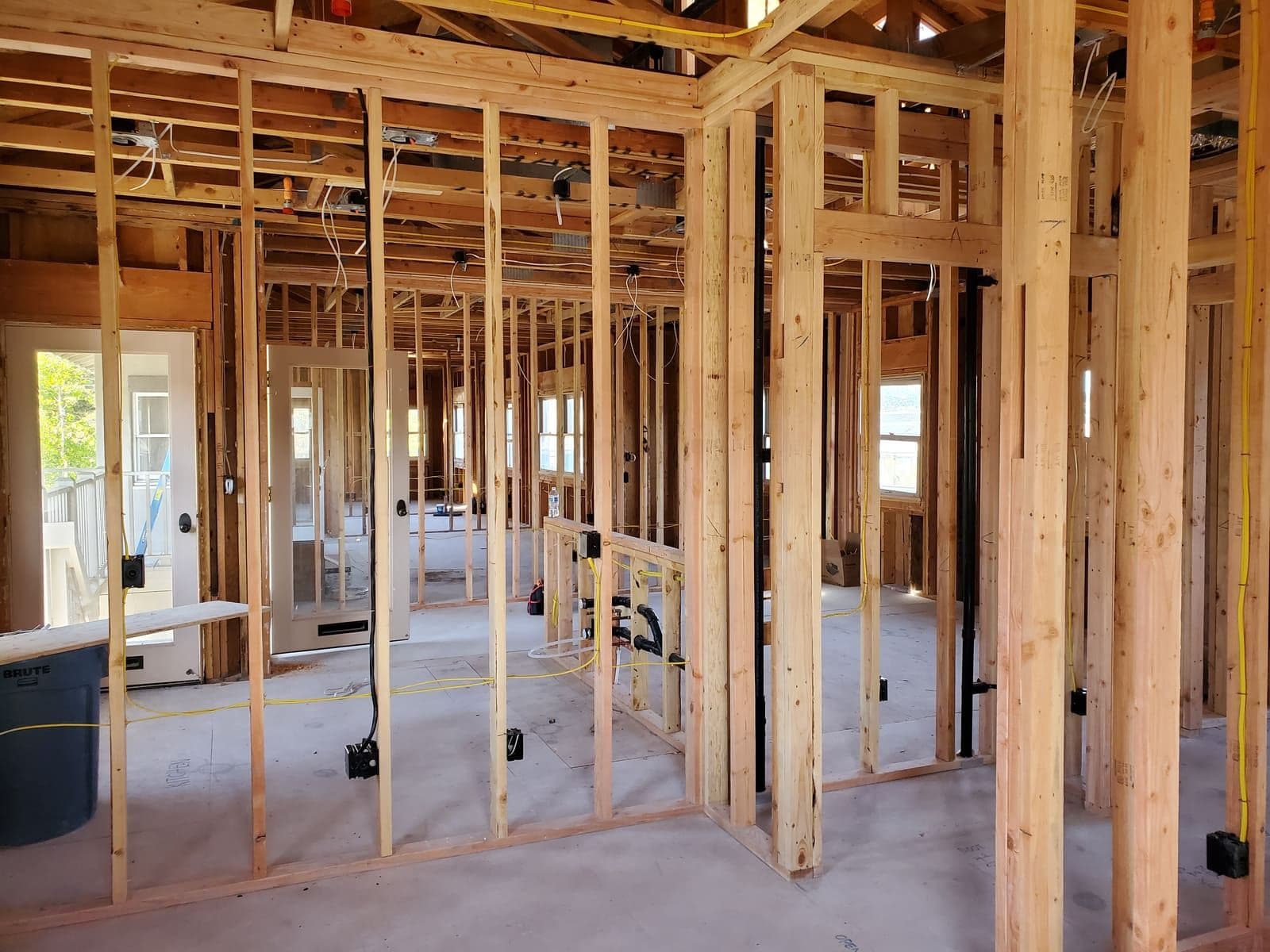
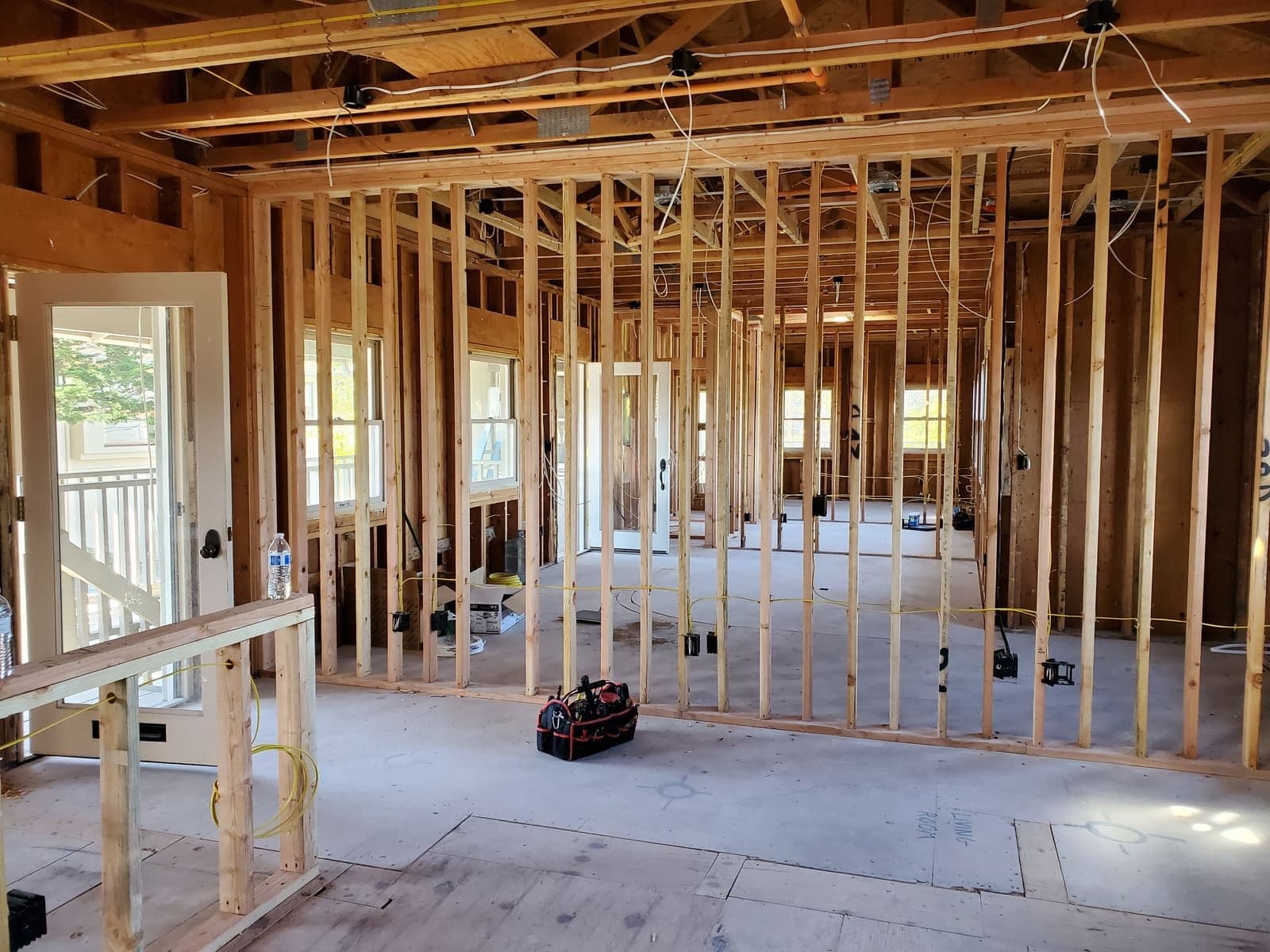
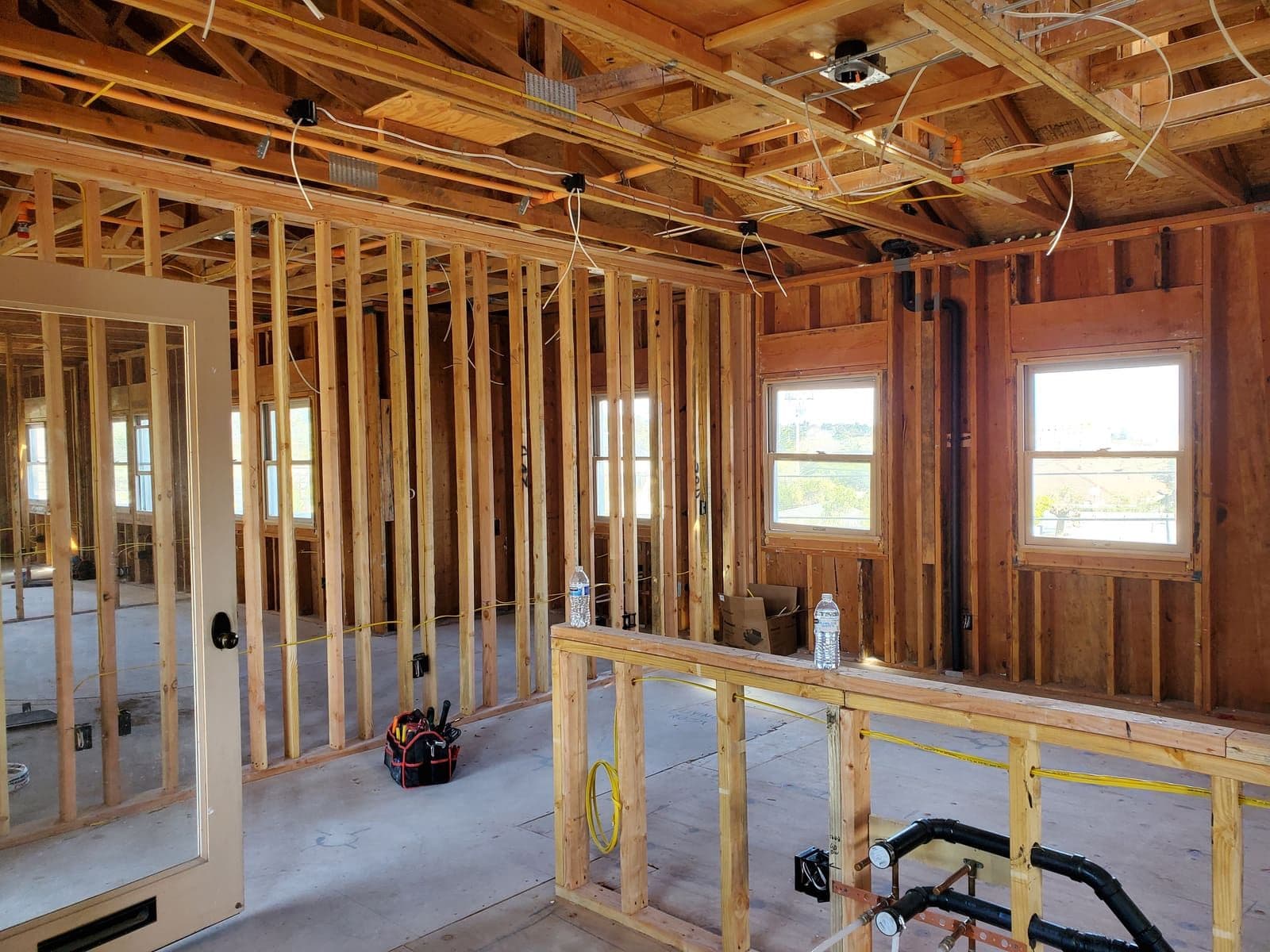
Local housing stock
What era your home was built in changes the rewire
Santa Clara County has wiring from every generation still in service, and each one fails differently. The construction era tells us what we are pulling out and how we can route the new work, which is why the assessment starts in the attic and the crawl space rather than at the panel.
Pre-1940
Knob and tube
Bungalows, farmhouses, and early cottages across the county still carry original knob and tube in attics and crawl spaces: ungrounded, spliced in open air, and rated for an era with no kitchen appliances, no HVAC, and no electronics. Insurers increasingly decline or non-renew on it. This is the single most common full-rewire candidate we see.
1940s to 1950s
Cloth-covered rubber insulation
Early post-war tract homes used rubber-insulated conductors under a cloth braid, often run in fiber loom or early metal raceway. Rubber embrittles with heat and age, so the insulation cracks off the conductor at panel terminations, in ceiling boxes, and anywhere a fixture ran hot. It looks intact from the box face and crumbles the moment it is moved.
Late 1950s to 1960s
Mid-century post-and-beam
The county has a large stock of mid-century modern tract homes: post-and-beam framing, exposed tongue-and-groove ceilings, radiant heat in the slab, and no attic or crawl space to work in. Rewiring these is a different craft. Circuits route through interior partitions, along the roof deck, or in surface raceway, and the plan is set during the assessment rather than improvised on site.
1965 to 1973
Single-strand aluminum branch circuits
Aluminum branch wiring expands, contracts, and oxidizes at every screw termination, which is why it shows up as warm cover plates and intermittent outlets rather than a dead circuit. Full replacement is the permanent answer; approved pigtail repairs are the partial one.
Any era, after the fact
Uncoordinated later work
Decades of add-ons stack up: splices made outside a box, circuits extended past what the conductor was sized for, three-prong receptacles swapped onto ungrounded two-wire circuits, and attic runs chewed by rodents. A rewire clears all of it at once instead of chasing it circuit by circuit.
1978 onward
Grounded copper NM
Homes wired with grounded copper NM cable rarely need a full rewire. What they need is targeted: added circuits, AFCI and GFCI protection where the code now requires it, or panel capacity. We will tell you when that is the honest answer instead of selling you a project you do not need.
The technical scope
What a rewire actually replaces
A rewire is judged against the California Electrical Code in force today (the 2025 edition, based on the 2023 NEC), and the new work has to meet it in full. Here is what that means line by line, so nothing on the quote is a mystery.
Branch circuits and home runs
Every branch circuit and home run replaced with new copper NM-B cable (or conduit where the construction calls for it), sized to the load and terminated in accessible boxes. Nothing gets abandoned live in a wall.
AFCI and GFCI protection
New circuits serving habitable rooms get arc-fault protection under NEC 210.12, and kitchens, bathrooms, laundry, garages, outdoors, and receptacles near sinks get ground-fault protection under 210.8. On a rewire this is not an upgrade option, it is what the new work has to meet.
A real grounding system
Two-wire ungrounded circuits are replaced with grounded ones, boxes and enclosures are bonded, and the grounding electrode system (rods plus the water-pipe bond) is brought up to Article 250. This is what actually protects surge strips, computers, and appliances, not just what makes a three-prong plug fit.
Dedicated circuits where code requires them
Two 20-amp small-appliance circuits for the kitchen, a dedicated 20-amp laundry circuit, and a dedicated 20-amp bathroom circuit per NEC 210.11(C), plus receptacle spacing brought to 210.52 so no point along a wall is more than six feet from an outlet.
Devices, boxes, and box fill
New tamper-resistant receptacles (NEC 406.12), new switches, and correctly sized boxes calculated for conductor fill under 314.16. Old shallow boxes and pancake boxes packed past their cubic-inch rating get replaced rather than reused.
Smoke and CO alarms
California requires smoke and carbon monoxide alarms to be brought to current requirements when an alteration permit is pulled. With the walls open there is no access exemption, so alarms are replaced, hard-wired, and interconnected as part of the permitted scope.
Where a circuit genuinely cannot be replaced (a fixture in an inaccessible chase, for example), NEC 406.4(D) allows a ground-fault device and a “No Equipment Ground” label as the compliant remedy. We flag those locations in the written scope up front rather than discovering them at the final inspection.
What to budget
What drives whole house rewire cost
Home size is the primary cost driver. A 1,200 sq ft two-bedroom has far fewer circuits than a 2,500 sq ft four-bedroom. The bigger variable is accessibility: homes with open attic and crawl space access cost less to rewire than homes where every circuit requires opening finished walls.
Construction type is next. Plaster and lath, two-story layouts, and slab-on-grade homes with no crawl space all add routing labor, and a home with knob and tube on both the branch circuits and the home runs has to be mapped completely before a single wire is pulled. That assessment phase is not optional on pre-1940 construction.
Panel timing matters. If the panel needs work anyway, doing it concurrent with the rewire means one utility shutoff, one permit package, and far less duplicated labor than a standalone panel job later.
Occupancy is the last lever. A vacated home lets the crew work every room at once, which shortens the schedule and lowers labor cost. We will tell you honestly whether that trade is worth it for your project.
01
Full Circuit Assessment
Every circuit mapped: panel, attic, crawl space, and walls assessed. Full written scope delivered before any work begins. No charge.
02
Permit Filing and Staging
Electrical permit filed with your city and the work sequenced by area so essential rooms stay live at the end of each day.
03
Rough-In and Inspection
Old wiring pulled, new cable run and stapled, boxes set. The rough-in inspection verifies wire sizing, routing, boxes, grounding, and AFCI and GFCI placement before anything closes up.
04
Trim, Final, and Close
Devices installed, panel terminated, circuits labeled, final inspection passed, and the closed permit package delivered for your records.
| Scope | Range |
|---|---|
| Whole house rewire, up to 1,200 sq ft (2BR/1BA) | $15,000 – $20,000 |
| Whole house rewire, 1,500–2,000 sq ft | $18,000 – $26,000 |
| Whole house rewire, 2,000–3,000 sq ft | $22,000 – $32,000+ |
| Partial rewire, key circuits/rooms only | $8,000 – $14,000 |
| Panel upgrade concurrent (recommended) | Add $1,500 – $3,000 |
| Permits, varies by scope and city | $500 – $1,000 depending on jurisdiction |
Permits vary by city and typically add $500 to $1,000 depending on jurisdiction. Drywall patching, texture, and paint follow electrical sign-off and are handled by a finish contractor, generally $3,000 to $8,000 depending on wall condition. Every project gets a written quote after the full circuit assessment, not a range.
A rewire on its own does not carry a rebate. If we prewire circuits for a future heat pump, heat pump water heater, or induction range while the walls are open, households in SVCE Home Rebates member cities can qualify for $500 per circuit or device up to $2,000 ($750 up to $3,000 for income-qualified CARE or FERA customers). At least one non-EV circuit has to be included, and the program does not cover San Jose (San Jose Clean Energy), the City of Santa Clara (Silicon Valley Power), or Palo Alto. Funding is limited, so we confirm what is still open for your address at estimate time.
Why Cali Rollin Electric
What we bring to every whole house rewire
A rewire is a multi-week project inside an occupied home, across two inspection stages, where the work is buried in the walls the moment it passes. That is why we document every existing circuit before quoting, phase the work around your living space, and hand over a closed permit package at the end. It is documentation an inspector, a carrier, or a title company can act on. Our team brings 15+ years in the trade to that process.
Full circuit mapping first
Every circuit documented before quoting. You know the scope before we start.
Phased by area
Rewire proceeds room by room to minimize disruption and work around your household.
Panel upgrade option
Rewire and panel upgrade together: one project, one permit package, one shutoff.
Permit on every project
Rough-in and final inspections coordinated and documented from start to close.
Resale documentation
Complete permit close package that clears wiring conditions at sale or refinance.
Countywide coverage
Every incorporated city across Santa Clara County, one standard of work.
Related work
Not the right fit? Here is where to go next
Knob and tube replacement
If the issue is K&T specifically, this page covers scope, insurance, and what partial removal does and does not solve.
Aluminum wiring replacement
Single-strand aluminum branch circuits: full replacement versus approved pigtail repair, and how to tell which you need.
Panel upgrade
Adding capacity, replacing an obsolete panel, or moving from 100A to 200A service, on its own or alongside the rewire.
Pre-sale electrical clearance
Selling soon? Clear inspection findings and document the work before the deal depends on it.
All residential services
See the full Sanctuary lineup: panels, EV charging, generators, battery storage, and more.
Serving homeowners across Santa Clara County.
Common questions
Whole house rewire: FAQ
What triggers a whole house rewire?
A whole house rewire is warranted when problems are systemic, spread throughout the home rather than isolated to one circuit. Common triggers include: a home built before 1975 still on original wiring, active knob and tube wiring, single-strand aluminum branch circuit wiring, or cloth-wrapped rubber-insulated wiring from the pre-1950s. Warning signs include burning smells from outlets or walls, warm or discolored outlet covers throughout the house, frequent tripped breakers across multiple circuits, flickering lights when appliances start, two-pronged ungrounded outlets throughout, or rodent damage discovered in the attic. Life events also trigger rewires: a major renovation opening walls, adding high-load systems like an EV charger or heat pump, a home purchase inspection flagging hazardous wiring, or an insurance non-renewal requiring remediation.
Can I live in my home during a whole house rewire?
Yes, it is possible and commonly done, but it requires honest planning. Staying works best when the home is under 2,000 sq ft and work can be staged room by room, you have enough unaffected space to maintain a bedroom, bathroom, and kitchen function, and you can be away during working hours. Staying creates complications in larger homes where the crew needs to work multiple rooms simultaneously, in homes with plaster walls that generate heavy dust, or when you have young children or pets. A vacated house can be rewired 30 to 50% faster because the crew can work freely across all rooms simultaneously, which directly lowers your labor cost. Cali Rollin Electric works room by room to keep essential areas live at the end of each day, and the free estimate conversation will include a frank discussion about whether temporary relocation makes financial sense.
How much does a whole house rewire cost in Santa Clara County?
Cali Rollin Electric pricing for whole house rewiring in Santa Clara County: up to 1,200 sq ft runs $15,000 to $20,000. From 1,500 to 2,000 sq ft runs $18,000 to $26,000. From 2,000 to 3,000 sq ft runs $22,000 to $32,000 or more. Partial rewire covering key circuits or rooms only runs $8,000 to $14,000. Adding a panel upgrade at the same time adds $1,500 to $3,000 and is recommended if the panel is due for replacement. Permits vary by city and scope, typically adding $500 to $1,000 depending on jurisdiction. Drywall patching and painting by a separate contractor follows electrical sign-off: budget an additional $3,000 to $8,000 depending on wall condition. All pricing is provided in a written quote after a full circuit assessment.
How many permits does a whole house rewire require?
Typically one electrical permit with two required inspections. The rough-in inspection is performed after all new wiring is pulled and stapled in place but before walls are closed. The inspector verifies wire sizing, routing, box installation, grounding, and AFCI and GFCI placement. The final inspection is performed after all devices are installed, panel connections are made, and everything is operational. If a panel upgrade is included in the same project it falls under the same electrical permit. Permit applications go to your city building department, and approval across Santa Clara County jurisdictions typically takes 5 to 15 business days for residential electrical work. Cali Rollin Electric manages the entire permit and inspection process.
Do I need a panel upgrade with a whole house rewire?
Not always, but it is strongly recommended to do both at the same time if your panel is due for replacement. If your panel is 100A or less, it very likely needs upgrading simultaneously since a full rewire with modern circuits and AFCI breakers will push its capacity. If you have a hazardous panel like FPE or Zinsco, the rewire is the perfect time to replace it. If your panel is a 200A Square D, Eaton, or Siemens in good condition with open slots, you likely do not need an upgrade. The labor savings are significant: adding a panel swap costs only $1,500 to $3,000 when the crew is already in the home for days. Doing it later as a standalone job costs significantly more. The free estimate includes a full load calculation and panel assessment.
What is the difference between a rewire and a panel upgrade?
They address two completely different parts of your electrical system. A panel upgrade replaces the breaker panel and service entrance only. All existing wiring throughout the home stays in place. It solves insufficient capacity, hazardous panel brands, and no room for new circuits, but it does not address dangerous in-wall wiring. A whole house rewire replaces all branch circuit wiring running through the walls, ceilings, and floors. The panel stays unless upgraded simultaneously. It solves deteriorated wiring, ungrounded circuits, K&T, and aluminum branch wiring, but it does not solve panel capacity issues on its own. The clearest way to think about it: the panel is the brain, the wiring is the nervous system. An aging home usually benefits most from both done together.
How long does a whole house rewire take?
For a typical single-story home under 2,000 sq ft with attic and crawl space access, expect one to two weeks of on-site work, split between rough-in and trim with the rough-in inspection in between. Two-story homes, plaster construction, and homes with no attic or crawl space run three to four weeks because every circuit has to be routed rather than fished. Add permit turnaround at the front (usually 5 to 15 business days across Santa Clara County jurisdictions) and inspection scheduling at both the rough-in and final stages. Drywall patching and paint by your finish contractor follows the final electrical sign-off, so plan that separately.
Do the walls have to be opened, and who patches them?
Some opening is unavoidable, but far less than most homeowners expect. Where a home has open attic and crawl space access, most home runs are fished from above and below, and the openings are limited to device boxes, switch locations, and occasional fishing access points in the middle of long wall runs. Plaster-and-lath and homes with no attic require more. Our crew cuts clean, patchable openings and keeps them in predictable locations so the drywall repair is straightforward. Cali Rollin Electric handles the electrical scope; patching, texture, and paint are handled by a drywall or finish contractor after the final inspection, which is the sequence every building department expects. Budget $3,000 to $8,000 for that finish work depending on wall condition.
Will a rewire clear an insurance non-renewal over knob and tube?
In most cases, yes, provided the removal is complete and documented. Carriers that flag knob and tube, cloth-insulated wiring, or aluminum branch circuits generally want written confirmation from an electrical contractor that the wiring in question has been removed from service, not merely disconnected at one end. A permitted rewire produces exactly that paper trail: a permit number, a passed rough-in inspection, a passed final inspection, and a closed permit. We provide the close-out package so you can send it straight to your carrier or your agent. A partial rewire that leaves original wiring live elsewhere in the home often leaves the condition open, which is the main reason homeowners in this situation choose the full scope.
Is a whole house rewire worth doing before selling?
It depends on what the wiring is and what your market expects. Active knob and tube, aluminum branch circuits, or an FPE or Zinsco panel will surface in the buyer inspection, and once disclosed they become a negotiation item that is usually priced well above the cost of the work. Getting ahead of it with a permitted rewire removes the finding, gives the buyer documentation, and takes the issue off the table. If the wiring is grounded copper with isolated problems, targeted repairs and a pre-sale clearance inspection are the smarter spend. Our team will tell you which situation you are in before you commit to a project.
Get started
Get a free whole house rewire assessment
Tell us the age of the home, what the panel looks like, and what you have been seeing at the outlets. Our team responds the same day during business hours, maps the circuits on site, and puts the scope in writing before you commit to anything.
Mon to Fri, 7:00 AM to 4:00 PM. Emergency electrical services available 24/7.